‘Something AI can’t replace’: Why Thailand wants to reform massage sector, including ‘grey’ services
As Thailand moves to shake up its massage industry by introducing stricter standards, training and regulation, industry players and workers tell CNA about their hopes and concerns.
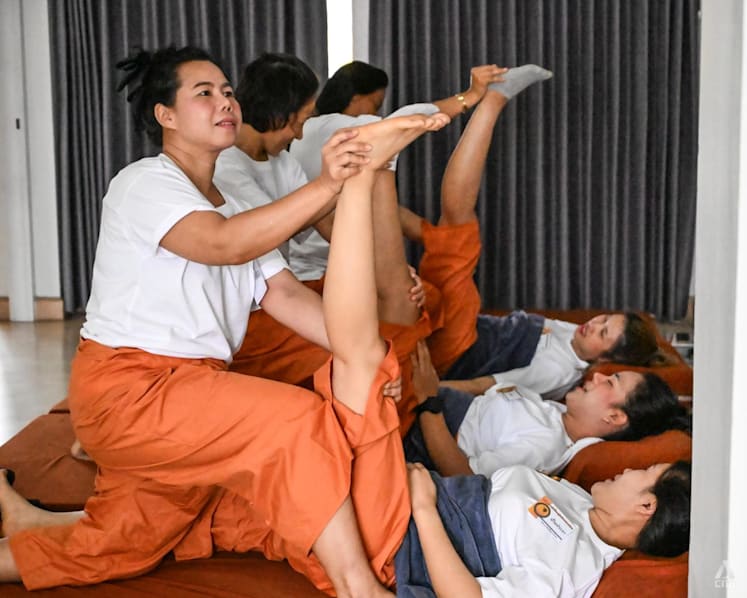
Thai massage trainees learn the basics at Charawi Association for the Conservation of Thai Massage in Bangkok. (Photo: CNA/Jack Board)

This audio is generated by an AI tool.


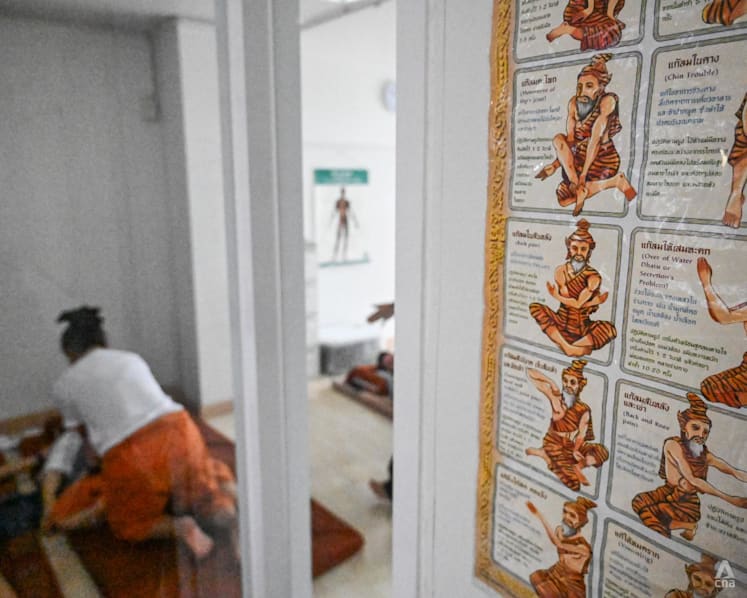
BANGKOK: The room looks like any typical massage space in Thailand; thin mattresses laid out along a wooden floor, with therapists dressed in orange robes warming up their hands.
But this is no ordinary spa session. These are beginners: some of Bangkok’s next wave of would-be massage therapists on the very first day of their training.
Wry smiles and occasional giggling ripple through the room, as the newbies get accustomed to the basics of body movement, pressure and touch, the essentials of traditional Thai massage.
They are stepping into one of Thailand’s most recognisable industries, and one now facing a major overhaul, as the government moves to raise standards, improve Thai massage’s global image and rebuild a workforce depleted by the COVID-19 pandemic.





For some of the students, like Darunee Bhumidid, this is really a new experience. The 48-year-old had “absolutely no experience with massage” before committing to a two-week training programme in the Thai capital.
She had never even stepped into a massage shop before, she said.
“This was truly my first time. I wanted to have a skill that I could always rely on. Even if I work as an employee, I can still use this as a side profession,” she said.
Yada Srisanga used to work at the airport before shifting her attention to the massage industry, at the encouragement of her mother.
“She wanted me to have a better life and told me that massage is a well-paying profession. When I tried it, I found that it suited me well. It’s a comfortable job, and it also opens opportunities to work abroad,” the 25-year-old trainee said.
Within two weeks, this group will be qualified and ready to work in one of Thailand’s estimated 28,000 massage clinics, spas and wellness centres.
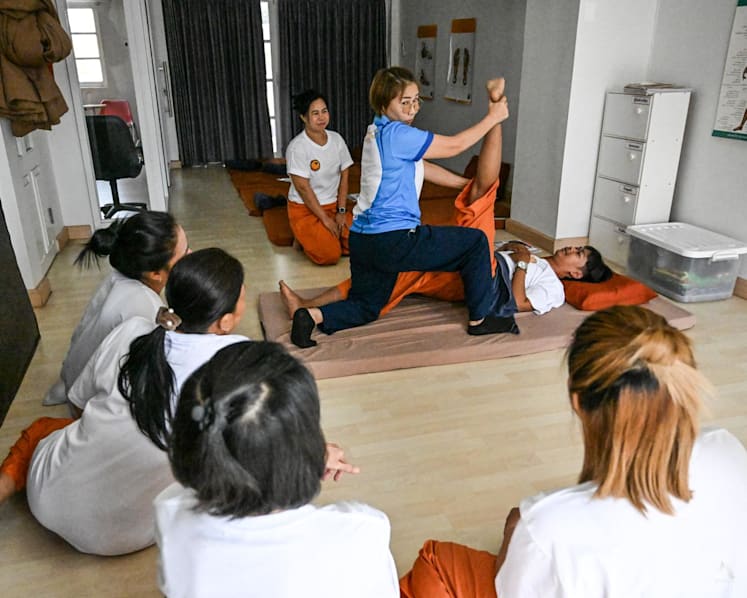
It is a cohort excited by the possibilities in a fast expanding industry that has strong local roots and cultural connections.
“I want to help preserve Thai traditions and I believe this is something sustainable. It belongs to us, and no one can take it away,” Darunee said.
“If Thai people don’t learn it, are we going to let others take it instead?”
Thailand lost tens of thousands of therapists during the pandemic as businesses collapsed and workers moved on to other industries.
But the sector is regaining its footing once more.
In 2024, total annual spending in the Thai wellness industry grew by more than 10 per cent, with a domestic market worth US$42.7 billion, according to figures from the Global Wellness Institute (GWI).
Wellness tourism, a significant part of the industry, is also growing fast.
Wellness tourism spending in Thailand hit US$14 billion in 2024, with the 36.4 per cent growth from 2023 being three times the average global growth rate, according to GWI.
Wellness tourism-related businesses in the kingdom generated an estimated US$20.5 billion in total revenue in 2025, the Ministry of Tourism and Sports reported.
The top three foreign markets for spa clients in Thailand are Malaysia, China and Singapore, according to the Thai Spa Association.
The government estimates that there are approximately 200,000 people nationwide who have completed basic massage training programmes, not including informal practitioners. But skilled workers are highly in demand.
The owner of this training facility, Charawi Tisanto from the Charawi Association for the Conservation of Thai Massage, said her enrolments for learning have been growing fast in recent years.
Many of her students are recent university graduates choosing careers in massage and spa services instead of working in offices.
“It’s because of the higher income and increasing acceptance of the profession. In the past, this career lacked prestige, but that is no longer the case,” Charawi said.
But Thailand’s massage industry remains deeply fragmented. Overall, the sector has yet to return to pre-pandemic levels and remains at the mercy of broader tourism challenges.
Training varies widely, oversight is split across agencies, and standards are inconsistent for workers, businesses and customers, just as demand begins to surge.
“Reform is necessary,” Charawi said.
In response, the government has proposed a comprehensive overhaul of the massage sector, to protect its quality and global reputation.
“We are at a turning point,” said Rutchanee Chantraket, the director of the Institute of Thai Traditional Medicine at the Department of Thai Traditional and Alternative Medicine (DTAM), under the country’s Ministry of Public Health.
“We are moving from a local standard to a world class standard,” she told CNA.
ARCHITECTS, NOT POLICE
In March, DTAM publicly detailed a package of reforms designed to fix deep-rooted issues within the broader massage and spa industry.
Some of the changes being proposed include a new three-tier system for therapists, designed to reward higher skill levels with better pay.
There are also plans to expand training, with programmes run through universities and hospitals, including more specialised medical treatment skills.
The Thai Massage College under the Ministry of Public Health aims to professionalise massage therapy with training to be conducted at 18 specialised Thai traditional medicine centres and 38 universities offering degrees in Thai Traditional and Integrative Medicine.
And a new digital ID system would track qualifications, helping raise standards across the industry, according to DTAM.
In effect, it would create a career ladder, from health promotion practitioners with a minimum of 150 hours training, to specialty practitioners focused on therapeutic skills, up to licensed professionals with up to four years training.
“The main challenge lies within the occupational group. We need to ensure that what they have learned complies with legal standards,” Rutchanee said, of those with typically 60 hours or less of training.
“We don't want to be the police of the industry. We want to be the architect of its ecosystem to make life easier for business.”
“We want the world to see Thailand as more than just a place for a holiday massage. We are a premium wellness destination. This is our soft power. We are taking ancient Thai wisdom and turning it into a modern health solution,” she said.
Industry players are keen to add value by amplifying Thailand’s premium offerings and repositioning massage as healthcare and therapy.
“We are focusing on quality not quantity,” said Sunai Wachirawarakarn, the president of the Thai Spa Association.
He welcomed the reforms as a “crucial step”, and an opportunity to upskill practitioners and prepare them for a fast-changing and competitive economic environment.
“One of the key competitive advantages for this sector is it’s something that AI cannot replace. Even if you have a robot for the muscles, you cannot replace human touch.
“The people we have are so valuable, so we have to make sure that they get the proper skills.”
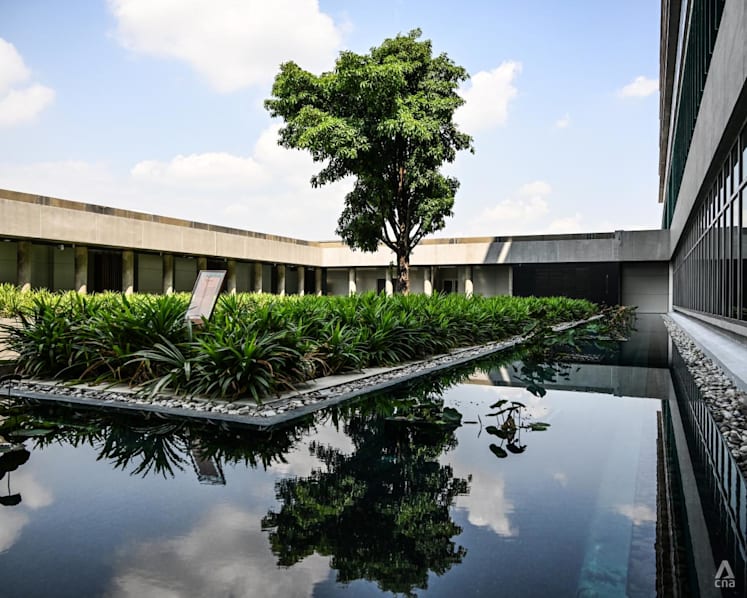
Siriraj Hospital, Thailand’s oldest and largest public hospital, is working to strengthen the scientific credibility of Thai traditional medicine.
It plays a major role in formalising the profession by offering undergraduate and postgraduate degrees in applied Thai traditional medicine and helping set international standards for “Nuad Thai”.
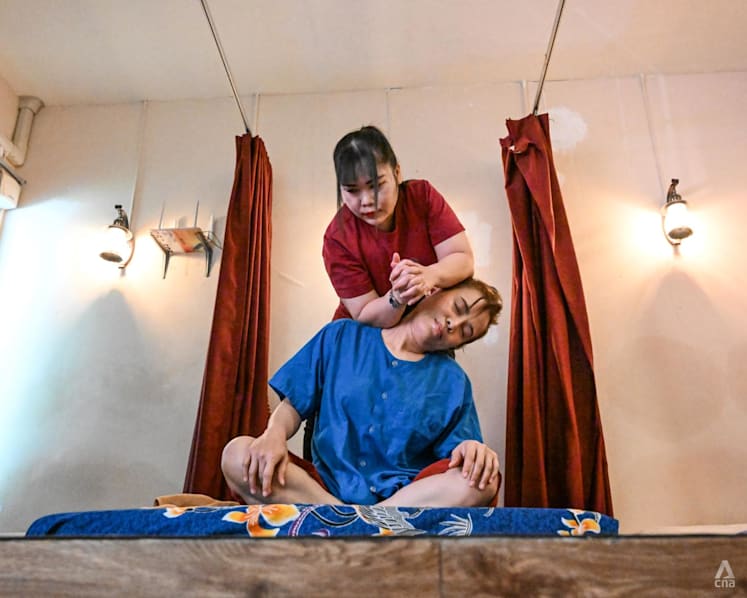
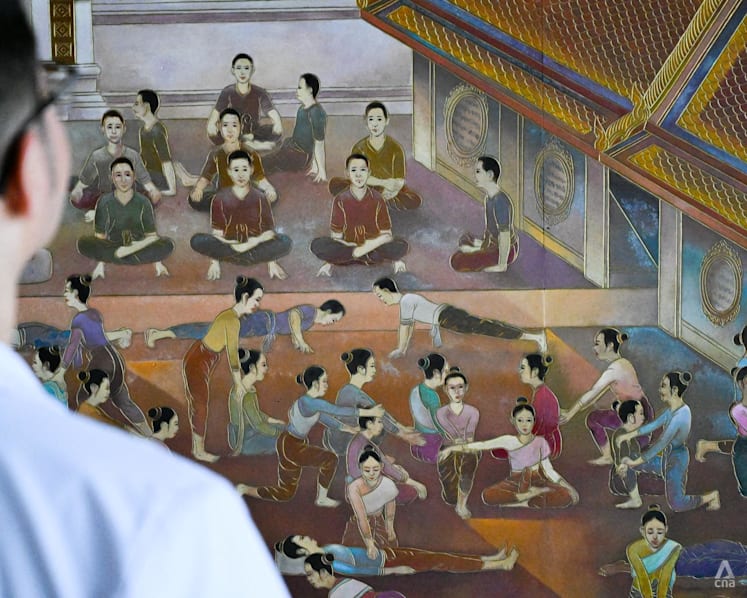
“Nuad Thai” specifically refers to the traditional form of massage that combines acupressure, assisted stretching and energy line work.
Recipients are usually fully clothed and no oil is used. It is a practice that dates back about 2,000 years and is traditionally taught in temples.
Practitioners are trained alongside doctors, and traditional techniques are studied through modern science.
The aim is to transform massage from a loosely regulated wellness service into a recognised form of healthcare, backed by research and clinical application, said Pravit Akarasereenont, the head of the Siriraj Center of Applied Thai Traditional Medicine.
While it will not be the path for most massage therapists, he is confident that this approach can filter down to the broader industry and help raise standards nationwide.
DUAL IDENTITIES
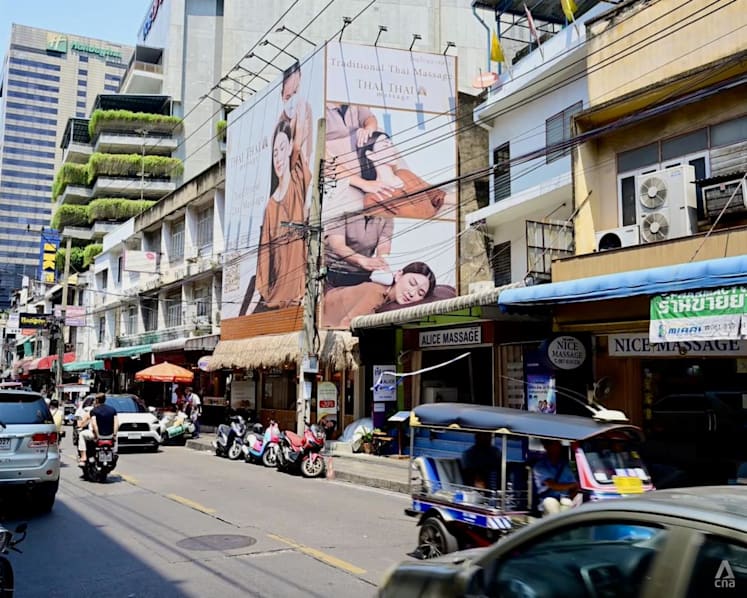
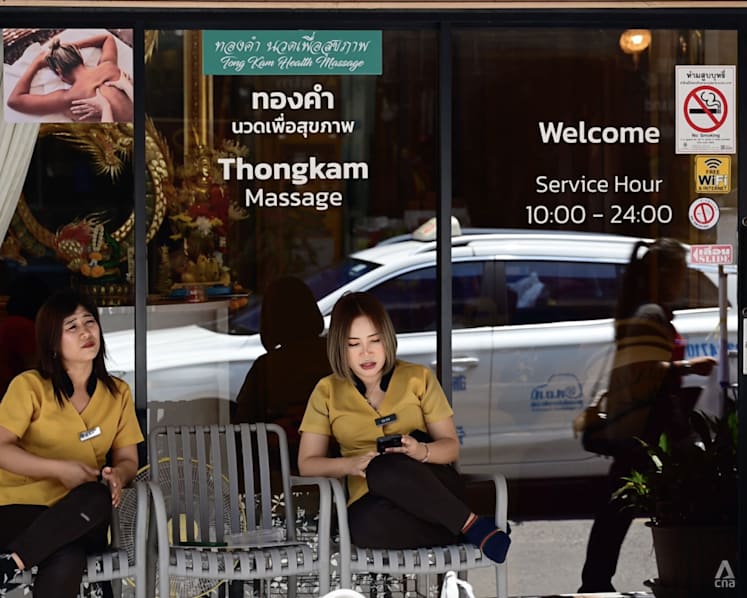
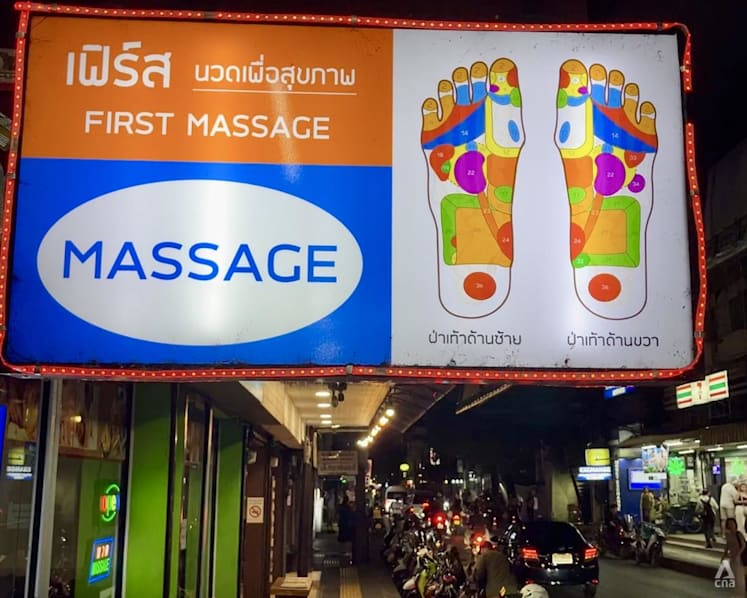
As evening falls in downtown Bangkok, life stirs outside the numerous massage stores in the Asok area of the city.
Here, women sit outside businesses along the street trying to attract mostly foreign customers.
For all its cultural prestige and heritage, Thai massage still struggles with a dual identity. Alongside professional therapists is a more shadowy economy that blurs the line between wellness and illicit services.
For many “white” practitioners, a term used for those who strictly follow the law rather than the “grey” operators, it is a divide that undermines trust and shapes how the industry is perceived.
“There are currently many such establishments and they negatively affect legitimate businesses,” Charawi said.
“Customers often ask for these inappropriate services, which creates challenges for professional massage shops. We would like government agencies to address this issue more seriously.”
Darunee said she had seen many job postings in her area that asked for such “grey line therapists”, a situation that caused her confusion and cautiousness.
“My partner was quite worried about me entering this field, fearing that it might involve inappropriate services,” she said.
“I would avoid places with many foreign customers because I am still concerned about that and I am new to this.”
Rutchanee acknowledged that enforcement against unregulated activity has not been strict in the past. She said the government now hopes to improve the industry’s image through clearer branding, promoting the use of “Nuad Thai” instead of the more generic “Thai massage”.
The shift mirrors how “Muay Thai” is used internationally to emphasise Thailand’s distinct martial art and uphold consistent standards, she said.
These days, however, many massage businesses also offer various other kinds of treatments, including aromatherapy, oil and foot massage or body scrubs.
Overall, the regulations - which will apply to all forms of massage services - could come with trade-offs. Higher standards and wages for therapists could mean higher prices for customers.
In Thailand’s current sluggish economy, some business owners, like Aksika Chantarawinij who runs Thanya Aroma Spa in Bangkok, worry that raising prices could drive customers away.
“(Spending) to help yourself or to cure yourself, is considered more like disposable income,” she said.
Most of her customers are local workers looking to ease “Office Syndrome”, with symptoms such as neck, shoulder and back pain, often a few times per week.
But she reconciles that higher prices are a necessary step to ensure her therapists can earn a decent living.
“Some of these young women are family pillars. All of my therapists, they all support their own family with money from massage,” she said.
One of her staff members is a 10-year veteran in the industry, 49-year-old Naree Khumphoklang. Currently, she said she typically earns between 15,000 baht and 25,000 baht per month (US$460 to US$760).
She is open-minded to more regulations, as long as the requirements do not add to her monthly costs too much.
“For additional training or certifications, I’ll have to spend more time and money. But on the other hand, it could be a good thing because it would make the profession more credible,” she said.
“Right now, the income is not stable. Some days are busy, some are not. But if I have to pay a lot for the training myself, that could be difficult.”
Back in the classroom, the debates about standards, prices and reform may still be some way off, but they already feel important for those about to embark on a new career, students said.
If the reforms stick, the industry they are stepping into may look very different from the one that came before. Still, as they bend limbs and push down on pressure points, the human element is what resonates in their learning.
“When I see customers enjoying themselves and feeling happy after a massage, it makes me feel that I can bring happiness to others. That’s what makes me love this profession,” Yada said.
“I believe Thai massage is both a cultural wisdom and a way to help people.”
Additional reporting by Jarupat Karunyaprasit.