With Thais 'addicted to salt', is country's planned sodium tax the antidote?
Thailand's plan to introduce a tiered salt tax in a bid to curb soaring rates of high blood pressure and kidney disease has sparked debate over whether price measures can succeed where education campaigns have struggled.
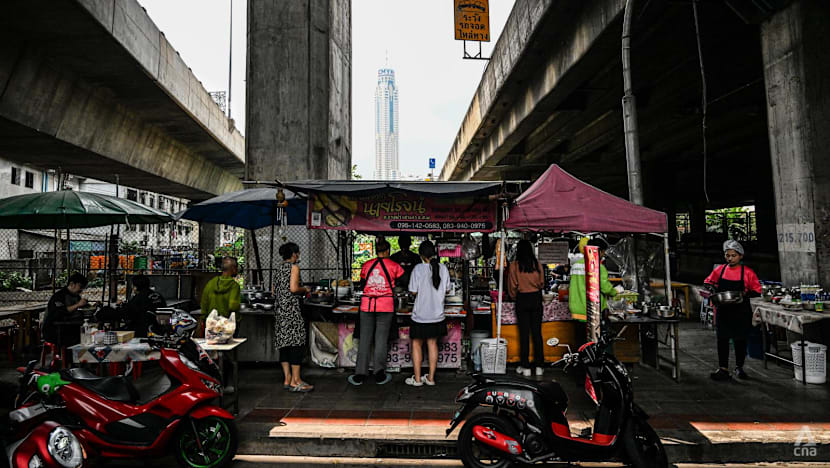
Eating salty food is a way of life for many Thais in a country where street food dominates the cuisine. (Photo: CNA/Jack Board)

This audio is generated by an AI tool.


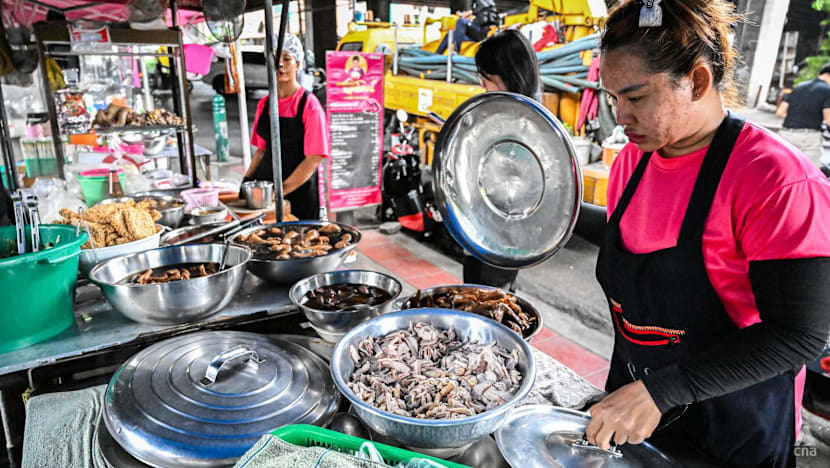
BANGKOK: Every day at midday, Pirada Rattachai and her crew work at full speed, sending out bowl after bowl of noodles swimming in fragrant broth, topped with chicken and a scatter of garnishes.
From a small shop tucked under a sprawling highway overpass, they serve one of the capital’s most familiar comfort foods.
The popular meal also captures the Kingdom’s enduring taste for salt.
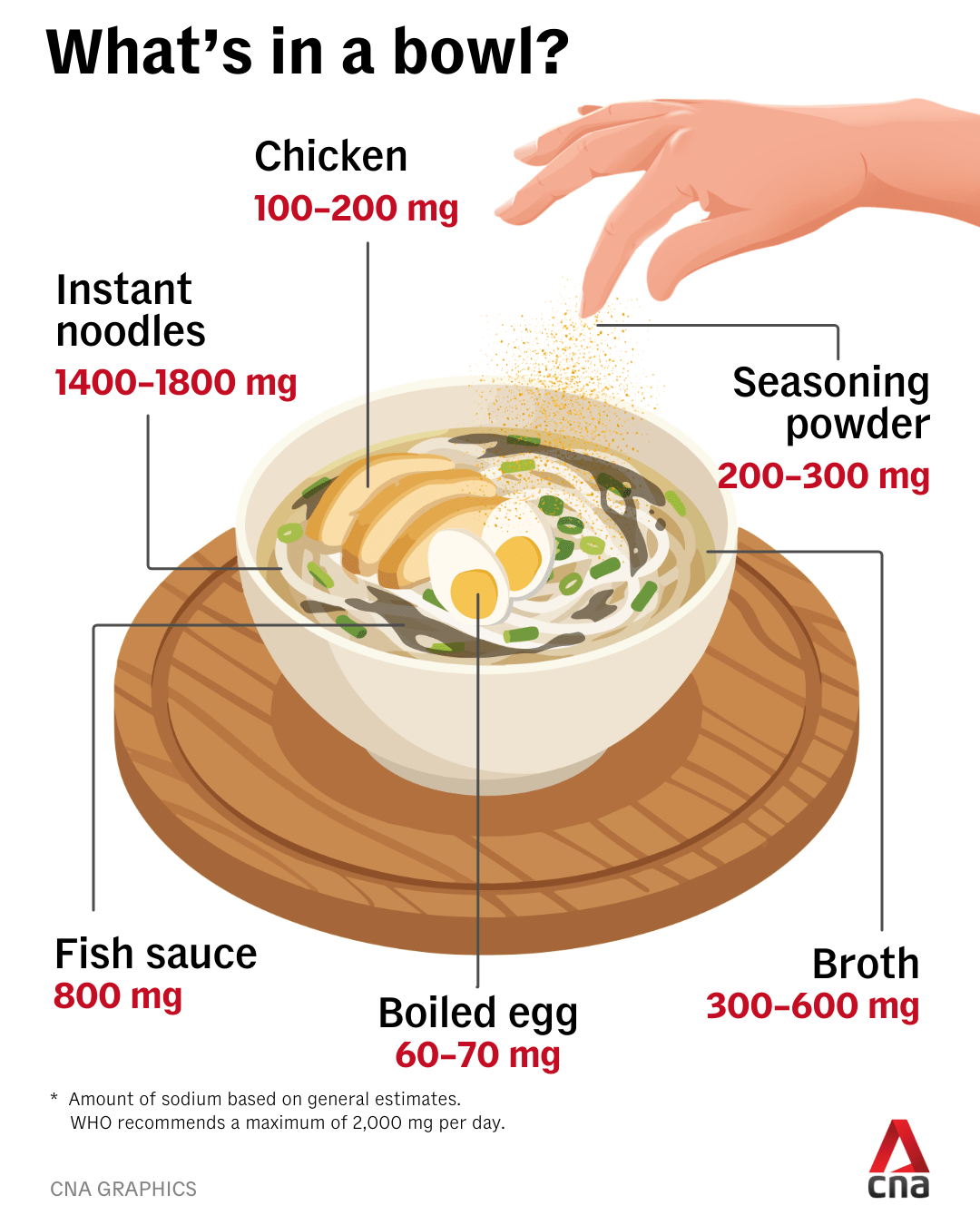
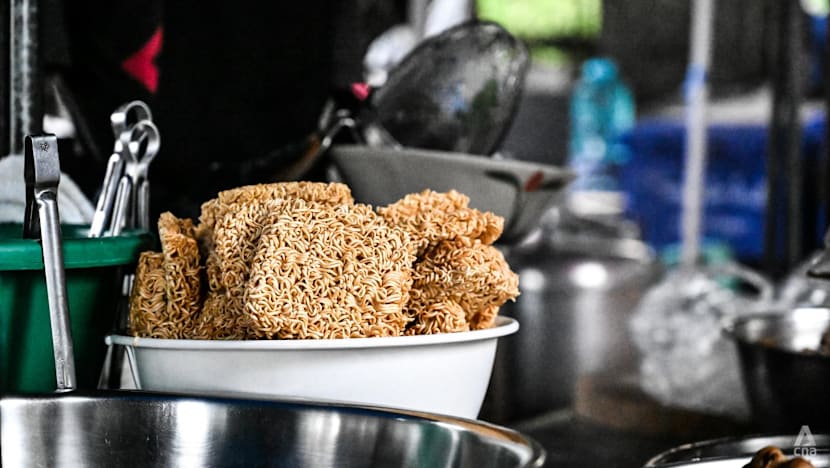
The instant noodle dish is loaded high with sodium: just one packet alone can deliver almost an entire day’s worth of salt, based on recommendations from the World Health Organization (WHO), which advises less than 2,000mg of sodium daily for adults.
Once typical extras are added, such as meat, soup, eggs or sauce, the sodium total pushes even higher.
But Pirada doubts whether her customers are concerned.
“No-one has ever asked us to adjust the taste to make it less salty. In reality, we rarely see customers who don’t add extra salty seasoning,” she said.
That taste is now at the centre of a growing public health debate.
With nearly one in three Thai adults living with high blood pressure, officials are considering a new tiered tax on high-sodium products such as snacks and instant noodles in a bid to curb the country’s soaring rates of heart disease and kidney failure.
Framed as a public health measure, the salt tax policy is designed to encourage manufacturers to reformulate products and curb excessive sodium intake.
The proposal has sparked debate among doctors, vendors and industry players over whether taxation can succeed where education campaigns have struggled.
And critics warn that price measures alone may not change behaviour in a country where salty flavours are deeply embedded in food culture.
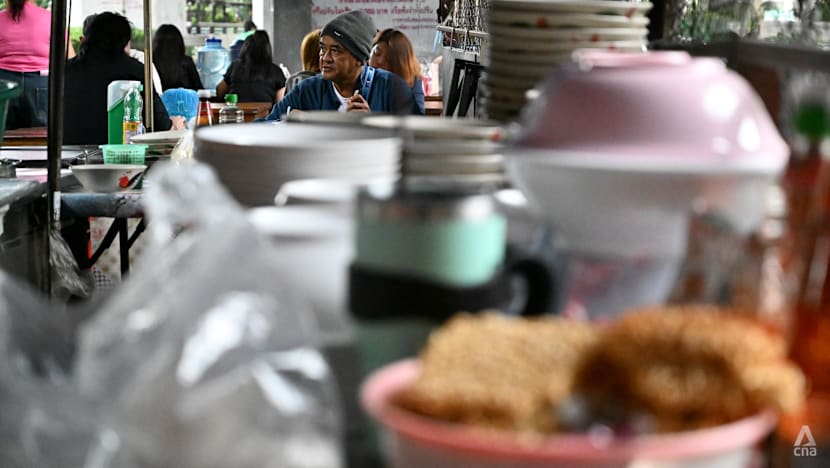
Kongkiat Senponkrung, a 51-year-old patron at the noodle shop, who was recently diagnosed with diabetes, said that adding flavour is part of Thai identity.
“Whether it’s dark soup, clear soup, or anything else, we tend to season it more first. I do that too because I’m Thai,” he said.
Kongkiat is not the only one in the country craving salty flavours.
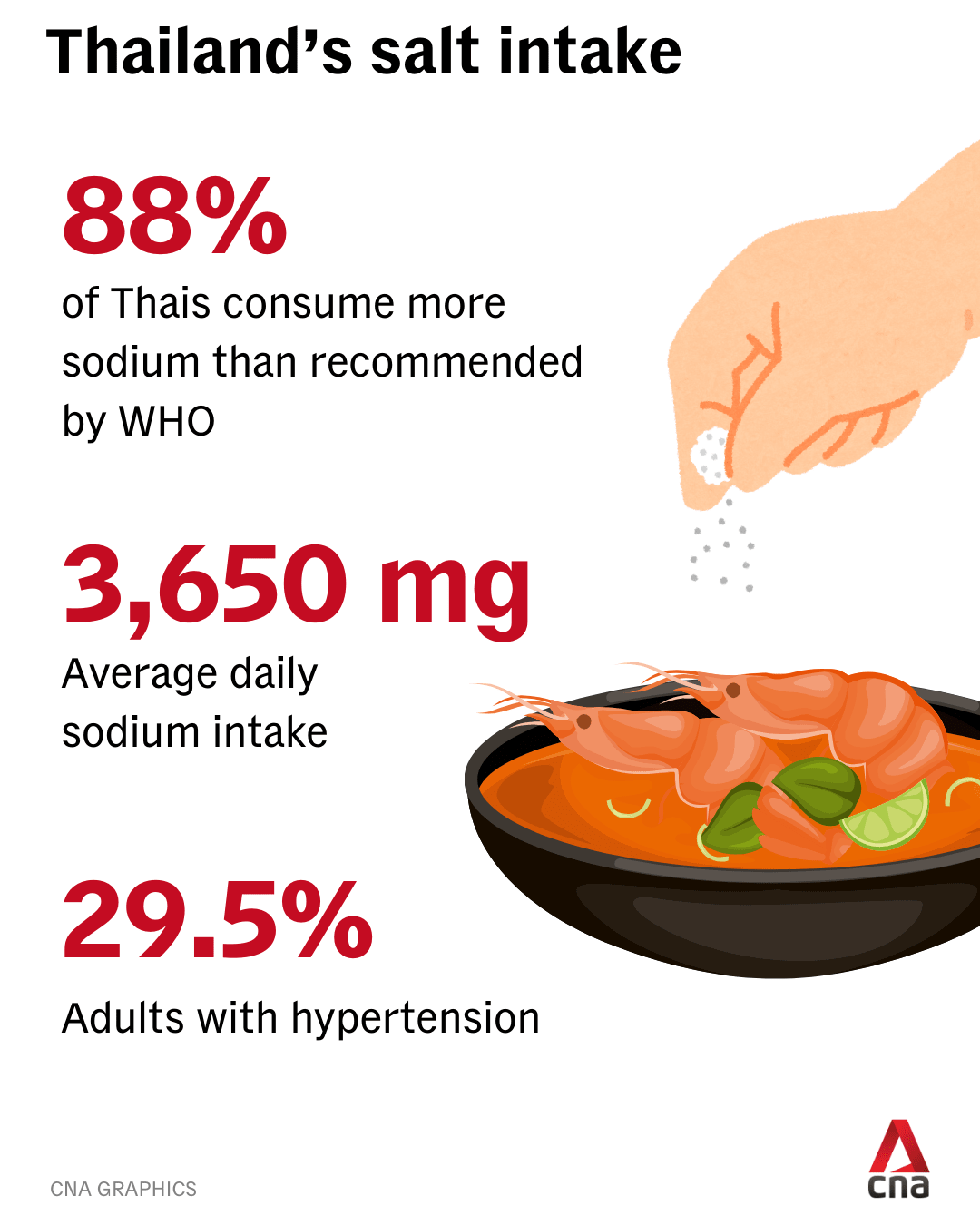
According to Thailand’s National Health Examination Survey, conducted every five years by the Ministry of Public Health, average sodium intake is estimated at about 3,600 mg per day - nearly double the WHO’s recommended limit - with about 88 per cent of Thais consuming more than advised.
“People are addicted to salt. It’s everywhere,” said Surasak Kantachuvesiri, an associate professor at Mahidol University and consultant in nephrology at the Faculty of Medicine at Ramathibodi Hospital.
He is also the chairman of the Low Salt Network, a multi-disciplinary partner network working on the country’s sodium reduction efforts.
Partly as a result, Thailand is grappling with a health crisis. Nearly 17 million people in Thailand, out of an adult population of about 58 million to 60 million, live with hypertension.
About 8 million people have chronic kidney disease and 200,000 have end stage renal disease, according to figures from the public health ministry.
Health advocates are backing the proposed salt tax, arguing that even small reductions in sodium could prevent tens of thousands of cases of heart disease and stroke over the next decade.
“We know about the risks. But we fail to prevent it from happening to our population,” said Prin Vathesatogkit, a cardiologist at Ramathibodi Hospital.
“You cannot just tell patients not to do this or that. Sometimes we need a top-down programme to help,” he said.

When someone eats too much sodium, their body holds on to more water. That extra water increases the volume of blood flowing through their blood vessels.
More blood volume means higher pressure inside those vessels, which raises blood pressure and eventually increases the risk of heart attacks, stroke and chronic kidney disease.
“It's a high socioeconomic cost for the country and for individuals,” Surasak said.
The country’s connection to salty food runs deep. Before refrigeration, salt was essential for keeping fish, meat and vegetables edible in a tropical environment.
Coastal communities produced fish sauce, while inland areas relied on fermented fish, shrimp paste and salted meats. These preserved ingredients became the foundation of many classic Thai dishes.
Over time, salty condiments have moved from being preservation tools to everyday flavour enhancers.
Thai cuisine has evolved around a balance of salty, sour, sweet and spicy tastes, with salt acting as a key base note and habitually added into dishes at home, in restaurants and in snack form.
A GLOBAL PROBLEM
Thai authorities, led by the Excise Department, announced that they intend to implement the sodium tax for snacks this year to address the urgent situation.
Officials have said the tax will focus first on processed foods like snacks which are high in salt and are considered non-essential items. The higher the amount of salt in a packet of potato crisps, for example, the more tax it would attract.
The Excise Department is finalising those sodium thresholds, product categories, exemptions and guidelines. The second phase of the tax scheme is expected to cover instant noodles before expanding to include other prepackaged foods.
But Thailand is not alone in its high sodium consumption. Regionally and globally, salt intake remains stubbornly high and non-communicable diseases are broadly on the rise.
In 2013, all 194 WHO member states pledged to reduce population-wide sodium intake by 30 per cent by 2025.
They also set a goal of a global average intake below the recommended maximum of 2,000 mg of sodium per day.
But by 2023, no country had reached the target and the average intake was found to be 4,130 mg per day. That means Thailand sits slightly below the global average.
Singaporeans consume a similar amount; according to its National Nutrition Survey 2022, the average resident consumes about 3,620 mg of sodium per day.
In Indonesia, average sodium intake had risen to 4,200 mg per day by 2023, according to WHO data.
Thais also consume far more sugar than health guidelines suggest; 21 teaspoons per day on average compared to WHO’s target of six, according to the Thai Health Promotion Foundation.
The country already implemented a similarly structured sugar tax, focused on sweetened beverages, in 2017. The sweetest drinks on the market attract a tax of 5 baht (US$0.16) per litre.
Last month, nine leading coffee chains committed to halving the sugar content labelled as “normal sweetness” in selected drinks, a move health officials hope will help reset consumer taste habits and reduce long-term health risks.
A CONTESTED SOLUTION
Like the sugar tax, the government intends to allow a transition period for businesses to adjust sodium formulas and pricing before full enforcement, a process that could take several years.
But under both schemes, the regulations do not extend to market stalls or restaurants, potentially limiting the speed of change.
It is one of the reasons why Apichart Sukonthasarn, a cardiologist and president of the Hypertension Society of Thailand, said a tax is insufficient to change health outcomes broadly.
“It’s a good move, but I’m not 100 per cent sure it will work,” he said.
“Somehow, the food manufacturers will adapt themselves to this kind of tax. They will push this cost to the consumer, and in that case, it will never work,” he said, arguing that the tax rates would be small on snack items and consumers may continue to choose salty items unwittingly.
Instead, he proposed more government-led funding and research into salt substitutions, clearer colour-coded packaging that identifies unhealthy foods and stricter, mandatory salt controls.
He cited a successful policy in South Africa, which forced sodium levels in 13 different food items to be gradually reduced over 10 years. It was one of the first countries in the world to go beyond voluntary guidelines and set legally binding targets for the food industry.
Research shows these regulations led to reductions in sodium content in products and measurable decreases in population sodium intake and blood pressure levels.
“In that case, they can try to bring it down little by little. And the consumer, they don't notice,” Apichart said.
He expects that marginally increased prices in a select number of items will not change behaviour.
“We’ve got to do something different. If you are doing the same and expecting something better, it will not happen.”
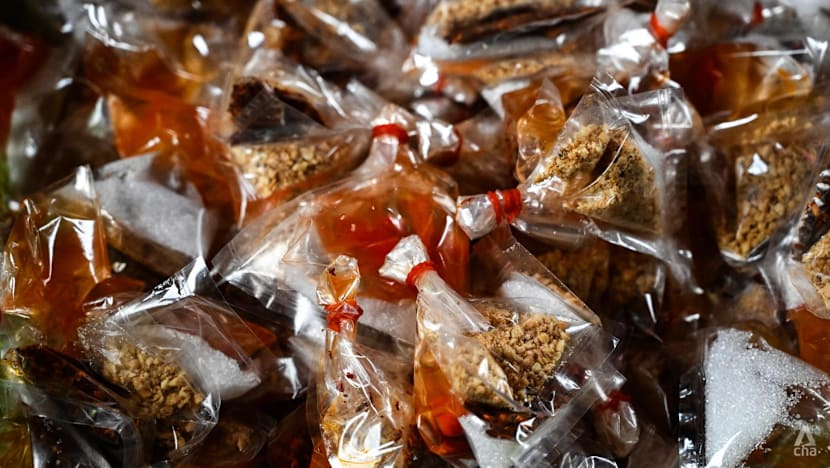
Surasak agreed that a raft of other measures needs to be more widely implemented, including targeted public messaging, working with local authorities to help street food sellers reformulate their recipes and simple measures such as salt meters that can help cooks easily tell if their food contains too much sodium.
Thailand’s public health ministry and partners had already adopted a five-pronged strategy to reduce salt intake from 2016, including awareness campaigns.
Key elements included monitoring sodium consumption, increasing community knowledge, and promoting healthier diets.
“Public education alone is not really effective. Even educated people now, they eat more salt than poor people, because they enjoy life, they go partying, they eat out and they eat more,” Surasak said.
He said that Mahidol University’s projections of the positive impacts of the tax were significant.
They include 155,000 fewer cases of stroke, kidney disease and heart disease over a 10-year period. Deaths prevented are estimated to exceed 10,000, and the national healthcare savings could reach 3.1 billion baht.
Regular Thais eating chicken noodles told CNA that they worry about the consequences of price increases of their favourite dishes.
“If you notice, the price of noodles has increased over time - by 10, 15, even 20 baht - yet people continue to eat them,” Kongkiat said.
“I think we should focus on shaping eating behaviour, perhaps through education, promotion, or informing people about the consequences of consuming certain foods too frequently. That would be more effective.”
Business is already tough for Pirada the Bangkok noodle shop owner. She wants the government to keep sellers like her in mind before making changes that could hurt their earnings or customer base.
“Other vendors in the market also say sales have dropped and costs have gone up,” she said. “Please don’t raise prices yet.”
Additional reporting by Jarupat Karunyaprasit.