









Presented by


HOW UPSKILLING TALENT POWERS AI TRANSFORMATION
Content share and bookmark
Presented by
In today’s fast-moving economy, companies that invest in AI-enabled tools and upskilling are better placed to grow, adapt and compete. IMDA’s initiatives support enterprises in building these capabilities and developing a tech-ready workforce to stay ahead.
More enterprises in Singapore are adopting digital technologies such as artificial intelligence (AI) to boost efficiency, reduce costs, streamline operations and drive innovation. This has increased the demand for tech professionals who can effectively apply these tools in their daily work.
Singapore’s tech workforce grew from 208,300 in 2023 to 214,000 in 2024, reflecting the wider uptake of AI. According to the Singapore Digital Economy (SGDE) report 2025, industries such as finance and insurance, manufacturing and professional services continue to show steady demand for talent with AI skills. In 2019, postings requiring AI capabilities made up 11 per cent of all tech listings; by 2024, this had risen to 14 per cent.
Despite global uncertainty, tech jobs in Singapore continue to offer strong career prospects and above-median wages. In 2024, the median monthly income for resident tech professionals was S$7,950 – well above the overall resident median of S$4,860, according to the SGDE report.

CREATING A WORKFORCE FLUENT IN AI
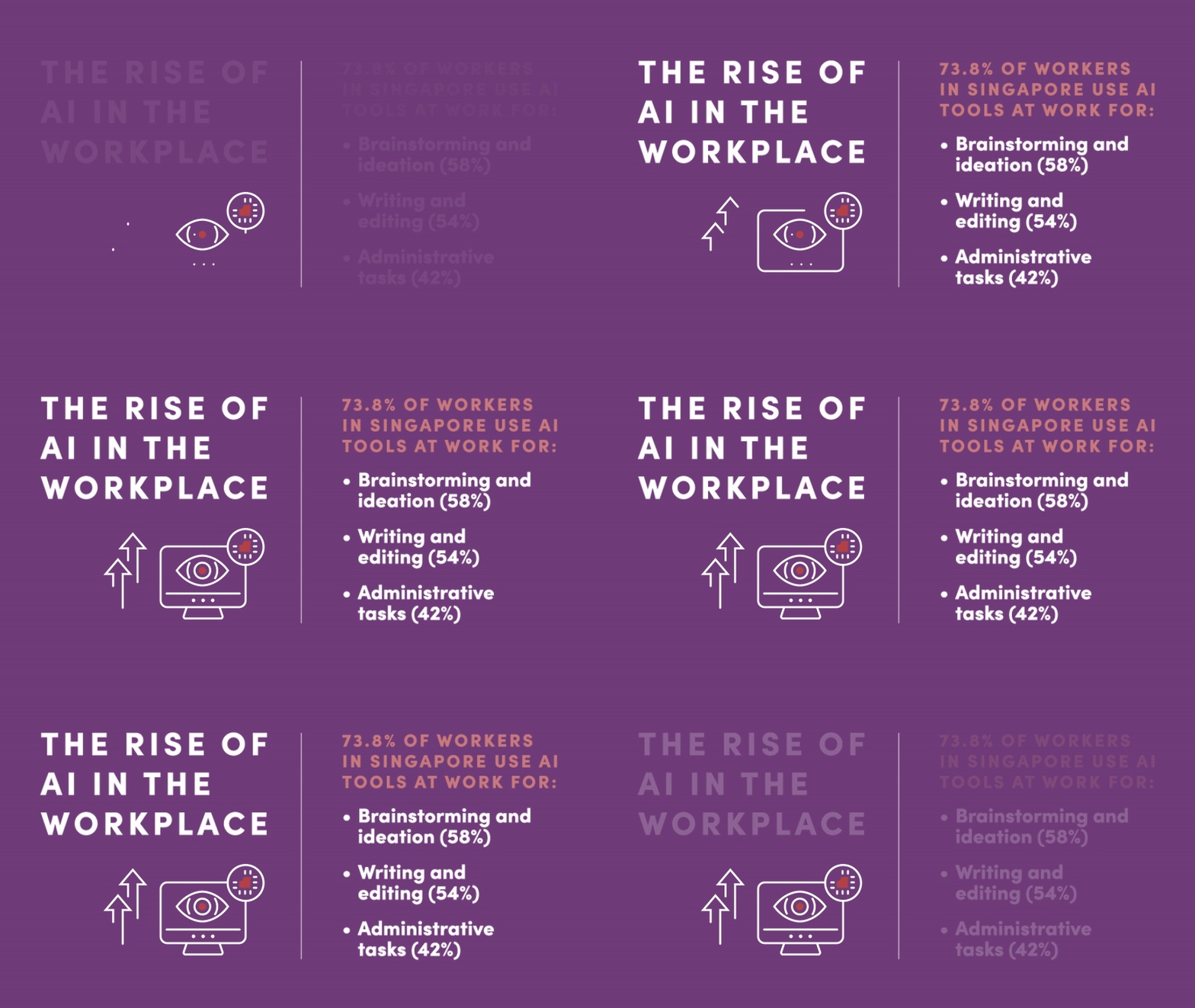
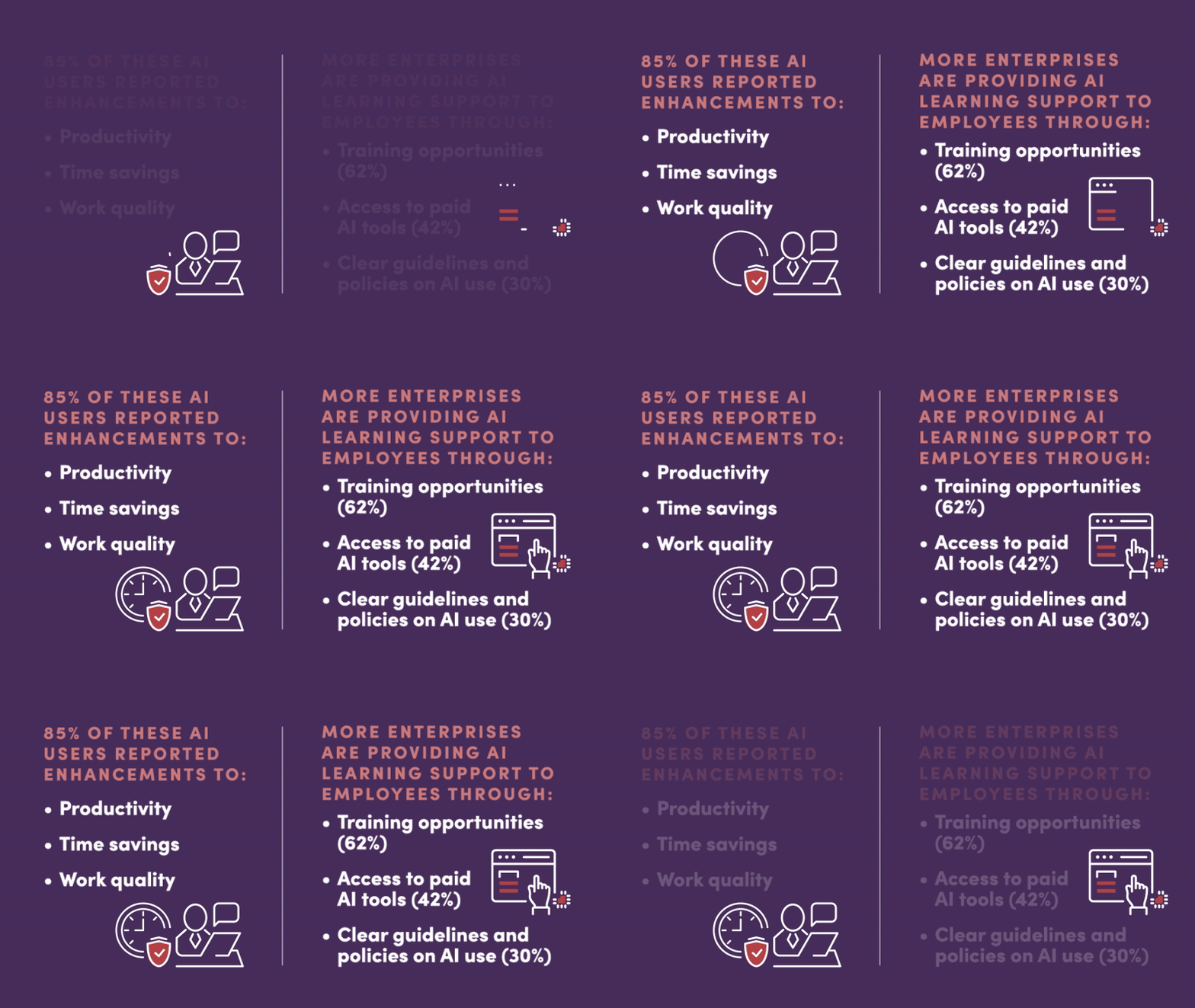
AI adoption across the economy is rising, with about three in four employees surveyed already using it for tasks such as brainstorming, writing, editing and administration, according to the SGDE report. To fully realise productivity gains, however, organisations need employees who can use AI effectively.
These “bilingual” AI talent combine domain expertise with adaptability, technical knowledge and AI fluency. As Minister for Digital Development and Information Josephine Teo noted in a recent speech, this ensures AI is not limited to a small group of specialists but can be applied across sectors by non-tech professionals driving innovation in their respective fields.
One example is the upcoming AI Fluency Programme announced by the Institute of Singapore Chartered Accountants (ISCA) with support from the Infocomm Media Development Authority (IMDA). Speaking at the 2025 ISCA conference, Minister in the Prime Minister’s Office and Second Minister for Finance and National Development Indranee Rajah said that building AI competencies would help accounting and corporate finance professionals automate routine work and focus on higher-value tasks like risk analysis and client engagement.
In parallel, IMDA continues to help more enterprises build a competitive edge through digitalisation, workforce transformation and upskilling. This includes initiatives such as the TechSkills Accelerator’s (TeSA) Company-Led Training (CLT) programme, along with partnerships with industry leaders and academic institutions.
EMPOWERING EMPLOYEES WITH AI UPSKILLING
Tech firm Oracle is among the companies working with IMDA to grow Singapore’s AI-ready workforce, with plans to train up to 10,000 students and professionals in areas such as AI, cloud computing, cybersecurity and data science by 2027.
Under IMDA’s TechSkills Accelerator (TeSA) for the Institute of Technical Education and Polytechnic Alliance (TIP Alliance) initiative, Oracle offers internships and apprenticeships to students and graduates across all five polytechnics, giving them hands-on experience with AI and cloud technologies.
Several interns have progressed into apprenticeships at Oracle after completing their diplomas, where structured on-the-job training helps deepen their skills and transition into tech roles, said Ms Chua Horng Shya, Oracle Singapore’s managing director.
The collaboration with the TIP Alliance has strengthened Oracle’s talent pipeline and fostered a more digitally fluent, innovation-focused workforce. “Some of our apprentices are now full-time employees,” said Ms Chua. “Others have taken on roles across our wider ecosystem – among customers, partners and allied organisations – bringing fresh perspectives and in-demand skills.”
Continued learning is encouraged even after employees are hired. Oracle’s in-house training platform, Oracle University, offers staff structured access to tools, certification, best practices and peer learning communities, enabling them to apply AI meaningfully across roles. For example, staff in human resources and finance are trained to use AI tools embedded in Oracle’s human capital management and enterprise resource planning systems, which optimise workflows, improve employee experience and boost productivity.
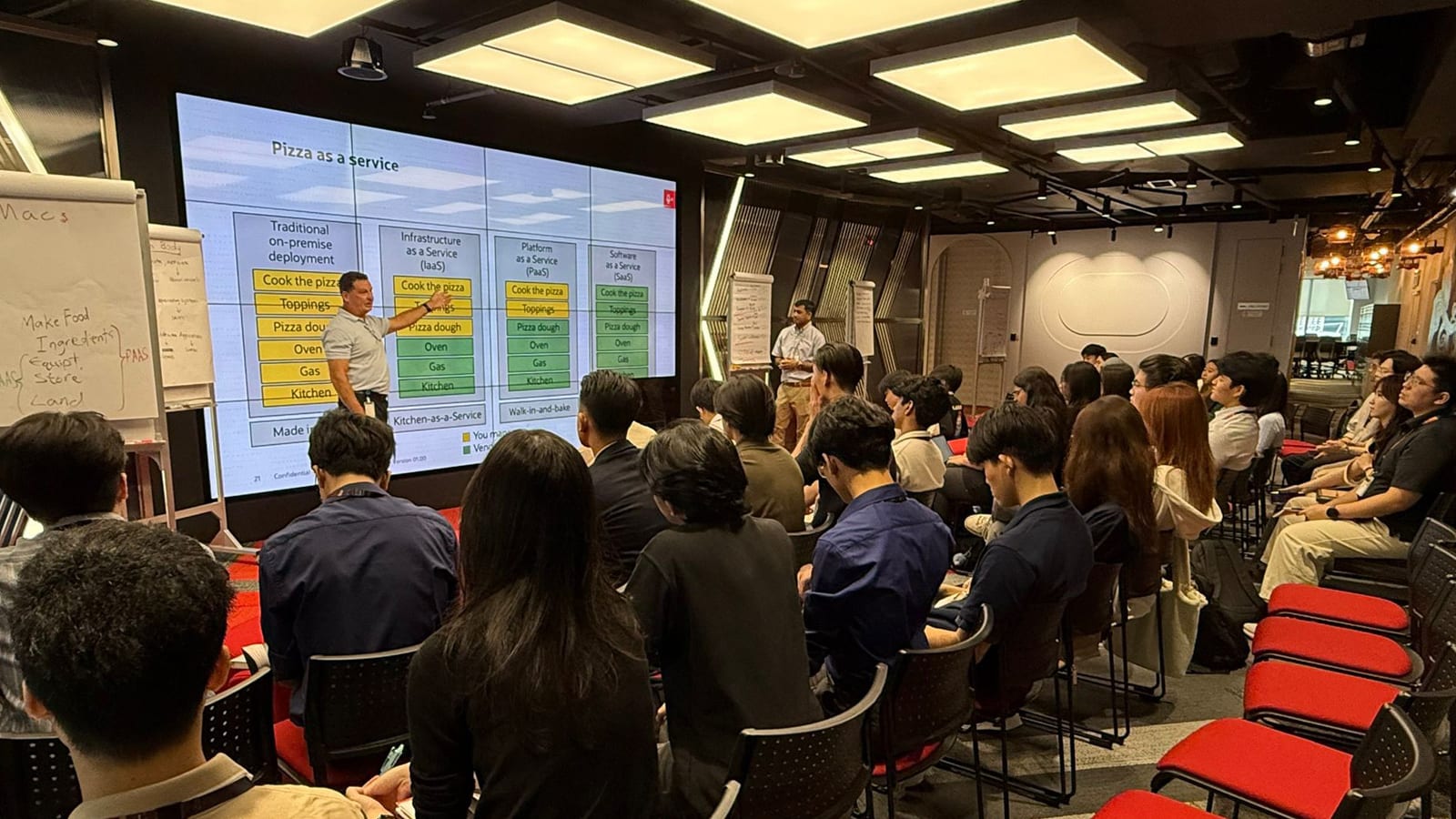
In March 2025, Oracle launched its Oracle AI Customer Excellence Center (formerly the AI Centre of Excellence), to support regional adoption of AI and cloud technologies. The centre serves as a training and innovation hub, offering hands-on access to AI tools, learning programmes and opportunities to co-innovate with customers and partners.
“The Oracle AI Customer Excellence Center provides the opportunity for interns and apprentices to train themselves in AI, experiment with AI in secure cloud environments and provide the knowledge needed to transform critical business operations,” said Ms Chua.
SCALING BUSINESS GROWTH WITH SKILLED TALENT
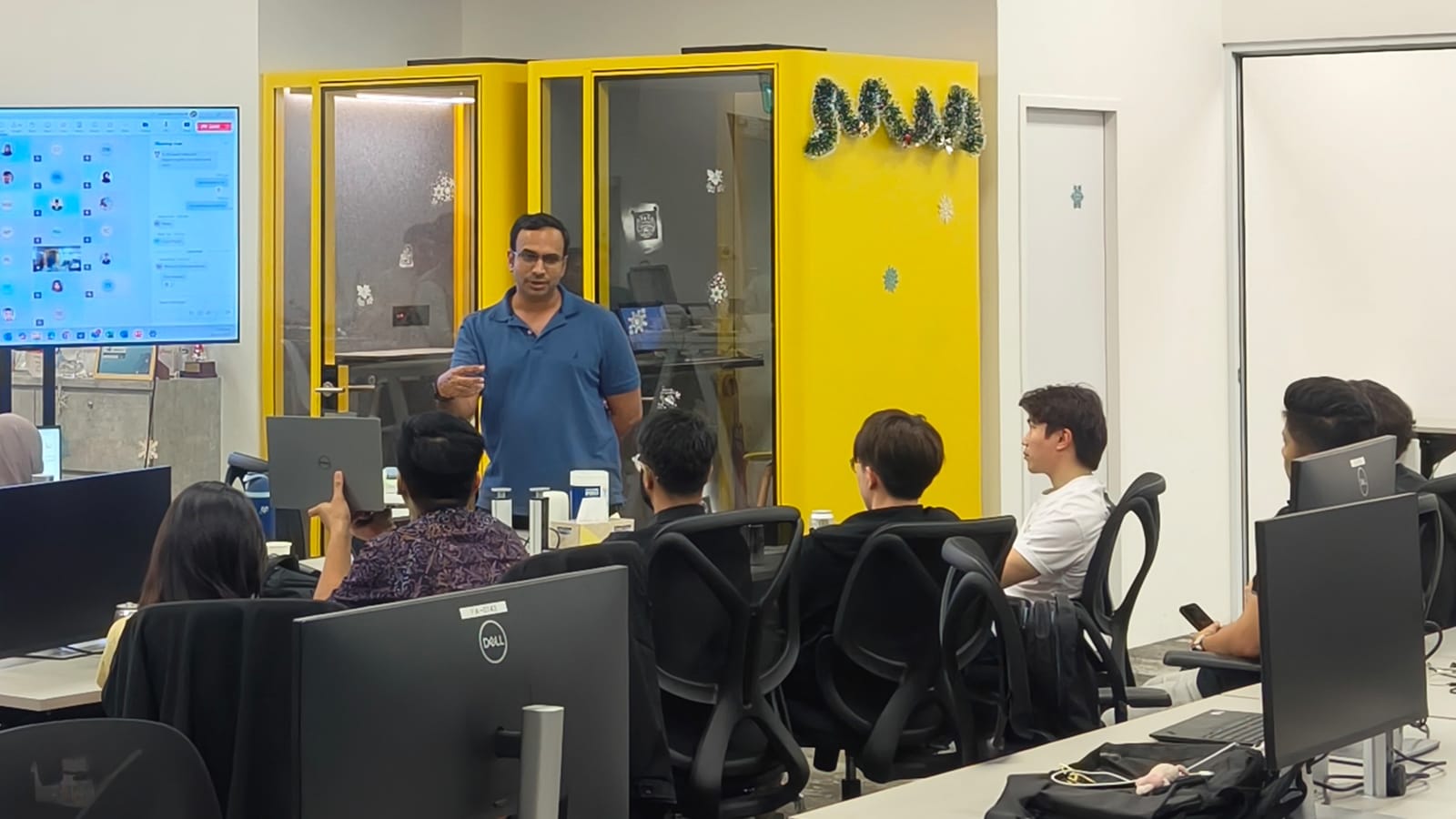
Intelligent automation services provider SimplifyNext is another company that is seeing the impact of sustained investment in AI talent. Through IMDA’s CLT programme, it has equipped both fresh graduates and mid-career professionals to step into AI and automation roles, strengthening its workforce and expanding its business capabilities, said CEO Mayank Gupta.
To date, SimplifyNext has hired close to 50 trainees and plans to onboard 30 more, including participants from its Agentic AI Hackathon, held in partnership with Nanyang Technological University and National University of Singapore (NUS). “The CLT programme gives us a framework that combines classroom learning with real-world project experience,” said Mr Gupta. “Trainees don’t just learn – they apply their skills to co-develop AI and automation solutions for both clients and internal initiatives.”
Internally, the company has rolled out tools such as Athena, an AI-powered HR assistant; RIE, a multilingual, voice-enabled GenAI chatbot for customer and candidate interactions; and a customer purchasing order processing agent.
It has also delivered over 35 AI-powered projects for clients, with CLT trainees involved in nearly half of them, guided by SimplifyNext’s in-house data scientists and AI architects. More than 90 per cent of SimplifyNext’s CLT trainees are now leading AI and automation projects within the company, said Mr Gupta.
Agile and diverse, these CLT-trained teams have helped SimplifyNext respond more quickly to client needs, shorten delivery timelines and expand regionally without compromising quality, while also building a sustainable talent pipeline that continues to strengthen the company’s AI capabilities.
Mr Gupta added that the programme aligns with SimplifyNext’s long-term vision of developing local talent that grows with the company and contributes to Singapore’s broader tech ecosystem.
GROWING AI TALENT THROUGH HANDS-ON TRAINEESHIPS
From intelligent automation to digital payments, companies across sectors are using AI to transform operations and prepare for what’s ahead. At Visa, AI is being applied at scale to rethink how transactions are carried out, and how talent supports that shift.
The global payments technology firm is exploring advanced AI and agentic commerce to shape the future of payments and tackle emerging fraud risks. “We’ve deployed more than 500 AI-powered applications to strengthen fraud detection, enhance security and improve operational performance,” said Ms Goki Muthusamy, senior vice president and head of people (Asia Pacific) at Visa.
Visa has invested US$3 billion (S$3.9 billion) in AI and data infrastructure over the past decade, underscoring its long-term commitment to innovation and resilience. Through its Intelligent Commerce programme, Visa is also working with leading AI platforms and fintech firms to support agentic commerce – where AI agents act autonomously to discover products, compare offers and complete purchases on behalf of users – enabling secure, seamless transactions at scale.

To drive further innovation and build a strong local tech talent pipeline, the company launched the Visa Technology Traineeship Programme (VTTP) in 2022, supported by the CLT Programme under TeSA.
Open to fresh graduates and mid-career professionals, VTTP prepares trainees for roles within Visa’s Singapore operations. Through partnerships with NUS-ISS and Ngee Ann Polytechnic, participants also earn diplomas in software development or cybersecurity.
VTTP trainees come from diverse fields such as business, humanities and other non-tech disciplines. Many have successfully pivoted into roles such as software or cybersecurity engineers, bringing with them new perspectives and problem-solving approaches that have broadened Visa’s talent base.
“VTTP has enabled Visa to tap into government support, align with wider industry transformation efforts and contribute to national workforce goals, while building the tech capabilities we need for the future,” said Ms Muthusamy.

