







Cathay Pacific to cut flights from mid-May to end-June as jet fuel prices surge
The Hong Kong-based airline will cancel about 2 per cent of its scheduled passenger flights from May 16 to Jun 30, 2026.
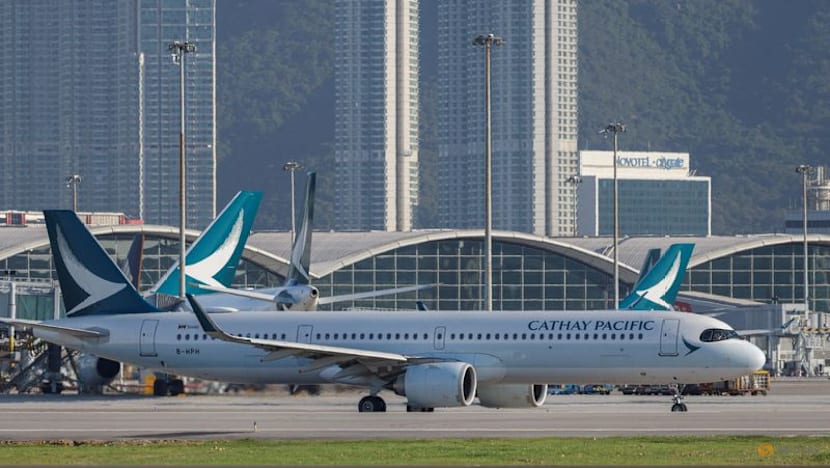
A Cathay Pacific aircraft taxis at Hong Kong International Airport in Hong Kong, Nov 28, 2024. (File photo: REUTERS/Tyrone Siu)
Cathay Pacific Airways said on Saturday (Apr 11) it will cut some flights from mid-May until the end of June, citing soaring jet fuel costs triggered by the ongoing conflict in the Middle East.
The airline will cancel about 2 per cent of its scheduled passenger flights from May 16 to Jun 30, 2026, while its budget arm HK Express will cut about 6 per cent from May 11, it said.
The carrier said the suspension of its passenger services to Dubai and Riyadh will stay in place until Jun 30.
"Jet fuel consists of crude oil and refinery cost, both of which are seeing sharp increases," Cathay Pacific said in a media statement.





It noted that according to the latest data published by the International Air Transport Association (IATA), the global average jet fuel price rose to US$209 per barrel for the week ending Apr 3, increasing from US$99.40 per barrel for the week ending Feb 27.
"Cutting back on capacity has always been our last resort," the airline said. "These consolidation decisions are not taken lightly and we apologise to customers for any inconvenience caused."
.jpg?itok=9vrw5YWf)

Last month, Cathay's CEO Ronald Lam said the Hong Kong-based airline would press ahead with plans to expand passenger capacity by 10 per cent this year, pointing to strong demand for long-haul flights to North America, Europe and Australia after the Iran war cut traffic through the Middle East.
Beyond June, Cathay Pacific and HK Express plan to operate all their scheduled passenger flights, Cathay said in the statement.
US President Donald Trump's two-week ceasefire with Iran is unlikely to bring quick relief to the global aviation industry, executives said this week.
Industry officials warned that jet fuel supplies will remain tight and costly for months, even if Iran reopens the Strait of Hormuz.





