Dollar advances as oil prices rise after latest US-Iran strikes, Houthi blockade
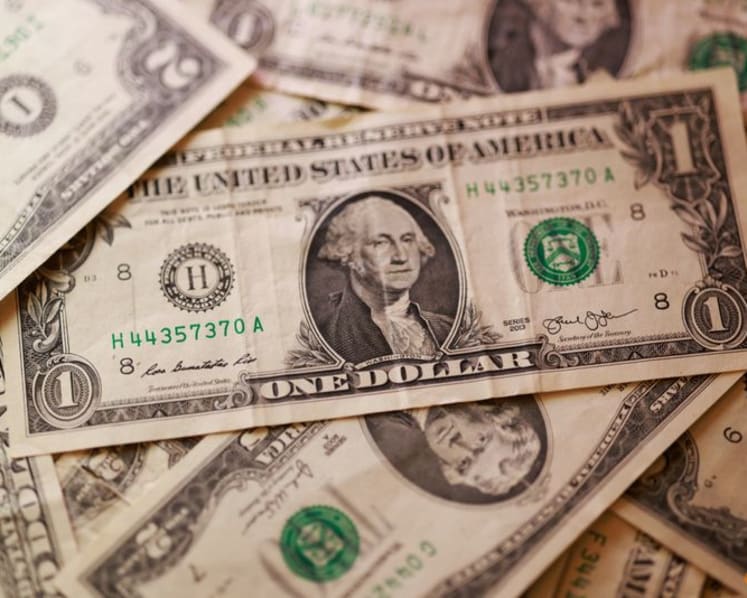
U.S. dollar banknotes are seen in this illustration taken March 24, 2026. REUTERS/Dado Ruvic/Illustration
NEW YORK, July 21 : The U.S. dollar climbed on Tuesday and was poised for a fourth straight session of gains, as the latest round of attacks in the Middle East pushed oil prices higher and stoked concerns about persistent inflation.
Two oil tankers carrying Saudi crude to Asia reversed course in the Red Sea after threats from Yemen's Iran-aligned Houthis, as a widening Middle East conflict disrupted shipping through two of the world's most critical energy chokepoints. The U.S. military said on Monday that it finished its latest round of strikes on Iran, marking its 10th straight night of attacks.
U.S. crude rose 2.09 per cent to $84.97 a barrel and Brent climbed to $90.90 per barrel, up 1.88 per cent on the day after hitting $91.99, its highest since June 11.
Optimism that a durable peace deal could be reached between the U.S. and Iran helped spark a downturn in crude prices as May began, and recent subdued U.S. inflation data had cooled market expectations of a rate hike at its policy meeting next week.





But oil prices have reversed in recent days as tensions in the region have flared, and comments from multiple Fed officials, including Chairman Kevin Warsh, have flagged concerns about inflation pressures.
The dollar index, which measures the greenback against a basket of currencies, rose 0.17 per cent to 101.16, with the euro down 0.11 per cent at $1.1402. The greenback was on pace for its longest streak of daily gains since mid-May.
"We're now on the tenth night of strikes in Iran, so the market is pricing things rationally here," said Erik Bregar, director of FX and precious metals risk management at Silver Gold Bull in Toronto.
"The Fed is hawkish, I don't think the marketplace fully appreciates that yet, and the longer this conflict goes on in the Middle East, the risks of the Fed sounding even more hawkish increase."
Despite the hostilities, efforts to find a diplomatic solution continue. A senior Iranian official told Reuters on Monday that Tehran had received a proposal from mediators for a 10-day ceasefire.
However, U.S. President Donald Trump said there would be a response if Yemen's Iran-aligned Houthi movement follows through on its threat to impose a blockade on commercial shipping in the Red Sea.
Expectations for a hike from the Fed of at least 25 basis points at its meeting next week have inched back up to 21.9 per cent, up from the roughly 11 per cent last week but well below the 38.5 per cent from a month ago, according to CME FedWatch. For the September meeting, markets are pricing in a 68.2 per cent chance for a hike.
The Canadian dollar weakened 0.27 per cent versus the greenback to C$1.411 per dollar, retreating from a one-month high hit on Monday, after the U.S. imposed a new tariff of 50 per cent on a wide range of Canadian products in response to Ottawa's "discriminatory treatment" of American-made cars, alcohol and dairy goods.
POUND FALLS AS BURNHAM GOVERNMENT BEGINS
Sterling declined 0.39 per cent to $1.3376, its fourth straight session of declines, as investors weighed the prospect of higher government spending and how new finance minister John Healey will finance it.
Andy Burnham became Britain's seventh prime minister in a decade on Monday, and reiterated his commitment to stick to the previous government's fiscal rules. John Healey, the former defence secretary, was appointed the new finance minister.
Labor market data showed Britain's jobs market appears to have stabilized at weak levels, with official data showing annual wage growth and unemployment steady in the three months to May and payrolled employment little changed in June despite the recent political turmoil.
"Today's data point to a loose labor market with little wage pressure, but one that is not worsening dramatically at the current juncture," said Jack Meaning, UK chief economist at Barclays, in a note.
Attention will turn to a European Central Bank meeting due later this week. Economists polled by Reuters expect the central bank to hold interest rates steady this time, but still hike at least once more later this year.
The Japanese yen weakened 0.41 per cent against the greenback to 163.14 per dollar, breaching the 163 mark for the first time since December 1986 as traders continue to brace for signs of intervention in the currency by the Japanese government.