


Advertisement
Advertisement

Business

Japan risks summer power crunch due to Middle East LNG disruptions -IEEJ analyst
Japan risks summer power crunch due to Middle East LNG disruptions -IEEJ analyst

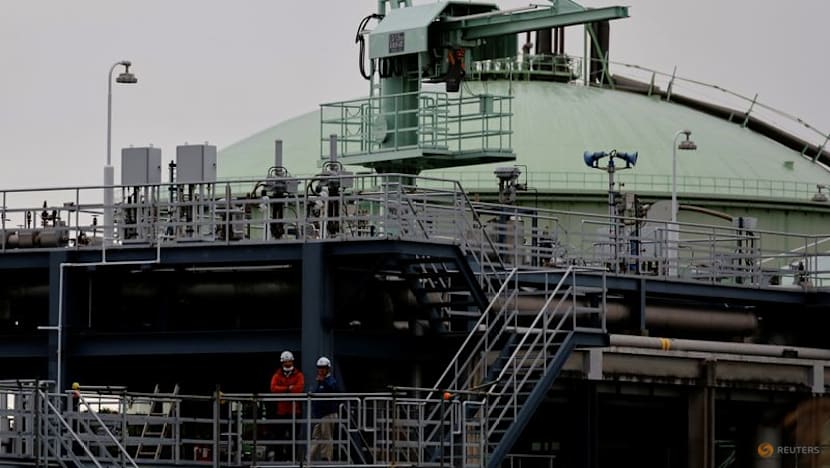
FILE PHOTO: A LNG tank is pictured at Tokyo Gas's LNG terminal in Sodegaura, Chiba Prefecture, Japan November 18, 2024. REUTERS/Kim Kyung-Hoon/File Photo

13 Apr 2026 06:39PM

TOKYO, April 13 : Japan may face a power supply crunch if the Middle East crisis drags on and liquefied natural gas shipments remain disrupted, just as air-conditioning demand rises during the Japanese summer, an analyst at a leading energy think tank said on Monday.

Takafumi Yanagisawa, executive analyst at the Institute of Energy Economics, Japan (IEEJ), said that a prolonged conflict could also delay the start of additional supplies expected by Japan from 2028 from new projects in Qatar and the United Arab Emirates.

• Japan takes delivery of some 4 million metric tons of LNG annually - or 6 per cent of its total LNG imports - via the Strait of Hormuz, which has been effectively closed due to the Iran war.

• In 2024, Qatar and the UAE accounted for 4 per cent and 2 per cent respectively of Japan's LNG imports passing through the strait, Yanagisawa said.

CNA Games
Show More
Show Less

• Japan's biggest LNG supplier is Australia, although it also buys from Malaysia, the U.S., Russia and other countries.

• LNG from Qatar and the UAE provide about 3.5 per cent of Japan's electric power, Yanagisawa said.

• "As this affects what is known as the power reserve margin, a 3.5 per cent drop is by no means small as we head into summer months," he said.

• Just under 60 per cent of Japan's LNG imports are used for electric power generation and the rest for city gas and other supplies.

• For now, utilities are buying additional volumes on the spot market and utilising the upper quantity tolerance (UQT) of existing contracts with suppliers such as Australia and the United States, Yanagisawa said. Under UQT, supply can be increased by around 10 per cent of the contracted volume, subject to mutual agreement.

• Qatar's LNG facilities were damaged nL6N4070Z9 by Iranian attacks, with repairs to affected sections potentially taking up to five years. Even if the blockade of the strait is lifted, reduced LNG exports from Qatar are likely to persist for some time, and expansion projects could be delayed, Yanagisawa said.

• Prior to the Middle East crisis, some expected the global LNG market to face a supply surplus by 2030, but that view is becoming increasingly difficult to sustain, he added.

Source: Reuters
Advertisement

Also worth reading

Advertisement





