More Japan firms expect profit growth despite Iran war uncertainty: Reuters poll
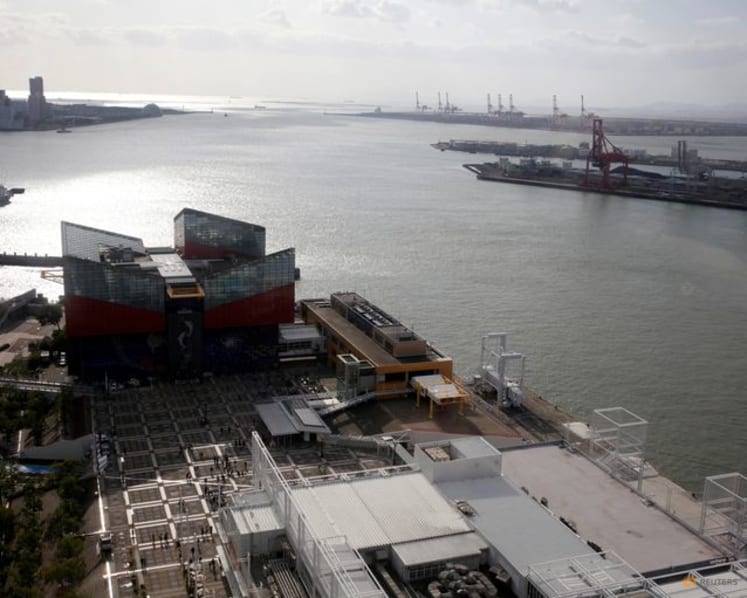
FILE PHOTO: File Photo: Factories line the port of Osaka, western Japan October 23, 2017. Picture taken October 23, 2017. REUTERS/Thomas White/File Photo
TOKYO, March 19 : More Japanese companies are optimistic about their earnings in the business year starting in April, although uncertainty surrounding the U.S.-Israeli war on Iran and soaring oil prices is tempering expectations, a Reuters survey showed on Thursday.
The conflict, which has killed thousands of people across the Middle East, has created the biggest-ever oil supply disruption as maritime traffic has halted in the Strait of Hormuz, through which a fifth of the world's oil is transported.
The supply shock will affect Japan as the country imports more than 90 per cent of its crude oil from the Middle East.
About 11 per cent of respondents expect their net profit to grow more than 10 per cent in the new business year, while 29 per cent anticipate single-digit growth and 44 per cent predict their profits will remain largely unchanged from a year earlier.





The trend is little changed from the December poll. In that survey, 40 per cent of companies expected earnings growth in the new business year, with 14 per cent projecting an on-year decline and 46 per cent expecting earnings to be largely unchanged.
"We expect a higher profit as we are making progress in cost pass-through and receiving robust orders," a manager at a precision equipment maker wrote in the survey.
"But heightening risks associated with the global situation are making it rather hard for us to forecast big profit growth."
Some companies are already bracing for a substantial earnings impact from the turmoil in energy markets.
"If oil prices stay on the uptrend, raw material costs will be driven up, and our profitability will be pushed down," said an official at a chemical company, who is among the 12 per cent of respondents that expect a single-digit net profit decline.
A transportation company official said in the survey that it previously foresaw net profit growth, but now expects its bottom line to be flat from a year earlier, given the possibility that higher energy prices will squeeze earnings.
The poll was conducted by Nikkei Research for Reuters for 10 days from March 4, or four days after the United States and Israel launched attacks on Iran. Nikkei Research reached out to 492 companies of which 216 responded on condition of anonymity.
The survey found 76 per cent of respondents forecast the yen will trade between 150-160 yen to the dollar in the new business year, and 19 per cent expect the Japanese currency to be firmer at 140-150 yen.
DEBATE OVER FOOD TAX CUT
Prime Minister Sanae Takaichi's plan to suspend the sales tax on food for two years drew mixed reactions. Among respondents, 20 per cent support the measure, 29 per cent oppose it and the remainder had no clear stance.
"We understand the importance of the plan as an emergency step in response to higher prices. But careful consideration is necessary when we think about how to fund the cut and how it will affect future generations," a manager at a rubber products maker said.
On the Tokyo Stock Exchange's three-year-old guidance urging listed firms to focus on their share prices and engage actively with investors, 53 per cent of respondents deemed the request appropriate while 17 per cent considered it inappropriate and 21 per cent expect it would have some side effects, the survey showed.
"Some of the resources that ought to be allocated to business activity are being shifted to measures that are targeted at share prices and shareholders (under the guidance)," an official at an electronics maker said.
The stock exchange's reform push to tackle Japan's unusually high number of undervalued stocks has sparked a wave of share buybacks, asset sales and management buyouts.