Oil prices fall as supply concerns ease on hopes for US-Iran talks
Even if oil shipments resume in May through the Strait of Hormuz, demand for crude oil will likely see the biggest slump in the second quarter since the pandemic in 2020, the IEA said on Tuesday (Apr 14).
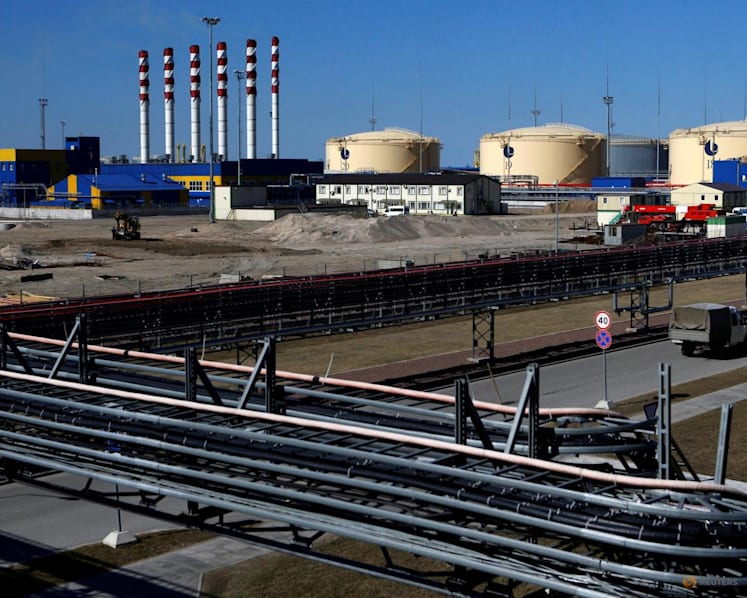
A general view shows the Ust-Luga oil products terminal in the settlement of Ust-Luga Russia. (File photo: Reuters/Alexander Demianchuk)
LONDON: Oil prices fell on Tuesday (Apr 14) as signs of possible talks to end the US-Israeli war on Iran eased supply risks stemming from the blockade of the Strait of Hormuz.
Brent futures edged 62 cents lower, or around 0.6 per cent, to US$98.74 at 8.28am GMT (4.28pm Singapore time), while US West Texas Intermediate (WTI) crude fell US$2.30, or 2.3 per cent, to US$96.78.
Both benchmarks rose in the previous session, with Brent climbing more than 4 per cent and WTI nearly 3 per cent, after the US military began a blockade of Iran's ports. Oil prices rose 50 per cent last month, a record.
While talk about the resumption of US-Iran talks put downward pressure on prices, the move lower ignores the loss of physical barrels of oil that are not moving, PVM Oil Associates' analyst Tamas Varga said.
Attacks on energy infrastructure in the Middle East and Iran's effective closure of the Strait of Hormuz have led to the largest oil supply disruption in history, the International Energy Agency said in its monthly report, with 10.1 million barrels per day (bpd) lost in March.
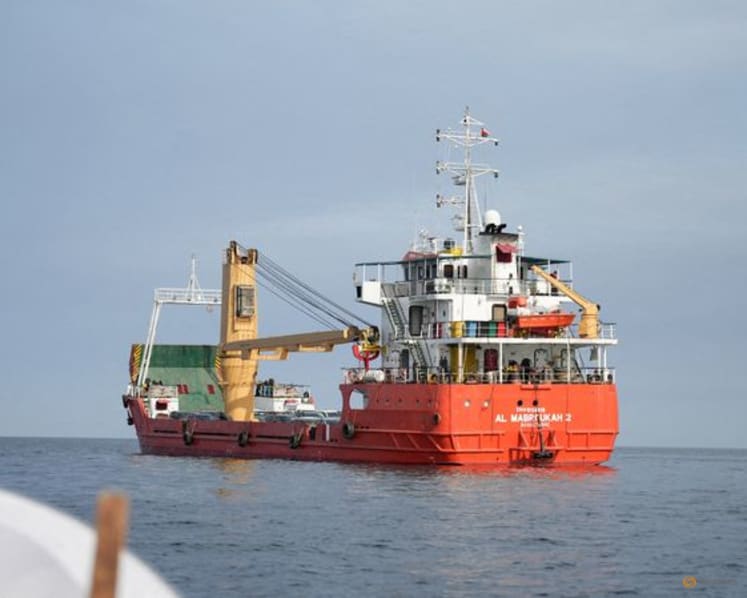
The US military on Monday said its blockade of the Strait of Hormuz would extend east to the Gulf of Oman and the Arabian Sea, while ship-tracking data showed two ships turned around in the strait as the blockade started.
NATO allies, including Britain and France, refrained from joining the blockade, calling instead for the waterway to reopen.
In response, Iran threatened to target ports in nations bordering the Gulf, following the collapse of weekend talks in Islamabad aimed at resolving the crisis over the strait, which in normal times is a passageway for about a fifth of global oil and gas supplies.
However, three Iran-linked tankers entered the Gulf and were allowed to pass since their destinations were not Iranian ports, shipping data showed.
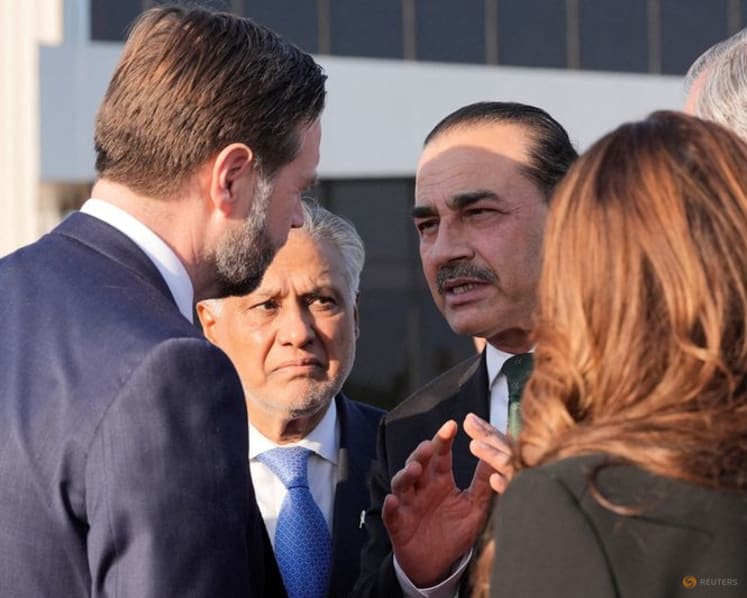
Negotiating teams from the US and Iran could return to Islamabad later this week, five sources told Reuters.
A US official also said there was continued engagement on trying to get to an agreement while Pakistani Prime Minister Shehbaz Sharif also said efforts were still underway.
"In case talks between the adversaries fail to bear fruit, even revisiting the March highs cannot be ruled out as the decline in global oil inventories might spill into the third quarter and beyond," Varga added.
IEA CUTS DEMAND FORECAST
The IEA said in its monthly report on Tuesday that demand for crude oil will likely see the biggest slump in the second quarter since the COVID-19 pandemic slammed the global economy in 2020.
Surging prices caused by the war in the Middle East will force many countries and industries to curb oil use, and "demand destruction will spread as scarcity and higher prices persist", the agency said.
It noted that its forecasts assume a "base case" of oil shipments resuming in May through the Strait of Hormuz.
This would lead to a decline in demand of 1.5 million bpd in the second quarter, "the sharpest since COVID-19 slashed fuel consumption", the IEA said.
Overall demand is forecast to have contracted by 800,000 bpd in March and is seen dropping by 2.3 million bpd in April.
But a "protracted case" if the strait remains closed could see oil demand plunge even further, the IEA said.
"In this case, energy markets and economies around the world need to brace for significant disruptions in the months to come," it warned.