Trump imposes 25% tariff on imports of some advanced computing chips
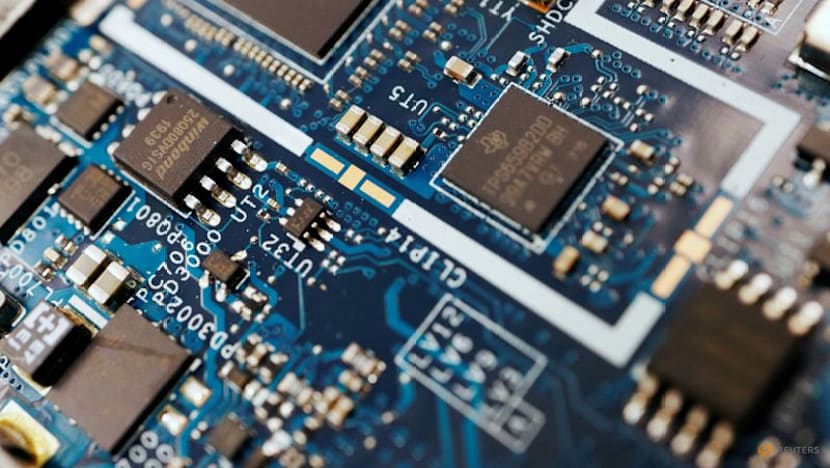
FILE PHOTO: Semiconductor chips are seen on a circuit board of a computer in this illustration picture taken February 25, 2022. REUTERS/Florence Lo/Illustration/File Photo
US President Donald Trump on Wednesday (Jan 14) imposed a 25 per cent tariff on certain advanced computing chips, such as the Nvidia H200 AI processor and a similar semiconductor from AMD called the MI325X, according to a fact sheet released by the White House.
The proclamation, which cited national security as a justification, is part of a broader effort to create incentives for chipmakers to produce more semiconductors in the US and decrease reliance on chip manufacturers in places like Taiwan.
“The United States currently fully manufactures only approximately 10 per cent of the chips it requires, making it heavily reliant on foreign supply chains. This dependence on foreign supply chains is a significant economic and national security risk,” the proclamation said.
US President Donald Trump has deployed an array of tariffs aimed at bolstering American manufacturing, announcing in September sweeping new import tariffs, including 100 per cent duties on branded drugs and 25 per cent levies on heavy-duty trucks, triggering fresh trade uncertainty after a period of relative calm.





In April, the Trump administration announced probes into imports of pharmaceuticals and semiconductors as part of a bid to impose tariffs on them, arguing that extensive reliance on their foreign production poses a national security threat.

While US companies like Nvidia, AMD and Intel design many of the most widely used chips, most are made overseas, many by Taiwan Semiconductor Manufacturing. TSMC did not immediately respond to a request for comment.
The tariff will be narrowly focused and will not apply to chips imported for US data centres - a huge consumer of AI chips - startups, non-data centre consumer applications, non-data centre civil industrial applications and US public sector applications.
Trump, in the near future, may also impose broader tariffs on imports of semiconductors and their derivative products to incentivise domestic manufacturing, according to the fact sheet.