







Commentary: Chinese electric vehicles made in the US - is that possible?
The fortress built by Washington to keep Chinese electric vehicles out is no longer looking so impregnable, says an analyst.
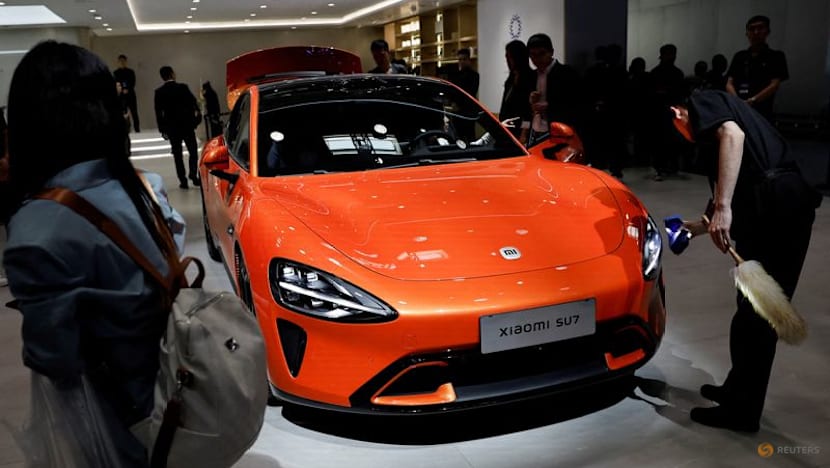
MELBOURNE: The fortress built by Washington to keep Chinese electric vehicles out is no longer looking so impregnable.
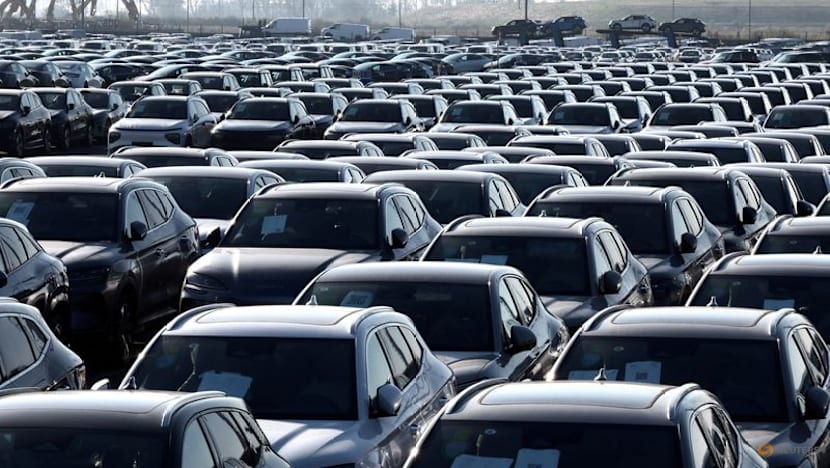
On many metrics, certainly scale and affordability, Chinese companies are well ahead of the rest when it comes to manufacturing electric vehicles (EVs). Yet the United States, long since overtaken by China as the world’s largest auto market, is far too sizeable to ignore for any global manufacturer. It remains the world’s biggest market for imported vehicles by a considerable margin.
The interconnection between geopolitics, national security and industrial policy has so far precluded Chinese EVs from meaningfully entering the US market. Tariffs of 100 per cent imposed during the Biden administration are a blunt instrument. The Chinese auto sector’s growing overcapacity and vicious price wars have seen companies, such as BYD, introduce budget models priced at around US$8,000 in China.
Towards the end of 2024, Washington released a now finalised draft rule on connected vehicles, providing surety where tariffs could not that Chinese EVs will effectively be banned from US roads.





Under the regulation, vehicles containing connectivity-enabling software and hardware provided by Chinese-owned entities will be prohibited from being sold in the United States by March this year and 2029, respectively. Vehicles with ever more ostentatious software-enabled features, such as on-board drones, are the clear direction of travel in the industry and particularly in China.
TANTALISING OPENING?
So a series of recent developments has offered a tantalising opening in North America - however uncertain - for Chinese EV companies. In mid-January, Canadian Prime Minister Mark Carney announced what some critics have acerbically termed a “canola for cars” deal that will allow nearly 50,000 Chinese EVs to enter the Canadian market annually at a preferential tariff rate.
Although President Donald Trump's tariffs have already partially disaggregated the previously tightly integrated North American auto market, Carney's deal still had a potent psychological resonance south of the border. Just days earlier in Detroit, the cradle of the once world-beating American auto industry, Trump suggested that the United States should “Let China come in”. Trump made similar suggestions twice in 2024.
This is unsurprising for a president whose seminal views on economics seem to have been formed during the 1980s when Washington was exercised by the threat of Japanese exports, including autos. The mythologised portrayal of tariffs as the decisive factor that forced Japan Inc to manufacture cars in the United States is a little tendentious. Still, tariffs undoubtedly provided America with leverage.
MADE IN US?
The auto industry is now taking seriously the prospect of US policy being recalibrated to allow Chinese automakers to open factories in the United States.
Geely, which outsold China’s market leader BYD in total auto sales in January, is one company to watch. Speaking at a Las Vegas auto show last month, a company official declared that Geely would announce plans to enter the US market within 2 to 3 years.
The specific but elliptical announcement omitted many key details. There is speculation that Geely, which owns Volvo and Polestar, could build EVs at an underutilised Volvo factory in South Carolina. How this would circumvent the connected vehicles ban remains unclear. As the rules are currently written, many suspect that Volvo would need to sever ties with Geely to comply.
The most intriguing development has come from Ford. At the end of January, Ford reportedly held preliminary discussions with Xiaomi to set up a US joint venture. Xiaomi, better known as a smartphone company, did in 2024 what Apple tried and failed to do in successfully pivoting towards EVs. Both companies have vehemently denied the reports.
Certainly, Ford has been relatively forward-leaning in seeking to integrate Chinese technology. The company, whose CEO Jim Farley personally drives a Xiaomi EV, has partnered with battery giant CATL to license and manufacture lower-cost lithium iron phosphate batteries in Michigan. This partnership was recently extended to include energy storage batteries.
The reaction to Ford’s Chinese tie-ups, both confirmed and alleged, gives an insight into the challenges facing aspirant Chinese entrants.
Responding to reports of the Xiaomi-Ford joint venture, the Republican chair of the House China committee John Moolenaar warned that the deal would be one that “only Xi Jinping could love”. In reality, Beijing has progressively tightened export controls to prevent technology leakage and has been wary of Chinese automakers building plants overseas. However, this does not mean that allowing Chinese investment would be devoid of risk - even if espionage and remote inference concerns involving connected vehicles were addressed.
The US market has acted as a redoubt of sorts for US, European, Japanese and Korean automakers increasingly struggling to compete with Chinese EV manufacturers’ formidable mix of speed, economies of scale, tech nous and enduring state largesse.
It will take time for Chinese automakers to establish themselves in the United States and cater to idiosyncratic US tastes. EVs represented less than 8 per cent of new US auto sales last year. Still, it is an open question whether giving Chinese automakers an American foothold is in the interests of the United States and its allies.
In the short term, much will depend on Trump and whether he is minded to persuade his unwieldy MAGA coalition to let the dragon in.
Henry Storey is Manager of Projects, Research and Analysis at political risk consultancy Dragoman, and was formerly an editor at Foreign Brief and Young Australians in International Affairs. This commentary first appeared on Lowy Institute's blog, The Interpreter.






