Commentary: The maritime shipping industry is finally returning to normal
With industry giant AP Moller-Maersk planning to resume trips through the Suez Canal, other carriers will likely follow its lead, says Thomas Black for Bloomberg Opinion.
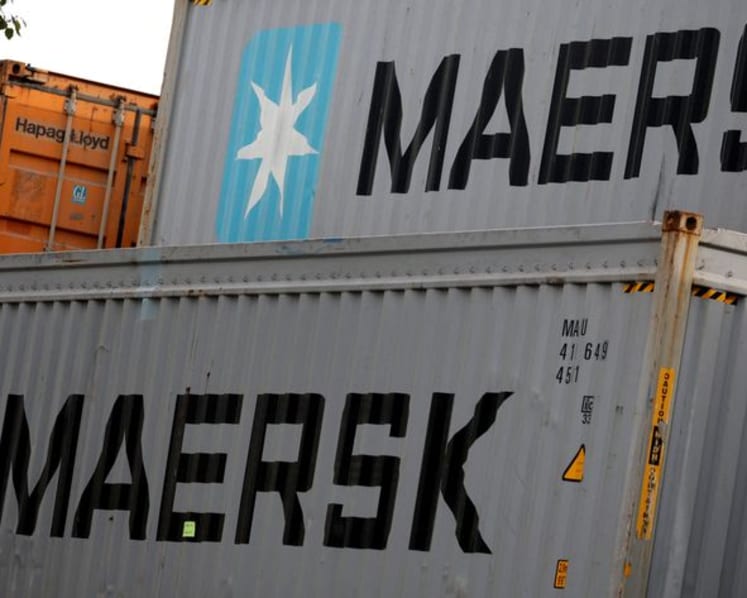
Maersk's logo is seen in stored containers at Zona Franca in Barcelona, Spain, November 3, 2022. (REUTERS/Albert Gea)
DALLAS, Texas: The maritime shipping industry has taken a big step toward returning to normal after more than six years of disruption - first from the pandemic, then from Middle East violence and finally from the United States’ tariff war.
AP Moller-Maersk, the Danish ocean carrier giant, said in a Jan 15 statement that it plans to resume trips through the Suez Canal after suspending use of this vital shortcut between Europe and Asia at the end of 2023 because of threats to commercial ships.
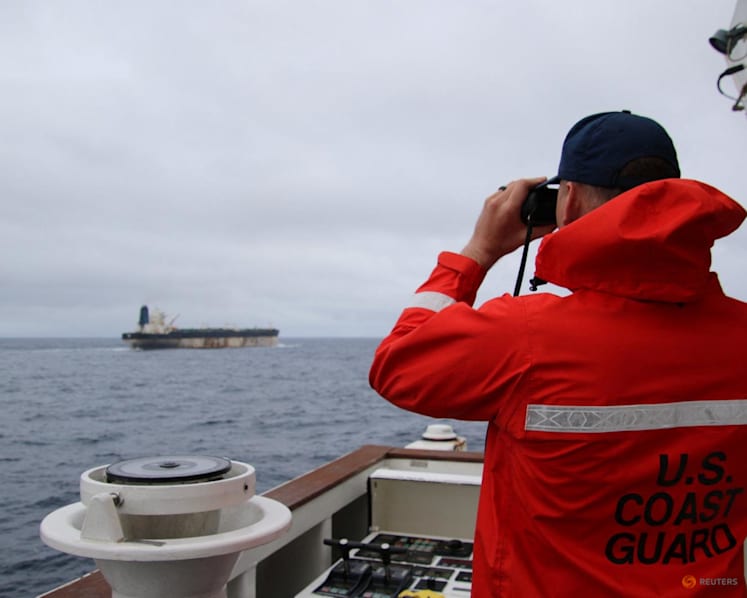
Houthi rebels - based in Yemen and backed by Iran - began using rockets, drones and small boats to harass vessels plying the narrow strait that provides access to the Red Sea, which is the gateway to the 193km canal that connects to the Mediterranean Sea. Most carriers suspended trips through the canal and instead made the longer, more treacherous journey around Africa’s Cape of Good Hope to keep goods moving.
Cargo traversing the canal tumbled by almost two-thirds to 458 million tonnes in 2024 and dropped an additional 8 per cent in 2025. The longer journey around Africa reduced carrier capacity by about 10 per cent, which helped shore up shipping rates that had sunk in 2023 to a seven-year low after a record surge during the pandemic.





GOOD NEWS?
Maersk is a market leader, and other carriers will likely follow its lead to revert to the shortest route between Asia and Europe and India and the US East Coast. CMA CGM, the privately held French ocean carrier, already made its initial return voyage through the canal in December. This gradual return to the canal means the capacity will be added back and comes when new shipping supply is outpacing demand.
This is good news for shippers because carrier rates will be kept in check. It’s also good news for Egypt, which operates the Suez Canal. The lower shipping volume traversing the desert has cost the country about US$800 million a month in lost revenue, Egyptian President Abdel Fattah al-Sisi said in March 2025.
It’s also good for the environment because of reduced fuel use to deliver the same amount of goods. For most, the sooner freight returns to normal routes, the better.
Carriers, though, will likely be slow to pivot back to the canal. The Middle East is still a hot spot. The US and Israel have crippled Iran and its proxies in Lebanon and Yemen with airstrikes but haven’t eliminated the potential threat. A wounded and cornered adversary can end up more unpredictable and dangerous.
Maersk started its return with its Middle East to US East Coast service, or MECL, and will continue to evaluate the situation. Safety of crew and cargo is a priority, the company said in its statement.

RISKS REMAIN
There’s another reason to return to the Suez Canal gradually. The extra capacity from the shorter voyages could suppress shipping rates as the industry absorbs a boom in shipbuilding.
There are orders for about 6,400 ships with deadweight capacity of 420 million tonnes, according to Clarkson, a marine shipping consultant. That’s almost 17 per cent of the global fleet’s capacity, the highest rate on new ships since early 2016. Ship orders have jumped 69 per cent since 2020.
At the same time, demand is shaky as companies and countries grapple with US tariffs and uncertainty around global trade. US imports of ocean containers is estimated to be down 0.4 per cent last year compared with 2024. Those US imports had increased 3.7 per cent in the first half of 2025, as shippers raced to bring in goods ahead of tariffs and then fell in the second half.
That weakness will continue during the first part of this year, according to the Global Port Tracker report that’s compiled by the National Retail Federation and Hackett Associates.
“As 2026 begins, we see a world increasingly focused on protecting domestic industries and addressing perceived trade imbalances,” Ben Hackett, founder of Hackett Associates, said in a statement. “This approach has raised questions about the future of free trade and international economic cooperation.”
Worldwide shipping demand is expected to grow 2.5 per cent to 3.5 per cent both this year and next, according to Niels Rasmussen, chief shipping analyst at the Baltic and International Maritime Council, a trade group.
Ship supply is forecast to expand 3 per cent this year and 3.5 per cent in 2027. Supply will be impacted by how many ships are retired, which has been well below average in recent years, Rasmussen said in a December presentation. Average vessel speed is expected to decline over the next two years, helping absorb capacity.
The last attack on a commercial ship by Houthi rebels was on the Dutch-flagged Minervagracht, which was significantly damaged; one crew member was killed. In November, the rebel group announced it had suspended attacks on commercial ships. Still, the Houthis are still around and are capable of resuming the threats even after devastating US and Israeli airstrikes.
“The return to the Suez Canal route is one of this year’s key influencing factors for capacity, freight rates, transit times and fuel consumption,” said Philip Damas, managing director of Drewry, the ocean freight consulting and research firm. Drewry is now publishing a Red Sea Diversion Tracker to help the industry follow canal’s progress.
For a world that craves a return to normalcy, the Suez Canal regaining its pre-pandemic ship traffic would be a great sign.