







Commentary: Why US$70 should be the most worrying number for the LNG market
US$70 is the tipping point where liquefied natural gas (LNG) will get squeezed out by renewable alternatives, says David Fickling for Bloomberg Opinion.
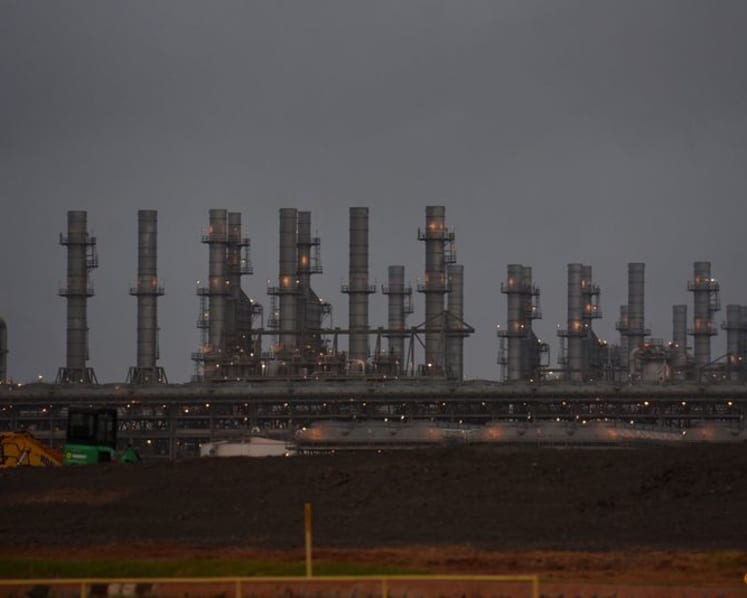
A general view of the Cheniere Texas LNG facility in Portland, Texas, U.S., June 13, 2022. REUTERS/Callaghan O'Hare
SYDNEY: Here’s some back-of-the-napkin math to show why liquefied natural gas (LNG) producers should be fearful for their future, even if the crisis in the Strait of Hormuz hadn’t just knocked a fifth of global supplies offline.
Take the market price of LNG in megawatt-hours (currently about US$50 in Asia), double it, then add US$4 or so for operating expenditures. That’s a decent proxy for the costs of electricity from an existing gas generator. If your answer is above US$70, then in most of the world, gas is about to get squeezed out by renewable alternatives.
The shock will hit hardest in Asia. It’s the region Shell expects to be central to LNG demand in the coming decades, as domestic fields in Bangladesh, India, Pakistan, the Philippines, Thailand and Vietnam run dry. But it’s also baked with sunlight, plugged in to China’s clean-tech supply chains, and faced with gas import bills growing fast enough to undermine fragile currencies.
To understand why this is such a big deal right now, it’s worth thinking about the shape of the fossil-power market.





Almost all the carbon currently emitted from the grid comes from facilities built years ago. Roughly 98 per cent of new generation connected since 2022 has been renewable. All the smokestacks that went live before that date, however, continue to belch pollution.
This is one reason why all the headlines about falling prices for wind and solar haven’t yet translated into a big fall in emissions: New generation may be cheaper, but most of the CO2 is coming from plants that have been running for years. A fully-depreciated gas plant doesn’t care if new renewables are cheap. So long as the cost of clean energy doesn’t fall below the far smaller sums it spends on fuel and maintenance, it’s winning.
FALLING COSTS OF CLEAN ENERGY
That’s about to change, however - and the tipping point is US$70. While costs of generation vary by country and over time, the number is a decent approximation for the price of LNG-fired electricity from an existing plant, almost everywhere. It’s also the price at which a new breed of hybrid renewable generators, combining batteries with solar panels, wind turbines or both, deliver dependable electricity.
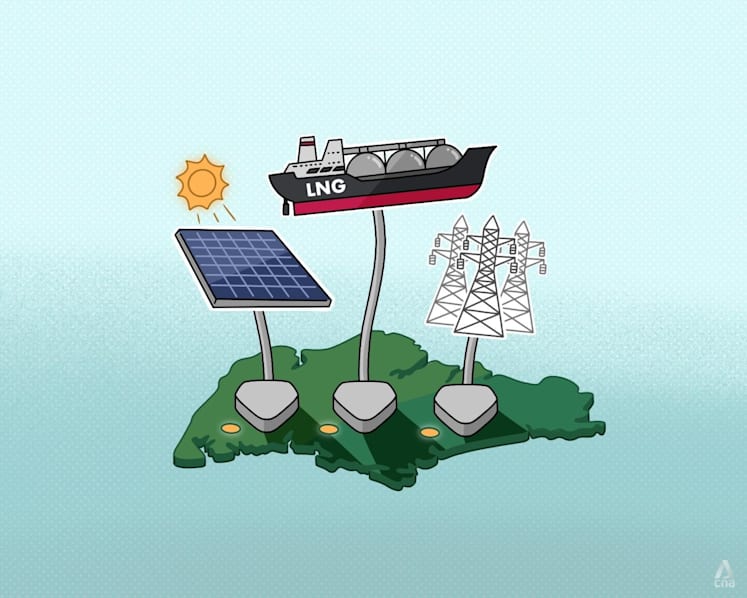

In China, India, Brazil and Texas, a solar farm connected to a four-hour battery can already provide stable power to a data center for between US$75 per megawatt-hour (MWh) and US$79 per MWh, according to BloombergNEF.
In places with plenty of sunlight and wind, renewables-plus-storage costs between US$54 per MWh and US$82 per MWh and will guarantee power 95 per cent of the time, the International Renewable Energy Agency, or IRENA, wrote last week.
We’re already seeing deals being signed at even lower prices.
In India, the Morena solar-storage project south of Agra is promising to deliver reliable daytime and peak-hour electricity for just 2,700 rupees (US$29) per MWh, less than half the cost of the cheapest LNG power. Further auctions by India’s state solar company over the past few years have awarded contracts to companies bidding around US$52 per MWh and US$66 per MWh for solar with storage.
Those economics are brutal. When it’s cheaper to build an entire new clean energy plant delivering on-demand power than to just keep your existing facility running, the role of gas is reduced to back-up and overnight generation.
A COMING GLUT OF LNG
Things aren’t getting better any time soon.
A few months ago, analysts were warning of a coming glut of LNG that might push prices lower in the second half of this decade. Those forecasts are going to have to be torn up, given the war damage to export facilities in Qatar. Renewables-plus-storage costs, meanwhile, will fall another 30 per cent by 2030, according to IRENA. At those levels, even the cheapest LNG in the world will struggle to compete.
The shift will be sharpest in developing Asia. In Europe, gas is already being displaced as fast as renewables can supplant it. Generation fell by a fifth between 2022 and 2024. The US and Middle East, meanwhile, will be more immune. Gas from a pipeline costs between a third and a fifth of what you’d pay for LNG, so existing plants will remain competitive for a good while yet.
For Asia, however, the events in the Middle East over the past few months have highlighted what a fickle power source gas really is. When you’re sweating through power cuts in the middle of a heatwave because you can’t get hold of gas shipments, LNG’s claims to dependability sound like a bad joke.
LNG may find a way to soldier on as a raw material for the chemicals industry or fuel for trucks, ships, and domestic boilers, but prospects for the roughly 40 per cent that goes into power generation look bleak.
The world’s gas producers have spent the past few years betting that LNG was an indispensable commodity. Even before the war in Iran blew up that argument, the relentlessly falling costs of clean power had rendered it obsolete.





