Commentary: How do we escape the air-conditioning trap?
Expecting people to give up air-conditioning is unrealistic, which means we must find ways to ensure that cooling our spaces does not warm the planet further, says NUS’ Khoo Teng Chye.
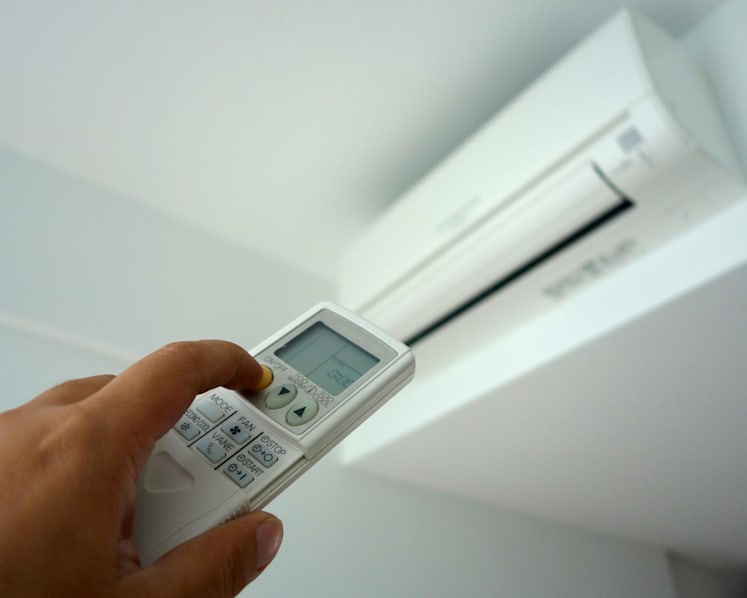
A hand using a remote controller to turn on an air conditioning unit. (Photo: iStock/tang90246)

This audio is generated by an AI tool.


SINGAPORE: Each time a sweltering day comes around, the most common response is to crank up the air-conditioner. But what is perhaps the easiest and most convenient way to beat the heat has increasingly been referred to as a climate felon.
For one, air-conditioners are energy guzzlers and emitters of greenhouse gases responsible for about four per cent of global emissions. This might go up further given how global demand for air-conditioning could more than triple by 2050, according to a United Nations Environment Programme report published last November.
Unfortunately, this forms the irony of an air-conditioning trap – warmer weather leads to higher use of air-conditioners, which in turn leads to higher temperatures. With the need for climate adaptation becoming ever more urgent, change is necessary.
WORK WITH NATURE, NOT AGAINST IT
A conventional air-conditioning system works by pulling warm air from a room, passes it over cold evaporator coils filled with refrigerant that absorbs the heat and expels it outdoors with the condensers at the aircon ledge.





In cities like Singapore, this exacerbates the urban heat island effect. Studies have shown that the temperature difference in built-up and more rural areas here can be as high as 7 degrees Celsius.
But instead of shielding ourselves from our natural climate, what if we find ways to harness it? This is where the design of a building becomes critical, especially in Singapore where buildings account for 20 per cent of the country’s carbon emissions and much of that coming from air-conditioning.
By being strategic about aspects, such as orientation and natural ventilation, we can cool a building with minimal mechanical systems, or at least reduce their intensity. This way, much less energy is required and carbon emissions can be reduced significantly.
Take the National University of Singapore’s College of Design and Engineering, for instance, where two buildings were remodelled with an extended west facade that screens the buildings from heat gain.
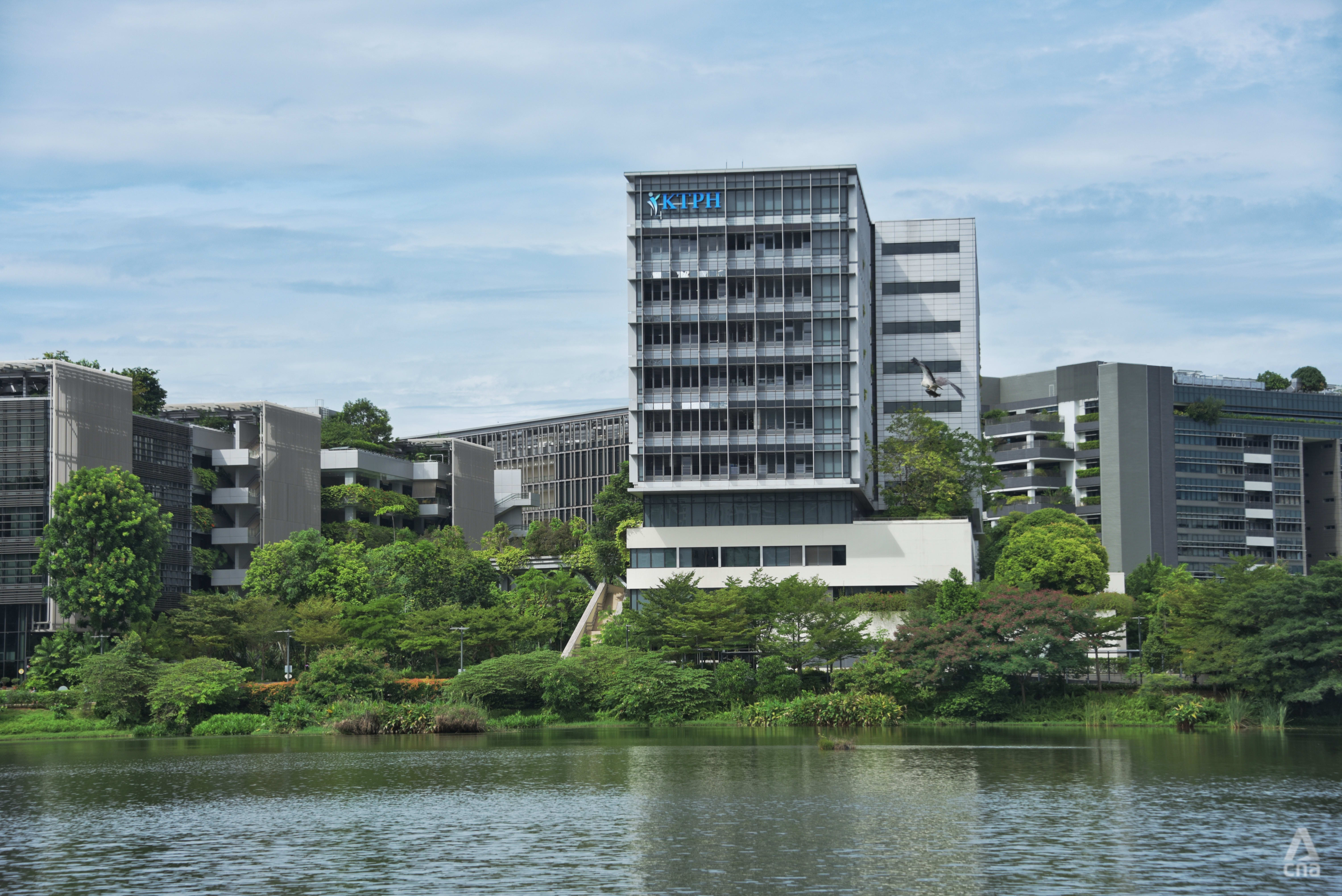
Then there is CapitaGreen, an office building with a cool void at its centre core that channels fresh cool air from the rooftop to the office floors, and Khoo Teck Puat Hospital, whose V-shaped building design captures prevailing breezes from the nearby Yishun pond to naturally ventilate the wards.
These examples show that by building smarter, we can take advantage of our natural climate to cool passively, even in the tropics.
OVERHAULING A CENTURY-OLD TECHNOLOGY
But design alone cannot solve the problem – technology must evolve too. While its invention predates both the first aeroplane and the first public radio broadcast, the underlying technology of air-conditioning has not changed much since 1902.
To be sure, there have been improvements, such as the use of more eco-friendly refrigerants. But we need fundamental, not incremental, change.
Singapore has shown it is capable of this through the centralised cooling system deployed at the new neighbourhood of Tengah.
This new system uses chilled water piped from centralised chillers on the roof to remove heat. Once the chilled water has done its job, the resultant warm water is circulated back to the chiller to be cooled, and the process starts again. Not only does it minimise the use of harmful refrigerants, it is also said to be up to 30 per cent more energy efficient. Lower greenhouse gas emissions also make it a more environmentally friendly alternative.
Without outdoor condensers – the mainstay of conventional air-conditioning – this system also offers lower upfront installation costs, a hassle-free setup and easier maintenance in the long term. Residents are also spared from the noise and excess heat that outdoor condensers produce.
Such a technology has been deployed in commercial buildings. For instance, in Marina Bay, a district cooling network currently serves 24 developments – a number that is set to increase to 28 by 2027, and up to 50 by 2030.
Research is also ongoing in other parts of the world to come up with more eco-friendly air-conditioning.
At Harvard, for example, scientists have developed an evaporative-cooling-based system that also uses water instead of refrigerants. Its multi-chambered ceramic heat exchange unit is coated with a proprietary material that isolates moisture from air as it is cooled, reducing the temperature without adding humidity to the air.
BREAKING THE STATUS QUO
But no matter how groundbreaking a technology, its success still hinges on people and their willingness to give it a shot.
As we all know, habits are hard to break. For years, the National Environment Agency has recommended that 25°C is the optimal temperature for air-conditioning here, yet it is not uncommon to encounter freezing offices, malls and so on.
Last year, a new Go 25 Movement was launched by the Singapore Green Building Council and the Ministry of Sustainability and the Environment to urge home, business and building owners to turn up their thermostats.
One can only imagine how much more it will take to convince building owners to incorporate passive cooling designs or innovative cooling systems in their buildings. We will also need the buy-in of stakeholders, such as tenants and residents, who choose to embrace new technologies because they believe in sustainability.
It will not be easy. Novel technologies will also come with their own teething issues, as we have seen in Tengah where some residents complained of problems including condensation and leaks. These have been overcome and user feedback is now generally positive.
To expect people to give up air-conditioning in a warming world is unrealistic. This means that we must find better ways to cool, such that turning on the air-conditioning does not warm the planet further.
Khoo Teng Chye is a Practice Professor with the College of Design and Engineering at the National University of Singapore (NUS) and Senior Advisor of NUS Cities. He was formerly Chief Executive Officer and Chief Planner of the Urban Redevelopment Authority.