







Commentary: Stop mourning strata-titled malls and start ensuring their survival
Singapore does not need more “Grade A” malls. Instead, we need “Grade A” ideas to strategically adapt “Grade B” spaces like strata-titled malls, says SUTD's Calvin Chua.
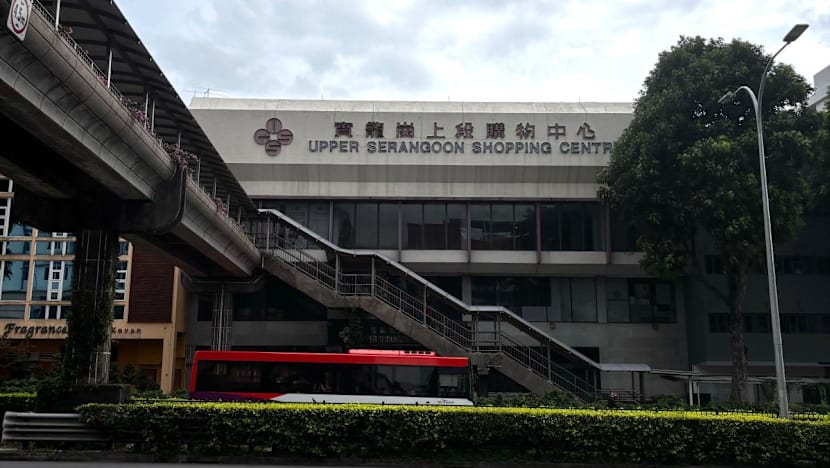
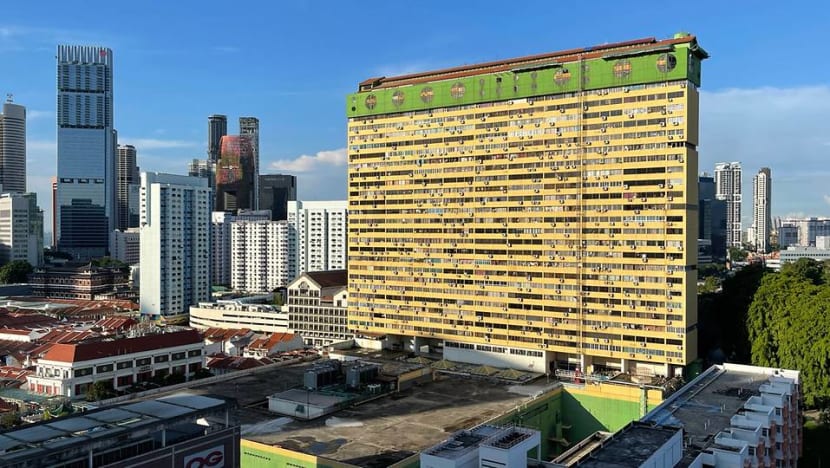
File photo of Upper Serangoon Shopping Centre, a freehold strata-titled development on Upper Serangoon Road. (Photo: CNA/Tang See Kit)

This audio is generated by an AI tool.


SINGAPORE: Singapore’s ageing strata-titled malls usually make the news for familiar reasons – stalled lifts and broken escalators, sparse footfall and perhaps a few questionable establishments – painting a dismal picture of a property in decline.
Attention also falls on these malls, once grand dames of Singapore’s retail scene, when there are en bloc plans. From there, they typically face one of three fates.
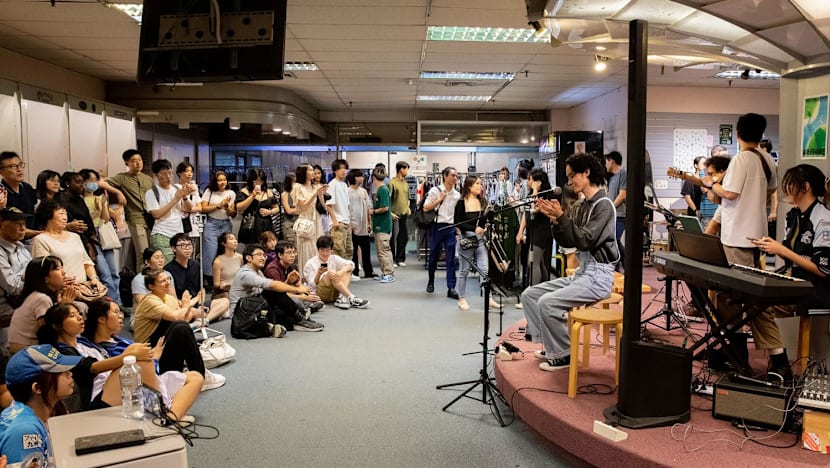
The first is what I call a “funeral party”. This was the case for Peace Centre whose demolition following a successful collective sale in 2021 was postponed, allowing it to see a final burst of life in the form of a vibrant hub for local artists and pop-ups until early-2024. Such creative activations, however, remain the exception – a temporary stay of execution before the wrecking ball arrives.
Another scenario is reserved for landmarks like Golden Mile Complex, where the building’s shell is conserved. Even then, a paradox exists: The structure is saved, but the original community has been displaced.
The third, and most common, fate is limbo. Collective sales don’t always work out, even after multiple bids like for Upper Serangoon Shopping Centre and Singapore Shopping Centre. These failed attempts often leave mall owners in a stalemate – unwilling to invest further in hope of a future sale, yet unable to sell as the building’s condition continues to deteriorate.
These three fates reveal a broader reality: In our pursuit of shiny new “Grade A” properties, we are neglecting some of these older buildings which may be “Grade B” in real estate terms but possess heritage and cultural value.
If we aspire to build a culturally vibrant and community-oriented city, we must preserve the very spaces that make that future possible.
ESSENTIAL THIRD SPACES
To the average shopper, a mall like Beauty World Centre might appear boring and dated. But for its long-time tenants and patrons, it is a familiar community anchor. It serves as a vital third space - a sociological term referring to a neutral ground for social life that exists outside the pressures of home and the productivity of work.
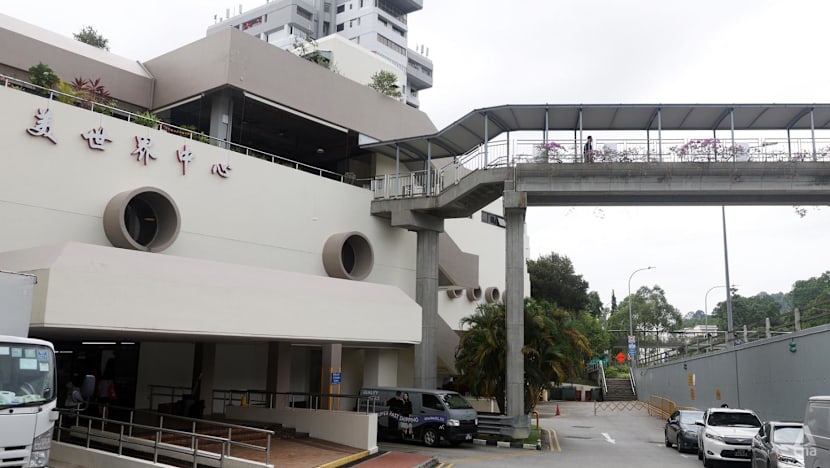
This is best embodied by the centenarian Madam Sie who went viral on social media in 2024 after being spotted managing a provision shop at Beauty World. She prefers doing so, as staying at home was boring, according to interviews with her son who owns the shop.
Alongside other long-time shop owners like Uncle Yap, who has managed a wedding decoration shop there for 50 years and is a familiar face to many patrons including myself, they form a social fabric that new REIT-owned malls, with their turnover rates, cannot replicate.
Hence, when we lose these malls, we do not just lose real estate; we lose the “living rooms” of our silver generation and our heritage businesses.
We also lose the unique experience that only strata-titled malls can offer, such as those that developed a niche positioning organically over the years like Queensway Shopping Centre and Sim Lim Square.
MOVING BEYOND THE WRECKING BALL
To move away from the teardown-and-start-over model, we must stop viewing strata-titled malls simply with nostalgia or tradable pieces of real estate, and start thinking of them as infrastructure to be strategically adapted. Government policies can help to nudge developers and other actors in this direction.
1. Fractional adaptation
The impasse of multiple failed collective sales highlights the need for a “fractional adaptation” approach. Instead of the all-or-nothing en bloc model, we should incentivise developers to buy into a building partially.
By strategically allowing for partial collective sales and offering adaptive reuse incentives – similar to those offered to the potential new owners of Golden Mile Tower last year during a collective sale exercise to nudge the conservation of the iconic cinema block – we can break the monolithic scale of the “mega-block” into independently-managed “micro cultural nodes”.
This will allow more flexible responses to changing retail demands. It may even encourage the creation of spaces with organic human-scale qualities, like KOTE in Seoul, Sala Saneha in Bangkok and others in the region.
Adaptive reuse, even if partial, also addresses the massive environmental cost of embodied carbon, as retrofitting an existing building saves a carbon debt that new buildings take decades to repay.
But, even if the structure of a mall is preserved, it might not house the old tenants and their businesses anymore. So we should complement this with a heritage quota, like the one proposed by non-profit heritage group Docomomo Singapore last year in its position paper on the potential conservation of People’s Park Complex. This can be a quota to retain a percentage of existing businesses, ensuring that the Madam Sies and Uncle Yaps of our country are not evicted and our social fabric can be preserved.
2. Turning the “funeral party” into an interim incubator
The activation of Peace Centre was a creative success, but it lacked the involvement of the building’s original tenants and owners.
In this case, efforts such as the Enterprise Singapore’s Sprout@AMK – a 12-month initiative helping heartland enterprises testbed innovative ideas – may be refined for strata-titled malls that have clinched a successful collective sale.
For existing and even new tenants in search of temporary spaces, having such a programme can serve as a transitional incubator for new business ideas and community services. For developers, they can use this time to finalise designs and approvals, sandbox new retail concepts and technology, while scouting for potential tenant mix for its new development from the pool of existing tenants.
3. Integration into urban design strategies
Urban design guidelines can serve as a catalyst for adaptive reuse, particularly in strata mall clusters such as Beauty World and along Jalan Sultan.
These clusters possess character but often suffer from a lack of integration with their surroundings. Urban design can reimagine these clusters as cohesive precincts, alongside the offering of plot ratio or floor area incentives in exchange for meaningful public realm contributions, such as the carving out of public plazas or the improvement of through-block pedestrian connectivity.
By having better urban connections that weave older buildings into the surrounding neighbourhood fabric, we can influence the economic viability of these malls from the outside in.
Singapore does not need more “Grade A” malls; what we need are “Grade A” ideas to enliven “Grade B” spaces that allow our city to breathe and age with dignity.
Calvin Chua is Associate Professor of Practice at the Singapore University of Technology and Design and founder of research-led design firm Spatial Anatomy.




