Commentary: The heat is on Thailand to not just muddle through
Problems are piling up for Thailand's once booming economy and decision-makers need to rise to the occasion, says Daniel Moss for Bloomberg Opinion.
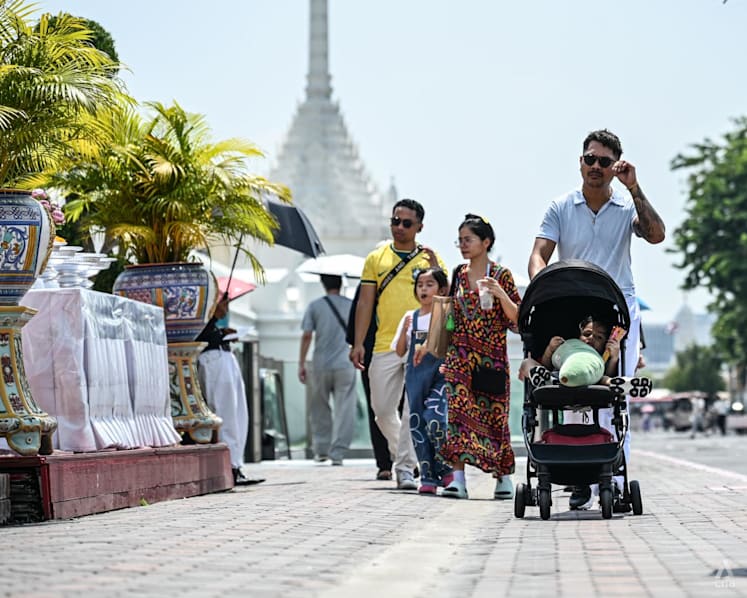
Tourism arrivals in Thailand have been dropping, with 2026 projected to have fewer arrivals compared to last year. (Photo: CNA/Jarupat Karunyaprasit)
SINGAPORE: Thailand’s economy, one of Asia’s brightest stars over a generation ago, has congestion issues.
Problems are piling up with very poor timing, made worse by the strains on global business from the Iran war. Decision-makers, already beset by disappointing growth, enormous demographic challenges and a tourism industry that’s come down to earth, need to rise to the occasion.
Failure risks confining one of Southeast Asia’s anchor nations to the ranks of permanent also-rans, a place in the sun that’s fun to visit and will enjoy good years - when world conditions are favourable. But not one strong enough to wrestle down long-term challenges, let alone return to anything like the frothy heights that preceded the late-1990s Asian financial collapse, and never reached again.
The country is among the region’s most exposed to the energy shock that’s followed the Iran conflict. The crucial tourism industry has suffered a blow, while a severe heatwave is testing rules aimed at cutting down electricity used for air-conditioning.





A pronounced economic slowdown looms, perhaps even recession. Interest-rate cuts, which the central bank has never really taken a shine to, are out of the question. Government spending is constrained by high levels of debt. And the currency is among the worst performers in Asia - and emerging markets. The baht has lost about 4 per cent against the dollar since the war began.
CHALLENGES AHEAD
Bangkok is putting a brave face on this difficult situation.
At least the Bank of Thailand won’t have to deal with incessant calls to stave off deflation. The conflict has provided a temporary fix to that problem. Inflation will climb from less than nothing to 3 per cent this year, a level that policymakers have long desired but struggled to achieve in less threatening times. Yet it’s a terrible way to meet an important target.
The central bank made its own problems. Policy was too conservative for too long. Inflation has been uncomfortably low for years, a phenomenon that’s rare in Southeast Asia and more closely associated with Japan during the lost decades and, more recently, China.
Calls from successive governments and business for significantly lower rates to perk up the economy, especially after the post-pandemic surge dissipated, were rebuffed as a threat to the bank’s independence. Only in the months before the war broke out, under a new governor, did officials begin to show urgency.
Growth will also be hit. Gross domestic product (GDP) may even have shrunk in the first quarter, and there’s likely worse to come.
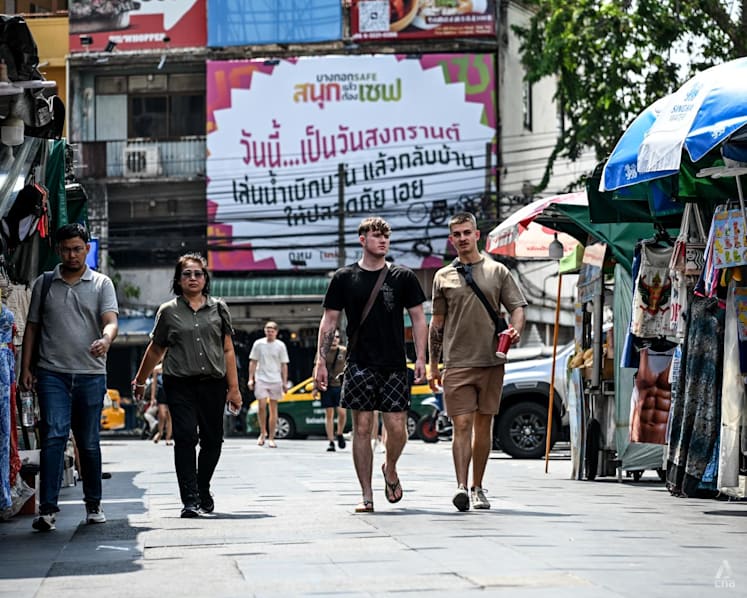
Tourism, long a crutch that the kingdom could fall back upon in lean years, is hurting and never really recovered from the pandemic. If the war lasts six months, receipts stand to fall by 10 per cent, reckons the government, and millions fewer will visit than forecast. Bars and clubs in the capital’s normally buzzing district of Sukhumvit were fairly quiet last weekend, with reservations at rooftop watering holes easy to come by, even for a large group.
To make matters worse, Thailand is one of the countries hardest hit by a severe heatwave scorching the southern reaches of Asia. On Saturday (May 2), the temperature in downtown Bangkok soared, which made for heavy going on the cricket field for my team visiting from Singapore.
One sign showed the mercury at 45 degrees. Authorities have urged the public to skip many outdoor activities. They’ve also taken steps to reduce power bills, ordering public buildings to ease up on air-conditioning and encouraging people to work from home - and in shirt sleeves and clothes made from light material. In practice, this is very hard to get right. Air-conditioning in hotels works overtime, even when you want the room just a little above frigid.
Domestic gas production, which was promising in the 1970s and 80s, has stagnated, and the country has been slow to embrace renewable energy. It’s high time that Thailand looked to the sun for more power.
A BRIGHT SPOT?
One bright spot is a relatively placid political environment - by Thai standards. Civilian governments tend to be short-lived, replaced periodically by a military coup. The generals then ease up on control, and the cycle repeats. But the current cabinet can go some distance.
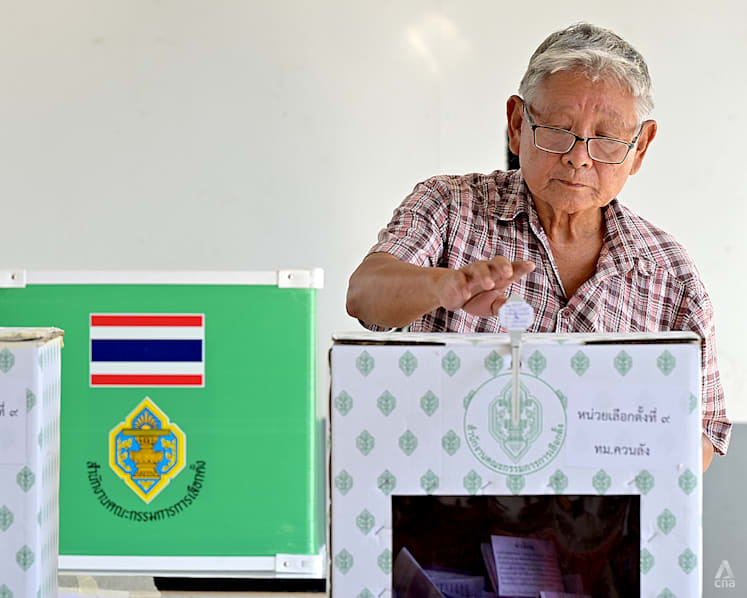
The conservative bloc led by Prime Minister Anutin Charnvirakul won a decisive majority in parliamentary elections during February, offering some assurance to investors. Divisions remain, however. Reformist groups described their defeat as a setback for democracy, and a top court is hearing a complaint that the use of bar and QR codes on ballot papers violates the constitution.
There is scope for fiscal stimulus. The finance minister, Ekniti Nitithanprapas, is working on a package and is open to lifting the ceiling on public debt. “If we don’t do anything - if we cannot create growth - then public debt to GDP will be rising anyway,” he said on a visit to Washington a few weeks ago.
The temptation to muddle through will be great, and with the exception of heavyweights like China, there isn’t much that emerging markets can do to push against global forces. But Thailand does have some agency. The central bank should make clear that, when the energy shock abates, it won’t allow deflation to creep back.
Politicians should also explain how they’ll reconcile high levels of debt with the demands of the rapidly ageing population; the birthrate is one of the lowest in Asia. This all might be too much to ask. First, let’s get over this hump.