Bangkok set for region-topping temperatures in years to come: Study
Experts say the Thai capital must act now or face a much hotter future, with projections of up to 120 extreme heat days a year by 2050.
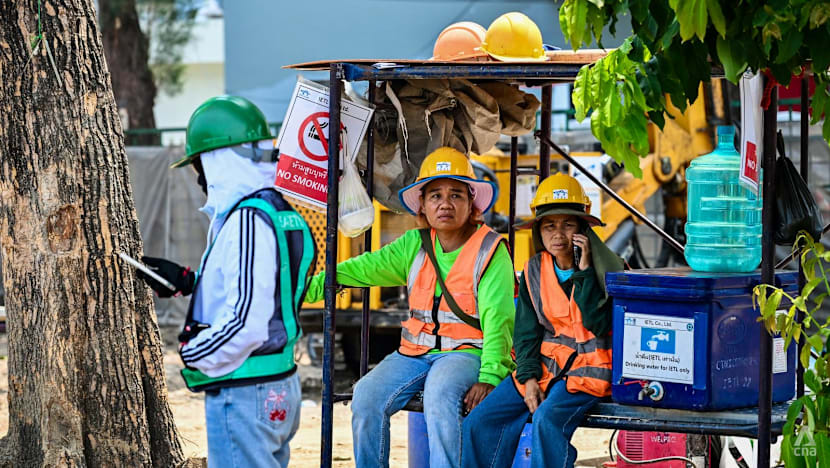
Bangkok has some 1.3 million outdoor workers who are exposed to rising heat. (Photo: CNA/Jarupat Karunyaprasit)

This audio is generated by an AI tool.


BANGKOK: With the oppressive summer sun beating down on Bangkok’s urban core, heat rippling across the concrete, a small group of people seek refuge inside a makeshift “cooling centre”.
Air conditioning is blasting inside a public library in Din Daeng district, where over the past few weeks, groups of around 20 people at a time - both young and old - have been sheltering from the hot streets.
“The weather has been extremely hot, so I started coming here since early March and now come almost every day. I like sitting and reading in the cool air,” said Jarat Soisomklang, an 87-year-old local resident.
Nearby, 12-year-old Natthawat Jaroenmuang is playing games with a group of friends, and says he comes here because it is too hot at his house.





“We have air conditioning at home, but we only turn it on at night,” he said.
Bangkok endured at least 19 consecutive days of “dangerous” heat index levels - how hot the human body feels, considering air temperature and humidity - through mid-April, according to city authorities.
These centres have become an important way for vulnerable residents to adapt.
There are 313 designated around the capital, located in schools, vocational colleges, public health service centres, district offices and cultural centre service points. There are also a further 279 outdoor cooling points, places with shade, greenery, water and seating.
Over the past month, more than 120,000 people have used these facilities, according to city authorities. They are intentionally located near densely populated communities, and over 80 per cent of users are able to walk from their homes to the centres, according to the Bangkok Metropolitan Administration (BMA).
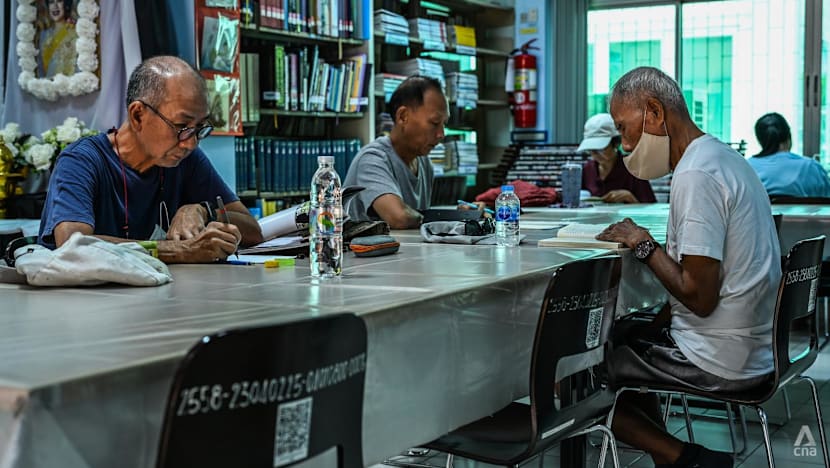
Locals and visitors alike are encouraged to step inside to cool down during the peak months of Bangkok’s hot season, which typically runs from March to May.
Experts say these types of immediate measures, alongside others such as drinking water spots, heat-level-based alerts and heat safety standards for outdoor workers, are critical in a fast-warming city.
“The BMA deserves particular credit for treating heat as a disaster risk rather than solely an environmental or seasonal issue,” said Peeranan Towashiraporn, director of the Asian Disaster Preparedness Center (ADPC), a Bangkok-based non-profit working to reduce the impact of disasters and build resilience across Asia and the Pacific.
“Cooling centres and heat alerts are essential - they save lives during extreme heat events, and we fully support expanding them.”
But experts also warn that these measures are only part of the response needed as heat risks continue to escalate.
A report released this month by the ASEAN Centre for Energy (ACE), a Jakarta-based regional intergovernmental organisation that supports energy cooperation among the 10 ASEAN member states, found that extreme heat is becoming a structural, long-term crisis in ASEAN cities,
It forecast significantly higher average temperatures and a rise in the number of extreme heat days.

Over the long term too, major cities across the region face extreme heat becoming normal.
“The impact of rapid urbanisation and climate change is creating very unbearable heat,” said Irma Ramadan, a senior officer at ACE and a contributing author to the report.
Bangkok sits at the top end of exposure, both in temperature and intensity.
By 2050, it is facing up to 120 extreme heat days - where the temperature rises above 35°C - annually. That is nearly triple the current levels of around 45 days.
Daily maximum surface temperatures could reach 38.1°C by mid century, the report found, compared to 33.3°C in 2000.
Other major cities could face a similar fate, with Jakarta, Manila, Ho Chi Minh City and Kuala Lumpur all looking at a temperature increase of at least 4.5°C compared to 2000.
Singapore’s average maximum is projected to be 36.1°C by mid century and its number of days above 35°C could more than triple from 25 currently to 85 each year.
Heatwaves across the region are already increasing from two to three events per year at the beginning of the century, to eight to 12 events a year recently, lasting up to three to four weeks at a time, the report found.
By 2050, a significant increase in extreme heat days could trigger public health emergencies, place mounting pressure on critical infrastructure such as energy and water systems, and disrupt economic productivity, particularly for at-risk populations, Peeranan said.
“It is an escalating disaster risk with far-reaching implications,” he said. “Extreme heat will reshape how people live, work and move through the city.”
Because the ACE analysis focuses on temperature alone, it may also understate the true risk in cities like Bangkok, where humidity can push conditions into dangerous territory for human health.
LACK OF GREEN, TOO MUCH CONCRETE
For Bangkok, this year’s weather conditions are similar to 2024, but authorities are concerned about prolonged heat due to the El Niño phenomenon, characterised by the ocean surface warming in the central and eastern tropical Pacific Ocean.
“The current situation is still considered normal, but we are closely monitoring how extreme the heat could become,” said Pornphrom Vikitsreth, the BMA’s chief sustainability adviser.
While current heat is not driven by El Niño, the climate pattern is expected to develop in the coming months, likely intensifying heat and dryness across the region, according to experts and institutions.
The National Oceanic and Atmospheric Administration noted around a 60 per cent probability that it will occur mid-year, persisting until at least the end of 2026.
Thailand’s own Climate Change and Environment Department warned that the country may face the effects of a “super El Niño”, that could last for 18 months.
El Niño typically acts as a multiplier, pushing temperatures higher and extending the duration of heatwaves, heaping pressure on urban populations, agriculture and water supplies.
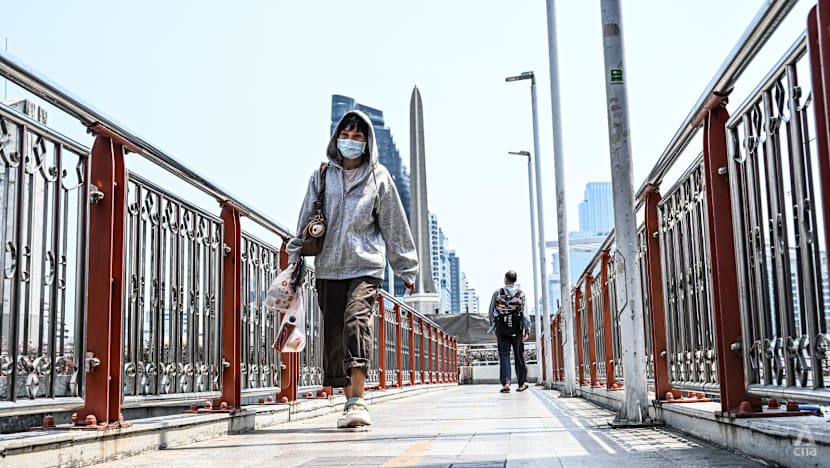
El Niño aside, multiple compounding factors are driving up temperatures in cities.
Decades of development have replaced natural landscapes with concrete and asphalt, creating what is known as the urban heat island effect.
These surfaces trap heat during the day and release it slowly at night, keeping temperatures elevated even after sunset. On top of this, global warming is pushing baseline temperatures higher and making extreme heat events more frequent and intense.
While the risks of extreme heat are most visible during the day, experts warn that nights can be just as dangerous. When temperatures remain high after sunset, the body struggles to recover, increasing the likelihood of heat exhaustion and heatstroke.
Extreme heat disproportionately affects low-income communities, outdoor workers, and those in informal settlements, while also reducing productivity across key sectors, Peeranan said.
“As urban populations grow, more people will be living and working in high-heat environments, intensifying both the frequency and reach of heat-related impacts,” he said.
In Bangkok, that challenge is particularly acute. The city’s green space per person is well below global standards, with some estimates suggesting only a few square metres of accessible green space per resident.
The city government has acknowledged the problem.
“In the long term, we need to significantly increase green spaces. This is a relatively low-cost measure that brings substantial benefits. At the same time, it is important to preserve existing green areas and prevent them from being replaced by concrete developments,” Pornphrom said.
The problem extends beyond the capital. Industrial areas in neighbouring provinces are already recording similarly intense, if not worse, heat island effects.
Data from ADPC found that Bangkok’s core districts are up to 3°C warmer than its coolest peripheral districts, and this gap is almost entirely explained by land use: dense impervious surfaces, limited tree canopy and low green-space ratios.
The most impacted districts are Samphanthawong, Pom Prap Sattru Phai and Bang Rak, all dense, central, historically built-up areas with minimal green cover, according to ADPC modelling.
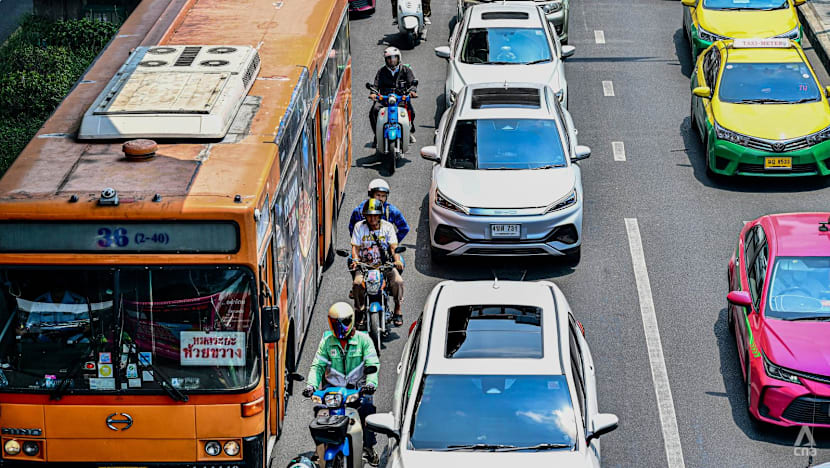
Roughly 1.3 million outdoor workers in Bangkok, about a quarter of the workforce, already lose productivity during extreme heat.
Without adaptation, heat and humidity-related labour productivity losses could reach US$15.6 billion a year by 2050, roughly 6 per cent of the city’s economic output, according to the Climate Resilience Center, under the United States’ Atlantic Council.
As temperatures rise, so too does the risk of widening inequality. Air conditioning offers protection for many, especially overnight, but for those without access, the impacts are far more severe.
“Without intervention, the gap between those who can buy their way out of the heat and those who cannot will grow wider,” said Peeranan.
Figures from Thailand’s National Statistical Office show that around 39 per cent to 44 per cent of households around the country have air conditioning, rising to 53.5 per cent in Bangkok and surrounding areas.
Bangkok also ranked highest among surveyed cities for air conditioner use in a global study done in 2024 by Japanese conglomerate, Daikin, with people using it for an average of 10.4 months a year, a reflection of the persistent heat experienced in the city.
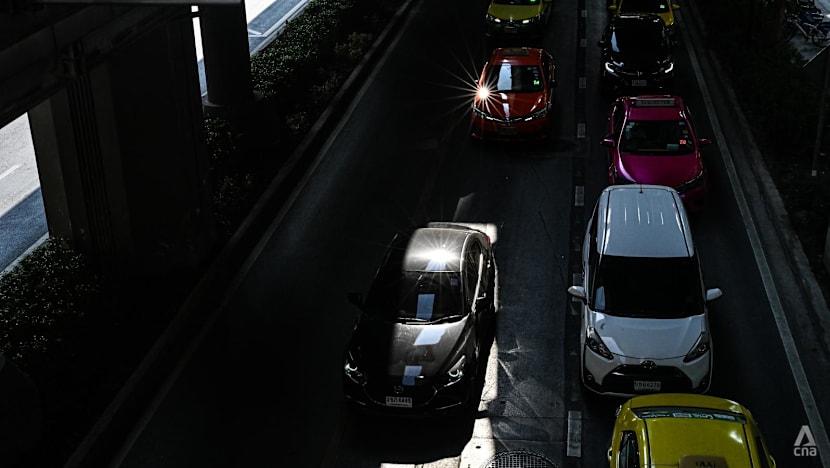
Cooling comes at a cost. Heavy reliance on air conditioning increases energy demand, often powered by fossil fuels, ultimately adding to emissions and pushing more heat back into the surrounding environment.
Buildings already constitute 23 per cent of total energy use in the ASEAN region, with cooling demand the fastest-growing energy driver, ACE found.
PASSIVE COOLING
With forecasts for much more hot weather to come, both for the rest of this year and for the decades ahead, experts urged long-term solutions to reduce heat exposure and urgent structural changes to how cities are built and cooled.
The ACE report found that without changes to how buildings and cities are designed, heat will drive health risks, energy demand, and inequality sharply higher.
Upgrading existing infrastructure - whether through retrofitting buildings or adding rooftop greenery - can offer some relief, but these measures tend to deliver only marginal, localised cooling.
The more transformative changes lie in how new buildings are designed and coordinated government action could help limit further escalation, Ramadan said.
The top priority for the region should be passive design, whereby cities can stay cool without relying on air conditioning, she said. Those measures would include ventilation, shading, reflective materials and green spaces.
Implemented widely, it could reduce temperatures, lower electricity demand, reduce emissions and improve resilience, she said, with ACE’s data finding that 20 per cent to 30 per cent reduction in cooling energy from passive design alone was possible in Southeast Asia.
But barriers included high upfront construction costs in new buildings, industry knowledge gaps and national policies lacking mandatory standards combined with weak enforcement.
Some of the most vulnerable countries to extreme heat like Myanmar and Cambodia are further behind, and “don’t have a clear road map or clear regulations to incorporate passive cooling or energy efficiency”, Ramadan said.
“Policy is not fast enough compared to the rising temperature. I think it's very urgent, and we need to be worried,” she said.
Thailand is better placed to cope with a hotter future, despite the projections, experts agreed, due to its commitment to climatic resilience and sustainable urban development.
The ACE report rated its adaptation capacity as medium-high, only behind Singapore, Malaysia and Brunei in the region.
Green building certifications and building codes that push for passive cooling are already well established but need better implementation, Ramadan said.
And Bangkok does not need to start from scratch, Peeranan said.
Many of the solutions, such as expanding green and blue infrastructure, improving building design and materials, and strengthening public health systems, are already known and can deliver immediate risk reduction if applied consistently and at scale.
“Bangkok is much better prepared today than it was five years ago,” he said. “None of this is inevitable.”
Additional reporting by Jarupat Karunyaprasit.