New wave of ‘cultural confidence’: Inside the explosive growth of China’s hanfu experience
More than just a fashion trend, the rising popularity of hanfu shows how younger Chinese generations are reclaiming history and heritage with pride.
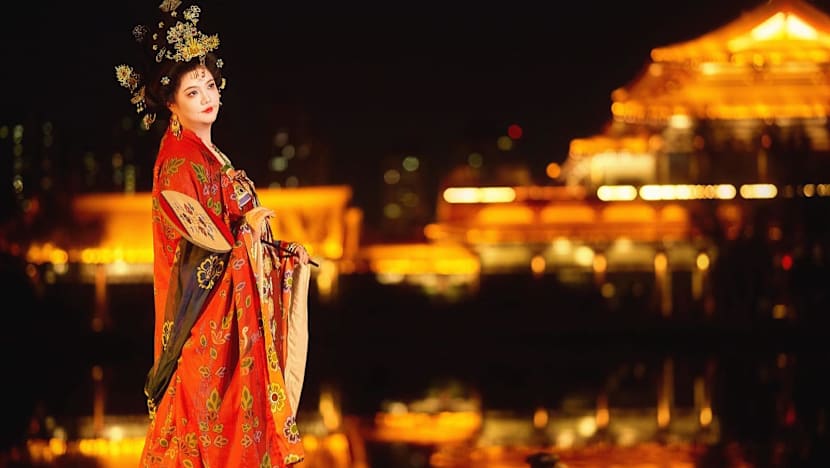
Tiffany Rong dresses up in traditional Chinese attire. Like many young Chinese women, Rong enjoys renting elaborate hanfu pieces to stage dramatic photo shoots in popular scenic locations across China. (Photo: Tiffany Rong)

This audio is generated by an AI tool.


SINGAPORE: Recently in Xi’an to visit its many historical sites, Tiffany Rong, 34, decided to add to her experience by renting a traditional silk hanfu gown.
Dressed in a long, flowy red robe with wide billowing sleeves, Rong also wore hair extensions and special ornamental make-up, complete with shiny gold accessories.
Dimple dots, known as mianye, were also painted on both corners of her mouth.
“My hair was really heavy,” Rong recalled. “It was a little difficult keeping my head upright.”





She also had help holding up the ends of her outfit while walking.
“The shoes added some height,” said Rong, who stands at around 1.74m tall. “But the hanfu was so long that it was dragging across the floor.”
It was a memorable experience, Rong said.
She gamely posed with a lantern against stunning outdoor backdrops at night, looking as though she had emerged from a classical painting.
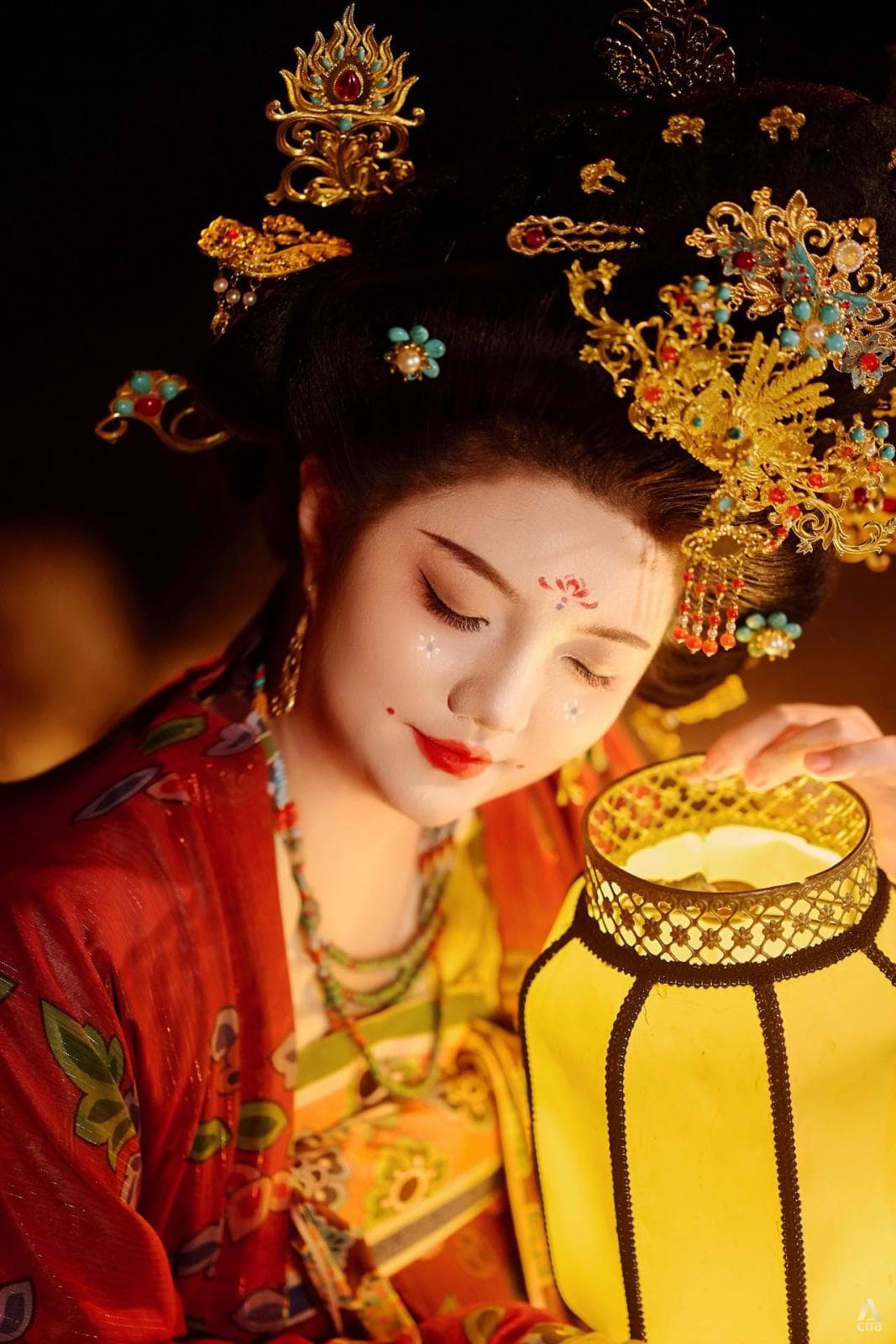
Like Japanese kimonos and Korean hanboks often worn by tourists and influencers for photo shoots at popular scenic sites, wearing hanfu in public has now become “very normal” in China, Rong said.
After scrolling through endless reviews on apps like Xiaohongshu and Dianping, she contacted a popular studio in Xi’an and made a reservation at least a month in advance before her trip.
“Back then, people would really stare (at you) if you wore traditional-style outfits,” she added.
“GROWING SENSE OF CULTURAL CONFIDENCE”
Worn by Han Chinese, the largest ethnic group in China, for over 4,000 years, hanfu fashion has been seeing a massive revival over the past decade.
Group orders for hanfu and traditional costume experiences on Douyin jumped 662 per cent during this year’s May Day holiday compared with a year earlier.
What was once considered traditional ceremonial wear has surged back into mainstream culture, experts said.
They pointed to the sheer number of hanfu rental shops and services at popular tourist sites across the country, from Beijing’s Forbidden City to historical areas throughout Xi’an and other scenic destinations like Hangzhou’s West Lake and the Classical Gardens of Suzhou.
It reflects a “deeper shift in China’s cultural identity” and “a growing sense of cultural confidence among China’s younger generation”, said Lina Zhong, a professor and director at the Institute for Big Data Research in Tourism at Beijing International Studies University (BISU).
“For many young Chinese, hanfu has cultural roots and carries a sense of identity,” Zhong said.
“Traditional culture is no longer something to be observed from a distance - it has become something they participate in and actively express.”
“(Young people) not only acknowledge their nation’s historical narrative,” she added, “but also integrate elements like hanfu into their everyday aesthetic, identity and self-expression”.
The rise of hanfu is “more than just a fleeting fashion trend”, said Zhu Jinsheng, an associate professor at Guilin Tourism University, also an adjunct professor at the City University of Macau.
“It represents a profound cultural renaissance - one that blends tradition with modern creativity and digital innovation,” Zhu said, noting that hanfu rental shops are especially popular in heritage areas and cultural sites.
“You often see visitors wearing hanfu among the timeless ruins and pagodas,” Zhu said.
“The picturesque scenery provides the perfect backdrop for this kind of sartorial time travel.”
Zhu also pointed to the influence of modern media as a major catalyst behind the phenomenon.
Chinese historical dramas, social media and xianxia-themed video games - fantasy stories about “immortal heroes” - have created a “compelling popular culture ecosystem”, he said.
“These media forms have not only familiarised younger generations with traditional aesthetics, but also recontextualised them as dynamic and aspirational,” he added.
Beyond cultural expression, the hanfu movement has sparked renewed interest in traditional craftsmanship, including silk flower making, embroidery and weaving, said Zhong.
“This growing market demand is creating new opportunities for the preservation and revitalisation of intangible cultural heritage.”
Zhu added that the hanfu boom is “predominantly female-driven”. While hanfu consumption has become a nationwide trend, young women remain its core consumers.
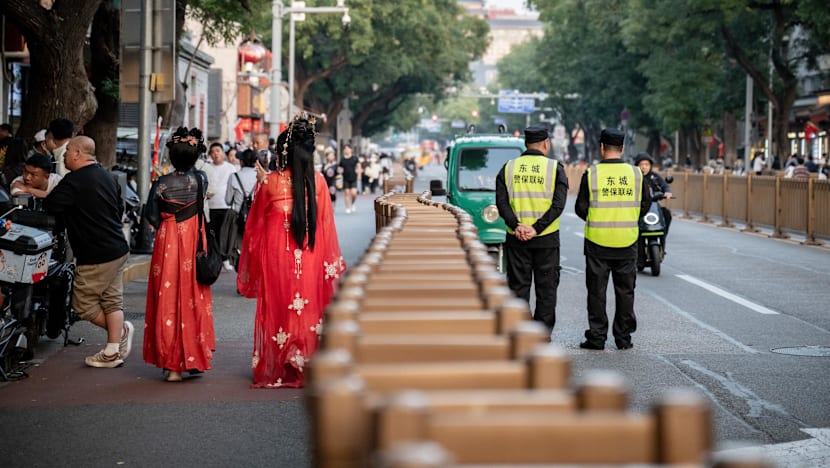
While many first encounter hanfu during their travels, some go on to develop a deeper appreciation for the traditional costume.
“Some women move from occasional rentals to purchasing multiple sets of hanfu, engaging with the culture not only as tourists but as everyday cultural enthusiasts,” said Zhu.
“This pathway - from travel-based experimentation to committed cultural consumption - has been central to driving the expansion of the hanfu market and the broader national trend economy.”
National trend, or guo chao in Chinese, refers to the phenomenon of Chinese domestic brands integrating traditional cultural elements into modern design.
This is not “merely a consumption boom” but a “lifestyle and cultural expression unique to this era”, Zhu told CNA, especially among younger generations born in the 1990s and 2000s.
“HANFU EXPERIENCE” ECONOMY
Hanfu studios today are no longer simple rental outlets - the business model has transformed into a full-service cultural experience.
In Xi’an alone, more than 3,000 hanfu rental shops now operate across the city - making it the “go-to” destination for enthusiasts.
For a modest fee, visitors can rent traditional attire for a day at popular local sights such as the Datang Everbright City pedestrian street and the Xi’an Bell Tower.
Hair and make-up as well as professional photography and post-editing services are also often included.
“The hanfu experience industry in Xi’an is very competitive,” said Rong.
“Many girls around me were getting their makeup reapplied until they were satisfied,” she recalled.
Competition among stores was “really fierce”, she added.
“If one place isn’t good enough, you can just easily choose another,” she said. “It’s good for customers because overall standards are pretty decent - everyone is trying to outdo each other.”
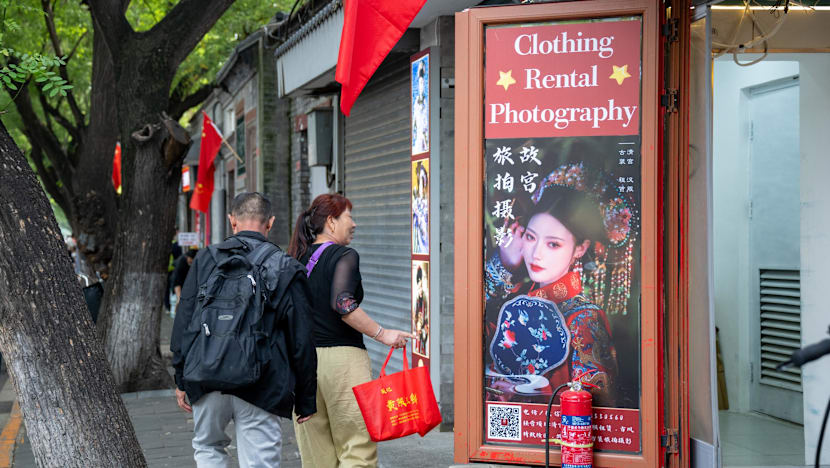
Studios in other cities like Beijing and Shanghai also offer similar competitive packages starting at 268 yuan (US$38), which often include hair styling, photo touch-up services and loaning of accessories.
Many have also embraced digital platforms and content-driven marketing, experts said, often promoting their services through livestreams, short videos and influencer partnerships.
“This attracts not only young Chinese users but also international visitors, greatly expanding the reach and impact of hanfu experiences,” said Zhong.
“This shift reflects broader consumption upgrades in China, where the emphasis has moved from simply having the product to immersive, emotionally resonant cultural experiences,” said Zhu.
Yuan, who only wanted to be known by her surname, manages a hanfu rental studio in Shanghai. She told CNA she has been seeing more business from overseas tourists and travellers.
“We’ve seen an increase in foreign tourists, especially from Singapore, South Korea and Japan,” she said.
A studio in Beijing told state news agency Xinhua it has served nearly 70 groups of foreign tourists this year, a 20 per cent increase from 2024.
In Luoyang city in Henan province, the number of hanfu shops in the historic Laocheng district exploded from just 18 in 2022 to 1,360 by September this year, according to the district’s Cultural and Tourism Bureau, marking a 75-fold increase.
When it comes to hanfu, the visual element is key, Zhong said.
“Hanfu is highly photogenic in the right settings and attractive visuals drive participation,” she said.
“Social media platforms make sharing hanfu photos effortless and create a powerful cycle where online visibility fuels offline engagement.”
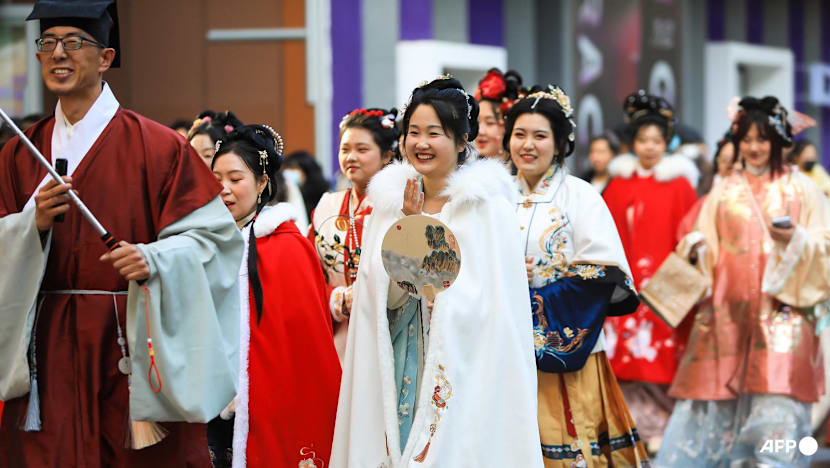
But while its rapid commercialisation has turned it into a full-fledged service industry, it now risks becoming formulaic in some cities, Zhong added.
“As the novelty fades, some consumers are beginning to show signs of fatigue.”
A countertrend is emerging, with some enthusiasts seeking more “historically informed and academically grounded experiences”, Zhong observed.
“They pay closer attention to historical accuracy, including makeup, garment structure, and ritual elements and this deeper engagement is encouraging broader interest in China’s textile and dress history.”
ANOTHER WIN FOR CHINESE SOFT POWER
The rise of hanfu experience studios mirrors the popularity of kimono and hanbok rentals in tourist hubs across Japan and South Korea.
And as China sees strong growth in foreign arrivals - boosted by expanded visa-free policies - hanfu has quickly become a “must-do” activity for international travellers.
When asked whether hanfu could be seen as a “modern-day” example of China’s soft power, Zhong said: “If we define soft power as the ability to influence others through cultural attraction, then the hanfu boom certainly represents a new form of soft power.”
“The traditional aesthetics, garment styles and cultural symbolism embodied in hanfu, combined with the massive amount of content created by young Chinese people online, create a highly visible, engaging and participatory form of cultural appeal.”
Domestically, she said, the movement reinforces cultural identity among young people.
Internationally, it also introduces Chinese culture “in a natural, spontaneous, and lifestyle-driven way”.
The growing number of foreign visitors trying hanfu shows the trend “has already moved beyond China’s borders and is generating genuine influence”, Zhong said.
“Compared with panda diplomacy - a highly institutional and state-led soft power tool - the spread of hanfu is far more decentralised and grassroots-driven,” she said.
Its momentum comes largely from young people, social media and cultural tourism.
“In this sense, hanfu represents a softer, more organic and everyday form of soft power - closer to lived culture than to formal diplomacy.”
And it holds further potential, said Zhu.
“Although China has invested heavily in cultural diplomacy and global branding, institutionalised frameworks specifically leveraging hanfu are still limited,” he said, pointing to opportunities such as international hanfu workshops and cultural exchange programmes.
For now, the global promotion of hanfu relies primarily on grassroots communities, diaspora groups and commercial influencers rather than national-level strategies.
Because hanfu experiences intersect naturally with tourism and social media sharing, visually striking user-generated content travels quickly.
“These visually appealing narratives can organically amplify China’s soft power by circulating positive representations of Chinese cultural heritage on global platforms,” Zhu said.