Big ambitions meet uneven reality as Qianhai returns to China’s opening-up spotlight
Established in 2010 on reclaimed land in Shenzhen, Qianhai is meant to showcase China’s next phase of opening up but converting policy vision into global traction remains a challenge, say analysts.
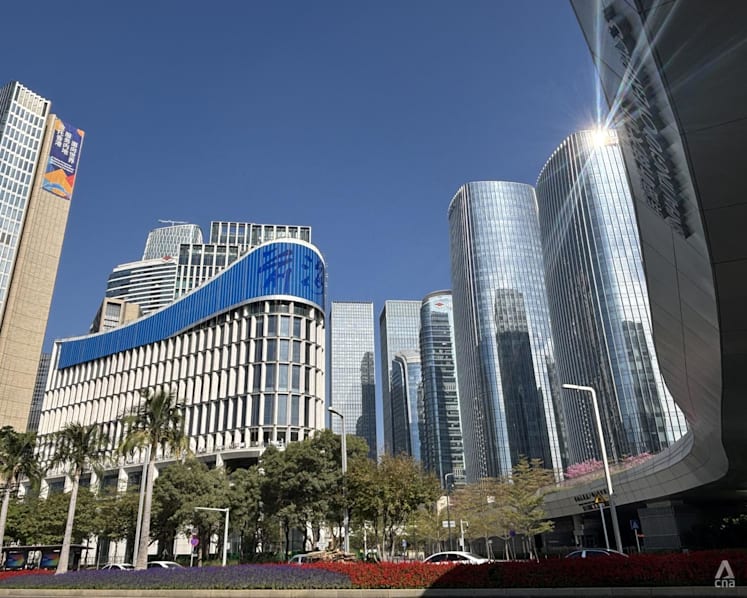
Qianhai, a 120 sq km strategic zone in Shenzhen, has been positioned by China as a bridge between Hong Kong, the mainland and the wider world. (Photo: CNA/Melody Chan)

This audio is generated by an AI tool.


SHENZHEN: As the familiar strains of the classic Cantonese tune Red Sun echoed over the waterfront, dancers moved across a glowing circular stage while beams of light fanned out across the bay.
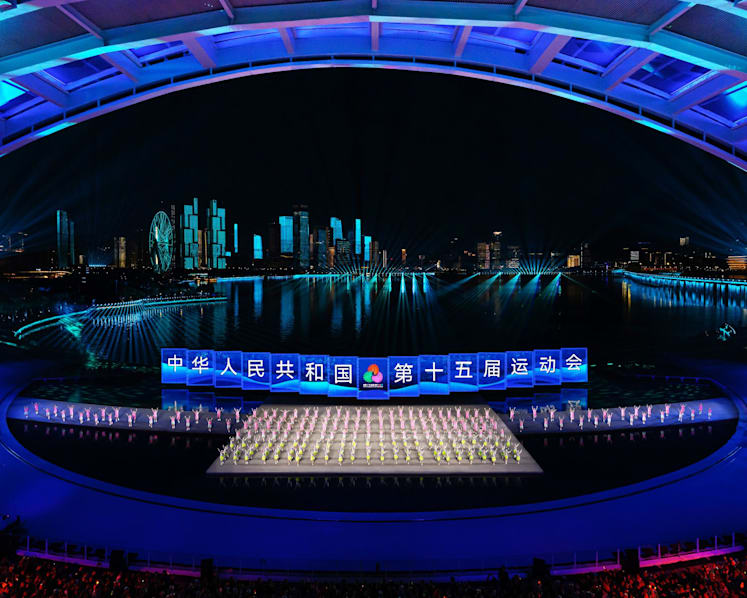
This spectacle played out during the closing ceremony of China’s 2025 National Games, staged at the newly built Happy Theatre in Qianhai - a 120 sq km strategic zone in Shenzhen that the country has been elevating as a showcase for its next phase of opening up, say analysts.
Staging the high-profile event there was no coincidence, they add, but part of a deliberate effort to push Qianhai back into the national spotlight after years of rapid expansion and policy experimentation.
By the numbers, China’s long-standing ambition for Qianhai to be a bridge linking Hong Kong, the mainland and the wider world has been taking shape, reflected in investment flows and startup activity.





Yet experts warn that the central test remains unresolved: whether it can move beyond policy-driven inflows and Hong Kong-centric networks to be a genuine international hub.
“Qianhai is becoming more international, but much of its external orientation still runs through Hong Kong and Chinese networks rather than a broad, diversified roster of global multinationals,” Alejandro Reyes, an adjunct professor at the University of Hong Kong (HKU), told CNA.
“To truly meet the original ambition, it will need not only more foreign firms on the ground, but also a regulatory and lifestyle environment that feels genuinely predictable and attractive to international talent, not just to mainland and Hong Kong players.”
QIANHAI’S RISING VISIBILITY
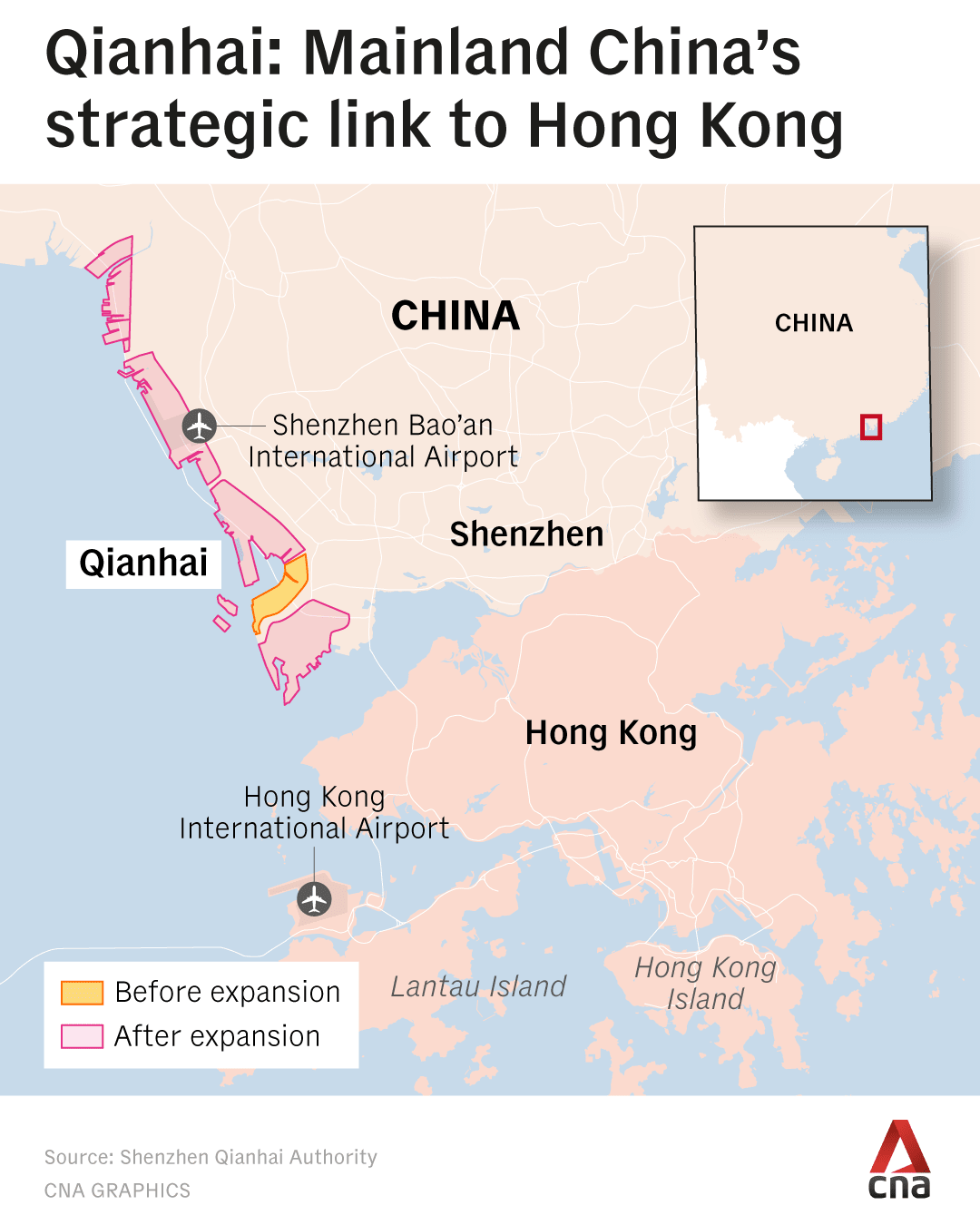
First established in 2010, Qianhai has long been positioned by Beijing as an “institutional laboratory” - a place where new rules are tested first before wider roll-out - while developing into a hub for modern services, finance, logistics and digital trade.
It has also become one of China’s most closely watched policy experiments, said analysts, tasked with advancing a broader vision of “relying on Hong Kong, serving the mainland, facing the world”, a phrase first used by Chinese President Xi Jinping in 2012.
Over the years, the 15 sq km zone - built almost entirely on reclaimed land - has expanded to cover more than 120 sq km, eight times its original size.
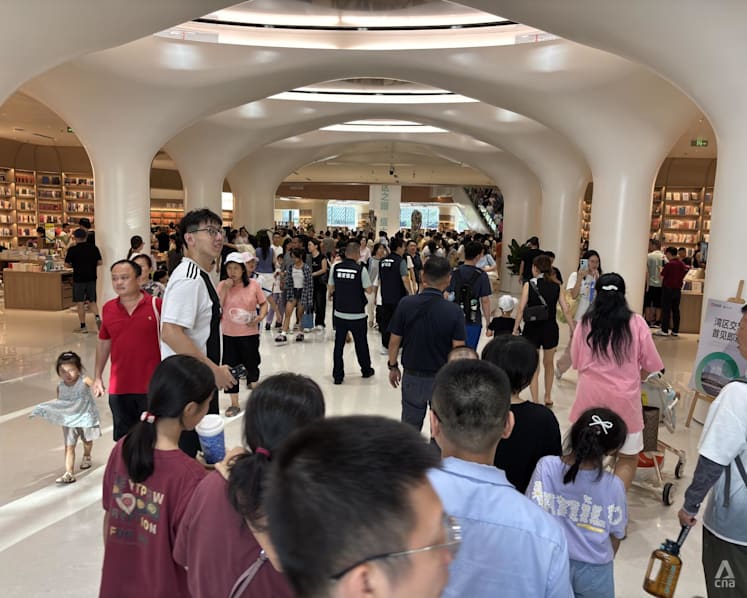
Aside from hosting the National Games closing ceremony in late November, Qianhai has rolled out notable projects in recent months - from the world’s largest indoor ski facility and the world’s largest physical bookstore to Chinese technology giant Tencent’s third headquarters, dubbed Penguin Island.
By holding a major national event in Qianhai and launching landmark projects there, the central government wanted to underline its commitment to a new phase of high-level opening up, Gary Wong Chi-him, chief Hong Kong and Macau liaison expert at the Qianhai Authority, told CNA.
Attention on the zone has also grown as Shenzhen prepares to host the Asia-Pacific Economic Cooperation (APEC) meeting in November next year, adding an international backdrop to Qianhai’s push for visibility.
But analysts said the political significance runs deeper than symbolism or timing.
HKU’s Reyes said the renewed push marks a “strategic declaration at a critical historical juncture”, reflecting Beijing’s effort to show that Shenzhen-Hong Kong integration is shifting from blueprint to implementation, with Qianhai as the main testbed.
REGIONAL INTEGRATION
As a “special zone within a special zone”, Reyes said Qianhai’s experiments could shape how the one country, two systems model evolves in the Greater Bay Area (GBA) - the economic region covering Hong Kong, Macau and nine cities in Guangdong province.
That ambition is already visible in the numbers. From January to October 2025, Qianhai recorded 16.1 billion yuan (US$2.2 billion) in actual utilised foreign investment, accounting for more than half of Shenzhen’s total, 19 per cent of Guangdong province’s, and 2.6 per cent nationwide.
Under a State Council master plan, by around 2030, Qianhai is expected to align its rules closely with Hong Kong and operate as a highly open economy and internationalised zone.
By 2035, the aim is for it to emerge as a mature, globally competitive hub for trade, innovation and cross-border cooperation.
Several indicators suggest the zone is moving in that direction.
Hong Kong-funded enterprises, seen as a key measure of integration, have risen to 10,000 as of July, approaching the 2025 target of 11,000.
More than 12,000 Hong Kong residents now work and live in Qianhai, already surpassing the 10,000 target set for this year.
When Hong Kong local Elvis Yu moved his startup to Qianhai in 2020, he was looking for something many early-stage companies struggle to find: certainty.
“The key advantage in Qianhai is policy certainty. You know what support you will get, and that is crucial for startups,” said Yu, whose company turns organic waste into sustainable protein through insect bioconversion.
“Qianhai is also highly open to innovation and offers strong platform support for tech companies,” he told CNA.
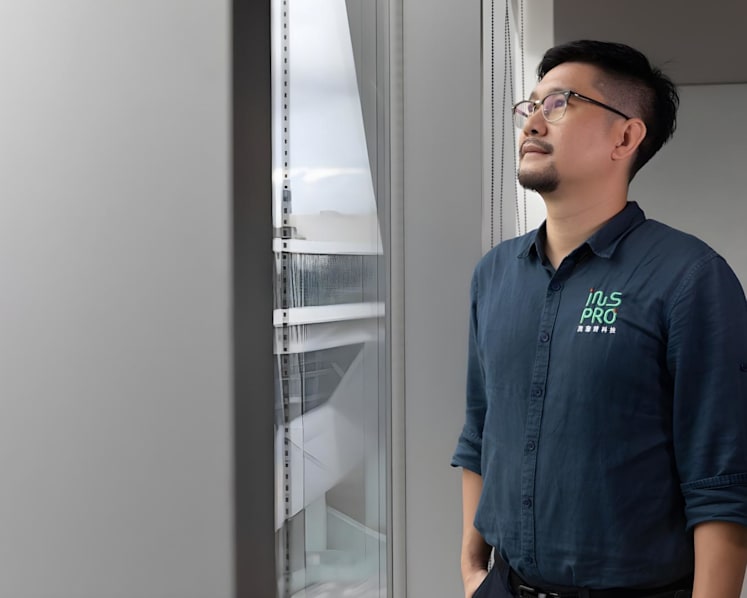
For Yu, the appeal was both practical and strategic. His business needed engineers across disciplines and reliable access to hardware suppliers, conditions he said Qianhai could offer.
He is currently based at the Qianhai Shenzhen-Hong Kong Youth Innovation and Entrepreneur Hub, a government-backed startup incubation hub, which has become a first stop for many young people from Hong Kong and Macau looking to build a career on the mainland.
Since last year, the hub has stepped up efforts to attract Hong Kong youth and firms, rolling out the “1510” model, which offers monthly rents of 1 yuan per sq m, access to a 500 million yuan fund and up to 100,000 square metres of industrial space for eligible startups.
As of September, the hub had incubated 1,073 Hong Kong startups, making it the facility that has nurtured the largest number of Hong Kong and Macau enterprises in the GBA, local authorities said.
Yu has since moved his family to Qianhai, where they live in government-supported housing for skilled workers, priced at about 50 per cent below market rates.
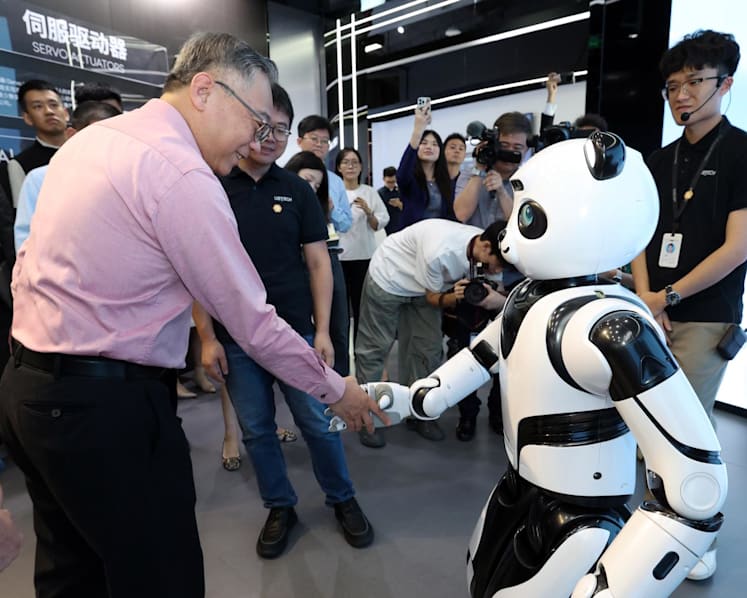
Beyond attracting firms, analysts said Qianhai has become a testbed for cross-border reforms with real on-the-ground impact, from allowing certain commercial contracts to be governed by Hong Kong law to piloting new cross-border renminbi lending arrangements.
“These reforms show that Qianhai is not just another industrial park. It is one of the main places where the institutional interface between Hong Kong and the mainland is being quietly rewritten,” said HKU’s Reyes.
BRIDGING THE GAP
For firms already operating across borders, Qianhai’s strengths and limits are visible in daily practice.
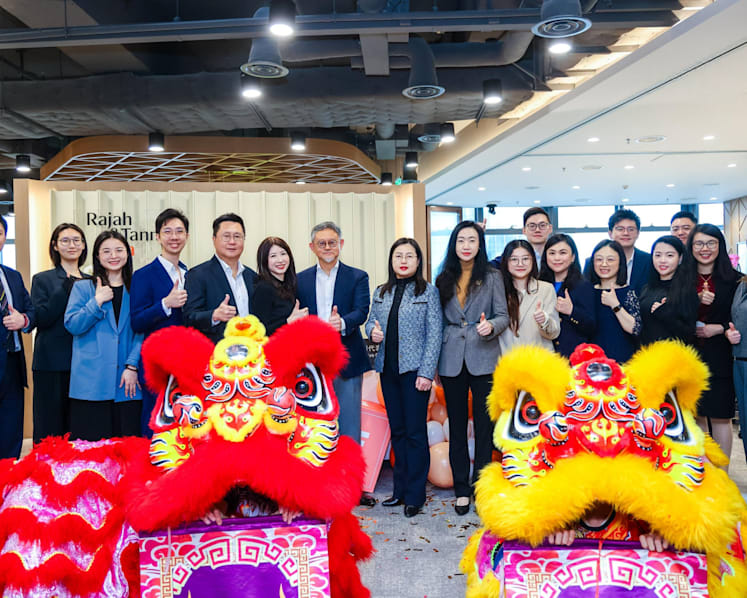
Loh Yong Hui, a partner at Rajah & Tann Singapore and chief representative of its Shenzhen office, said the firm expanded into Qianhai last year because the move aligns with its cross-border legal work and role in serving Chinese companies investing in Southeast Asia.
“Qianhai positions itself as a hub for international legal and dispute resolution services, aiming to become a leading arbitration and legal innovation centre in China,” he said.
But Loh noted that attracting foreign professionals remains a challenge. He said there are still relatively few international practitioners based in Shenzhen, adding that his firm is currently the only Singaporean law firm in the city, with just three Singaporean lawyers on the ground.
Competition within the GBA is also intensifying, analysts pointed out.
HKU’s Reyes said Qianhai is now competing not only with Shenzhen’s own core districts, but also Nansha in Guangzhou and Hengqin in Zhuhai, sister cooperation zones set up under Beijing’s GBA strategy to test cross-border integration models.
That, he said, has increased pressure on Qianhai to clarify what distinguishes it beyond preferential policies and incentives.
Officials argued that the zone is already shifting course.
Wong from the Qianhai Authority said cooperation between Shenzhen and Hong Kong is moving beyond infrastructure-led integration towards deeper alignment of rules.
He cited public services as an example, noting that 368 mainland government services - from company registrations to tax filings - can now be handled in Hong Kong through a one-stop platform, reducing the need for cross-border travel.
“These reforms have shifted from ‘physical connectivity’ to ‘institutional connectivity’, generating substantial tangible and actionable impact,” Wong said.
BEYOND A “SECOND HONG KONG”
HKU’s Reyes said Qianhai’s role should be understood less as a standalone global city and more as part of a broader system designed to fuse Hong Kong’s institutional strengths with the mainland’s scale.
Under the State Council’s 2021 master plan, Qianhai is tasked with serving as a high-level gateway for China’s opening up and a testing ground for deeper Shenzhen-Hong Kong integration, with targets set for 2025, 2030 and an end goal in 2035.
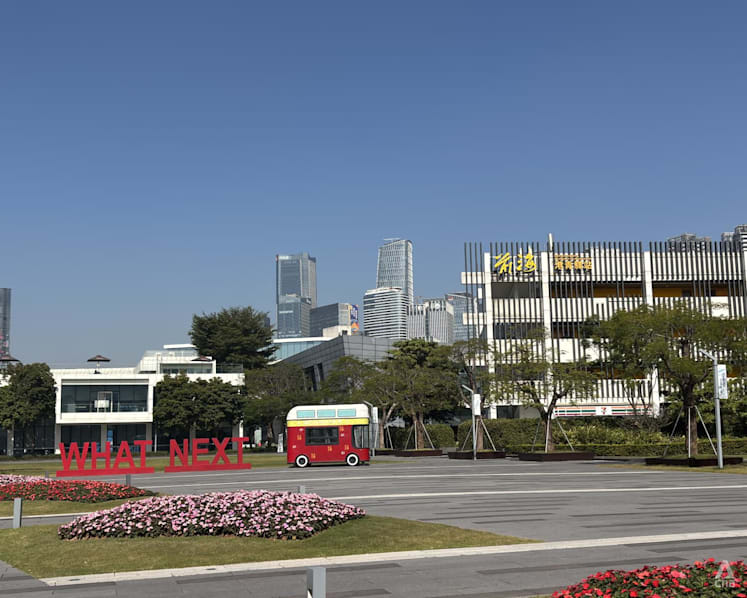
Rather than becoming a “second Hong Kong”, analysts expect Qianhai to evolve into a specialised hub within the wider Shenzhen-Hong Kong-Guangzhou corridor. It would see the testing of new cross-border rules and services being concentrated there, rather than being replicated wholesale.
The corridor already carries global weight. The Shenzhen-Hong Kong-Guangzhou innovation cluster topped the World Intellectual Property Organisation Global Innovation Index this year, overtaking Japan’s Tokyo-Yokohama cluster for the first time.
For entrepreneurs like Yu, Qianhai’s future hinges on how seamless cross-border movement becomes in practice.
Today, he said, travelling from his office in Qianhai to Hong Kong’s Central district typically takes about 1 to 1.5 hours by public transport - a journey that already feels closer to moving within the same city.
The proposed Hong Kong-Shenzhen Western Rail Link could further tighten connectivity. Expected to be completed between 2034 and 2038, the project could cut travel time between Hong Kong and Qianhai to as short as 15 minutes.

But analysts cautioned that infrastructure alone will not determine success.
NUS’ Shen said the real test for Qianhai is not the speed of construction, but whether changes to rules and systems can keep up.
Instead of relying on new buildings or financial incentives, the policy test zone will need to make meaningful progress in areas such as cross-border finance, data sharing and market access if it is to meet its long-term goals, he said.
“Without institutional reform, sustained economic development is difficult,” Shen said, adding that there remains “a considerable gap from the preset goals, and more significant breakthroughs are required”.
HKU’s Reyes said the more telling indicators will be whether Hong Kong and foreign-invested firms deepen their presence beyond paper registrations, whether modern services expand their share of jobs and output, and whether cross-border financial flows grow in practice, not just in policy documents.
Equally important, he added, are softer signals: whether international professionals choose to stay long term, and whether global firms begin to see Qianhai as a natural base rather than a policy-driven one.
“If these indicators are moving in the right direction, Qianhai will have a good chance of becoming a durable bridge between Hong Kong and the mainland - and a meaningful, if still China-centric, player in global services.”