Japan restarts operations at world’s largest nuclear plant, 15 years after Fukushima disaster
The restart is the latest of Japan’s efforts to revive its nuclear energy sector and reduce dependence on imported fossil fuels.
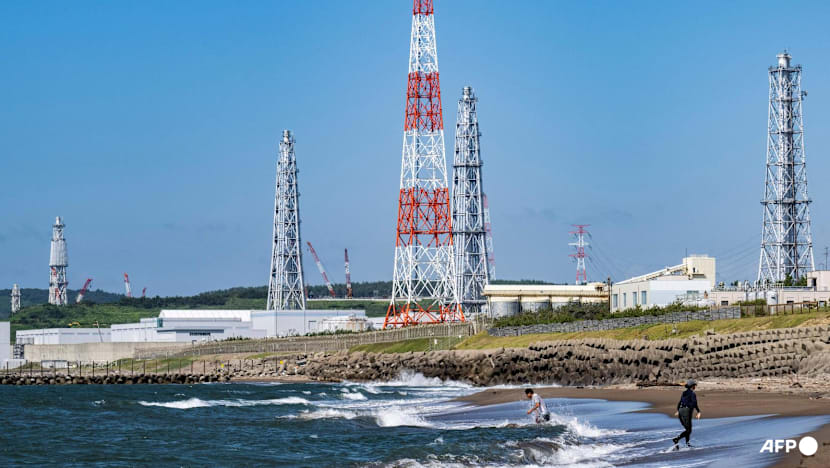
This picture taken on Aug 5, 2024 shows Arahama beach set against the Kashiwazaki-Kariwa nuclear power station in Japan's Niigata prefecture. (File photo: AFP/Yuichi Yamazaki)

This audio is generated by an AI tool.




KASHIWAZAKI-KARIWA: The world’s largest nuclear power plant is once again supplying electricity to about 450,000 households in Japan, more than a decade after it was shut down following the Fukushima nuclear disaster.
The Kashiwazaki-Kariwa nuclear station resumed commercial operations on Apr 16, according to its operator Tokyo Electric Power Company (TEPCO).
The restart is the latest of Japan’s efforts to revive its nuclear energy sector and reduce dependence on imported fossil fuels.
GENERATES ELECTRICITY FOR KANTO
The facility spans the city of Kashiwazaki and the village of Kariwa, located in Niigata prefecture, which was once a hub for crude oil production before shifting its focus to nuclear energy.
Today, the Kashiwazaki-Kariwa nuclear plant is the largest in Japan, with seven reactors and a total generating capacity of 8,212 megawatts.
It is the world's biggest nuclear power plant by potential capacity, although just one of its reactors has been restarted.
The electricity it generates is transmitted hundreds of kilometres away to the Kanto region, including Tokyo.
The plant first began operations in 1985, but all reactors across Japan were shut down in 2011 after an earthquake and tsunami triggered a major nuclear accident at the Fukushima Daiichi Nuclear Power Plant – the worst since Chernobyl.
Japan currently has 33 nuclear reactors, according to the Japan Atomic Industrial Forum. Nearly half – 15 reactors – had returned online as of fiscal year 2025.





Kashiwazaki-Kariwa is the first TEPCO-run unit to restart since 2011. The company also operates the stricken Fukushima Daiichi facility, which is being decommissioned.
“We experienced the Fukushima nuclear accident 15 years ago. It was an extremely tough experience for me. I have learnt a lot and repented a lot,” said Kashiwazaki-Kariwa’s superintendent Takeyuki Inagaki.
“We have to make the best use of that experience in our nuclear business,” added Inagaki, who was a manager at the Fukushima Daiichi plant when the disaster struck.
OPERATIONS HALTED TWICE
In January, Unit 6 of Kashiwazaki-Kariwa restarted for the first time since 2012. However, operations were halted after alarms went off when a control rod was removed.
The alarm was triggered again in March due to damage in an electrical circuit when power was turned on. TEPCO temporarily shut down the reactor to carry out repairs.
“If there is impact on nuclear safety, we would need to stop immediately, but it was not to that level,” Inagaki assured.
“Still, after the first alarm from the power source of the control rod drive mechanism went off, our staff expressed concern about continuing with the operation, so I decided to suspend it to completely repair the system.”
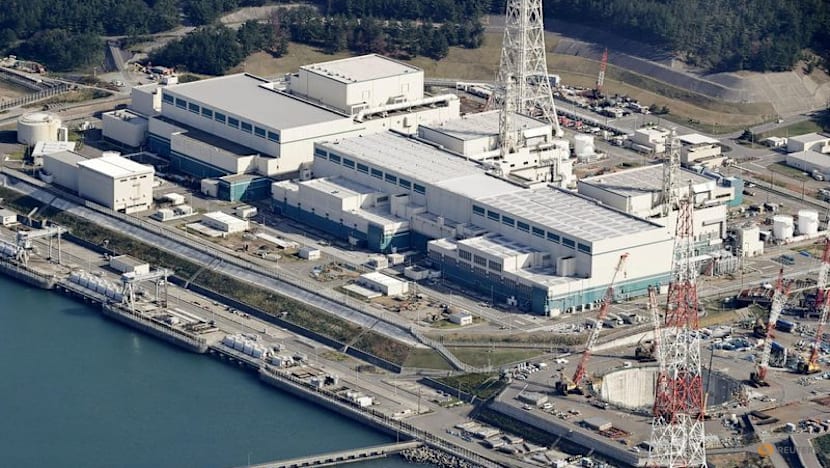
Commercial operations for Unit 6 eventually resumed last month. According to Inagaki, no major glitches have been detected since then.
Workers at the plant simulate a “severe situation” through drills in order to build trust and improve communication, he said.
“If an accident happens, the relevance of command and control is something etched in my heart from experience,” he added.
Another reactor at the Kashiwazaki-Kariwa plant, Unit 7, has also been approved for restart. Once renovation work is completed in August 2029, the facility is expected to double the number of households it can supply with electricity, while continuing to emphasise safety.
Since 2011, TEPCO has invested nearly 1.2 trillion yen (US$7.4 billion) into safety upgrades at the plant. These include a freshwater reservoir for emergency reactor cooling and backup power systems.
The facility currently employs about 6,700 workers, though training experienced staff has been a challenge.
“Half of those working at Unit 6 have never worked at an operating plant. We sent them to experience operating nuclear plants,” noted Inagaki.
“Turbines and generators are similar to those at thermal plants. The steam’s heat, sound, vibration, smell ... Taking (it) in through the five senses is important to understand what is normal and what is abnormal.”