







Death penalty bid against ex-President Yoon puts South Korea’s democracy and human rights on trial
The court is scheduled to deliver its verdict on Feb 19, bringing to a close one of the most consequential trials in South Korea’s modern political history.
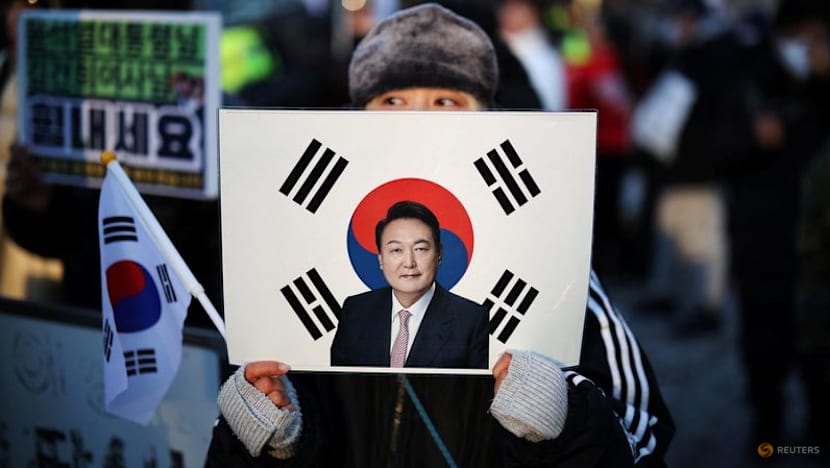
A woman holds a sign bearing a South Korean national flag with a portrait of former President Yoon Suk Yeol, as supporters for his arrival for the final arguments in his insurrection trial, at a court in Seoul, South Korea, Jan 13, 2026. (Photo: Reuters/Kim Hong-Ji)

This audio is generated by an AI tool.




SEOUL: South Korean prosecutors have taken the rare step of seeking the death penalty for former President Yoon Suk Yeol, accusing him of masterminding an insurrection through his short-lived declaration of martial law in December 2024.
The failed martial law order – which was lifted six hours after its shock announcement following widespread political resistance and public backlash – plunged the country into chaos.
The Seoul Central District Court is scheduled to deliver its verdict on Feb 19, bringing to a close one of the most consequential trials in South Korea’s modern political history.
Yoon also faces several other trials over various criminal charges related to the martial law attempt and other scandals during his time in office.
TRIGGERING A POLITICAL CRISIS
Yoon, who was removed from office amid mounting political turmoil, has been on trial for insurrection for about nine months, since proceedings began in April last year.
Prosecutors allege that his brief declaration of martial law constituted a deliberate attempt to subvert the constitutional order and undermine democratic governance.
During the trial, the court held dozens of hearings, heard testimony from multiple witnesses – including senior officials and military figures – and reviewed extensive documentary and digital evidence related to the events surrounding the martial law announcement.
On Tuesday (Jan 13), prosecutors formally demanded the death penalty, arguing that Yoon’s actions posed a grave threat to South Korea’s democracy and could not be treated as a mere abuse of power.
They said the severity of the offence warranted the harshest possible punishment under the law.
Analysts said the case could test how far South Korea is willing to go in holding a former president criminally accountable, while also confronting long-standing questions over capital punishment.
South Korea has not carried out an execution since December 1997 and is considered a de facto abolitionist state.
The country is also bound by the International Covenant on Civil and Political Rights, which urges restraint and progressive abolition of the death penalty.
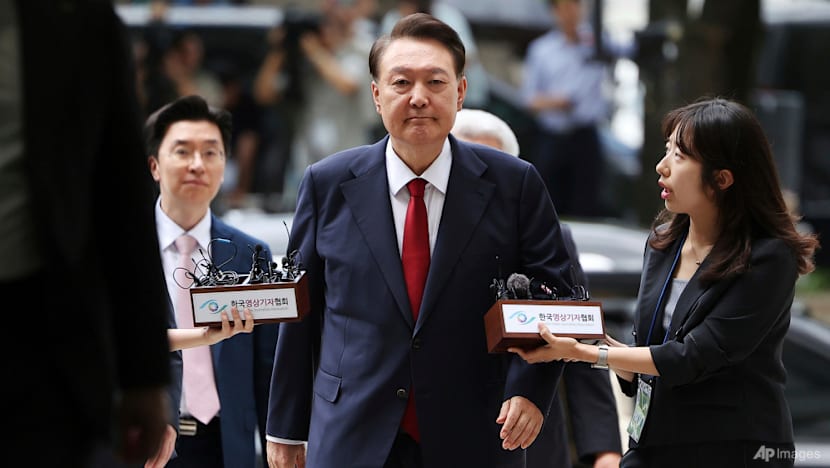
MIXED VIEWS OVER DEATH SENTENCE REQUEST
Still, reactions have been sharply divided.
Jung Chung-rae, leader of the ruling Democratic Party, welcomed the prosecutors’ recommendation, saying a firm response is necessary to prevent future threats to democracy.
"It must be decisively settled once and for all, so that no one can ever dare to attempt another coup, declare martial law or undermine the constitutional order and democracy,” he said.
Human rights groups, however, have cautioned against pursuing capital punishment.
“No one is above the law, including a former president, but seeking the death penalty is a step backward,” said Amnesty International’s death penalty adviser Chiara Sangiorgio in a statement on Tuesday.
“The death penalty is an inherently cruel, inhuman and irreversible punishment that has no place in a justice system that claims to respect human rights.”
She added that while accountability is necessary, seeking the death penalty runs counter to the principles of human rights and dignity that the rule of law is meant to uphold.


Public opinion remains split.
In one phone survey of about 1,000 people, roughly 37 per cent supported the death penalty for Yoon, while about 41 per cent favoured life imprisonment or life without parole. Around 22 per cent were undecided.
A separate poll of a similar size found higher support for execution, particularly among respondents in their 40s and 50s, with slightly more than half backing the death penalty.
Both surveys were conducted by broadcaster Kim Ou Joon, whose platform is known for its progressive-leaning audience.
As the verdict nears, observers said the trial has become a defining moment for South Korea – not only in judging the actions of a former president, but in determining how the country reconciles the rule of law with democratic values and human rights.






