







10-day detention order for IT manager who hurt intern
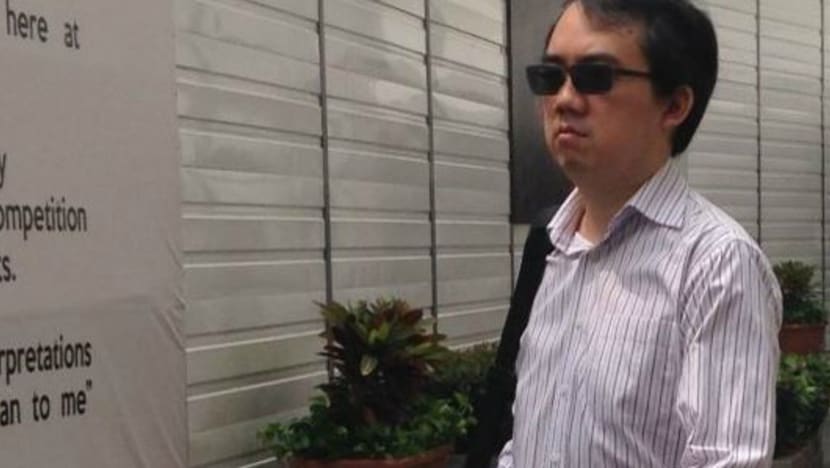
Lee Yew Nam leaving the State Court on Oct 27, 2015. Photo: Wendy Wong/Channel NewsAsia


SINGAPORE — Even though he had full control of his reactions while dealing with an intern, the IT company manager continued to assault his victim and did not stop after crossing the line, said District Judge Lim Tse Haw on Friday (April 1).
For hurting his intern, Lee Yew Nam, 45, was sentenced to a 10-day short detention order — a community-based sentence that sends offenders to jail for up to two weeks.
Lee had admitted to four charges of causing hurt to his intern Calvin Chan at his Jurong Town Hall Road office in 2013, while two other charges were taken into consideration.
A video of his assault on Mr Chan on May 15, 2013, filmed by another intern, went viral after it was posted on YouTube.





In his oral judgement, District Judge Lim said while he accepted that Lee was suffering from some form of depressive disorder, the accused also retained control on how he reacted to stressful situations.
The judge was also hesitant to accept the severity of Lee’s depressive disorder as he felt that the accused had not been entirely truthful with both doctors from the prosecution and defence when narrating the events that led to the charges.
Based on the video footage of the assault, District Judge Lim said it was clear to him that Lee had “full control over his reaction to what the victim had done or did not do”.
“Even if he (Lee) can be said to be impulsive when he struck the first blow as a result of his depressive disorder, when the other intern stopped the accused after that first blow, the accused ought to have realised that he had crossed the line and stopped,” the judge said.
Yet, Lee continued to question the victim before slapping him three times.
As a responsible employer, District Judge Lim noted that Lee had a duty to have regard for the well-being and welfare of his employees. Instead, he subjected the victim to physical hurt and verbal abuse on numerous occasions.
In particular, the judge agreed with the prosecution that employees holding lower-ranked positions are vulnerable and “belong to a category of persons in need of protection from acts of violence or abuse by the employer”.
While he would not go so far as to say that there was a “systematic pattern of abuse”, the judge noted that the hurt caused and abuse inflicted on Mr Chan were “certainly not on an isolated occasion”.
Noting that a strong message must be conveyed to all employers that such brutish behavior has no place in Singapore’s civilised society, the judge added: “It must be made clear to all employers that an employee, no matter how low his position in the company is, is an important member of the company and not a punching bag, not even for stressed-out employers.”




