







Affordability of food to be part of tender bid evaluation for coffee shops: HDB
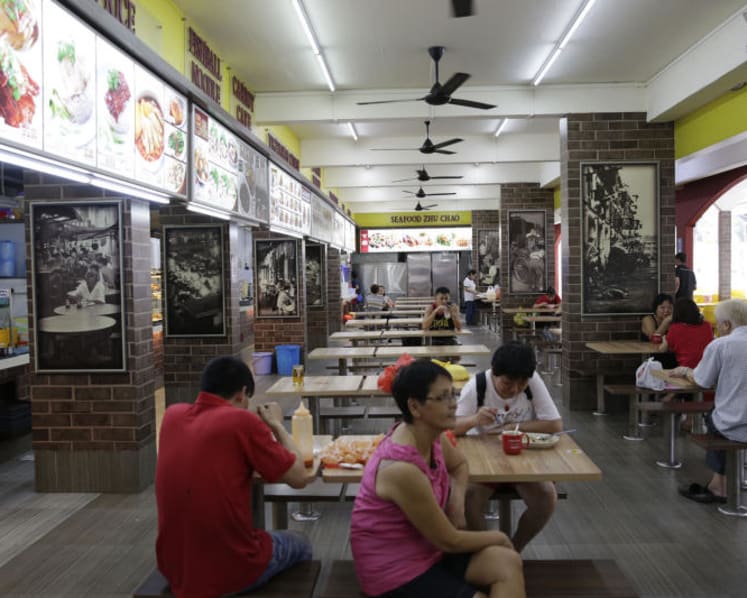
A coffee Shop at Blk 682 Hougang Ave 4.


SINGAPORE — From later this year, the Housing and Development Board (HDB) will evaluate bids for coffee shops on other factors – such as affordability of food options – apart from the tender price.
This was disclosed by National Development Minister Lawrence Wong in response to a parliamentary question from Dr Lee Bee Wah, Member of Parliament (MP) for Nee Soon Group Representation Constituency, on Wednesday (July 11). Among other things, she had asked if electronic bidding in coffee shop tender exercises "drives up the rent, and subsequently the cost of food sold at coffee shops".
Mr Wong said a two-year experiment by the HDB at five coffee shops had reaped some results, including a tender system where quality score accounted for 50 per cent of the evaluation, and operators with affordable food options received higher scores. This will be rolled out to all of the coffee shops that HDB oversees.
This amounts to close to 750 coffee shops built by HDB, of which 70 were completed in the last five years. Another 31 outlets which will be completed in the next five years will also come under the new tender system.





Responding to TODAY’s queries, HDB said the quality score also takes into consideration operators’ business proposals, which includes productivity initiatives and operating processes. It added: "With this, residents can look towards an enhanced customer experience in addition to a good variety of affordable food options."
Mr Wong cited the success of a pilot case in Choa Chu Kang, where the winning rental bid for a coffee shop was 40 per cent lower than the highest bid. The operator with affordable food options and initiatives to improve productivity was given preference.
The current tendering system, which has been in place since 2004, allows prospective bidders to see all online bids in "real time", so they can adjust their bids before the tender closes.
While this system is "more transparent", Mr Wong noted that the issue of affordability had pushed his Ministry to "continuously" review the tendering mechanism, and move away from "simply awarding (tenders) to the highest price bids".
Dr Lee said on Wednesday that she was "happy to hear" of the new tender system, and she hoped to receive fewer complaints from her constituents about the limited food options due to the turnover of food operators.
She added that she had posed the parliamentary question as a few coffee shops in her constituency, including some new ones that had been open for barely a year, had shut down as the high tender bids meant they were not sustainable.
She said: "In the future, we will have to be very mindful because if we do our sums, a small coffeeshop (winning a bid at S$30,000 or S$40,000)… How much do they have to charge the stalls? We can easily calculate if they can survive or not."




