







Analysts caution against giving NCMPs equal footing with elected MPs
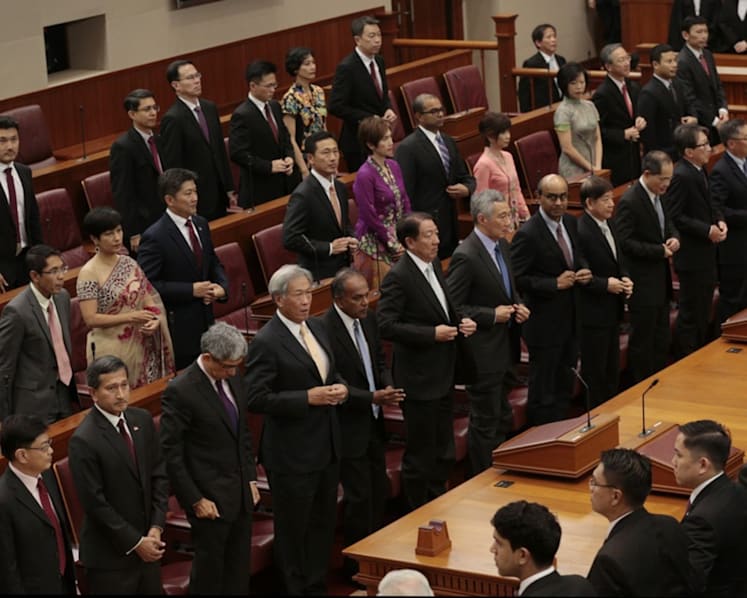
Opening of the 13th Parliament of Singapore on Jan 15, 2016. Photo: Jason Quah/TODAY


SINGAPORE — While most political analysts interviewed by TODAY welcomed Prime Minister Lee Hsien Loong’s proposal to raise the minimum Opposition representation in the House, some cautioned against undesirable outcomes in giving Non-Constituency Members of Parliament (NCMPs) equal voting rights as elected MPs.
Increasing minimum Opposition representation allows for more active debate and gives room for diverse views “not necessarily from one opposition party”, said SIM Global Education academic Felix Tan.
Institute of Policy Studies deputy director Gillian Koh pointed out that critics may question the fairness of giving voting rights to NCMPs who do not have the same responsibility of tending and representing the ground, as elected MPs do.
“How then are the NCMPs accountable to anyone at all, except their parties? What then is their basis of authority ... how and who do they get their views from?” she asked.





Agreeing, Singapore Management University law don Eugene Tan said the proposal to accord equal voting rights to NCMPs is a controversial one, as some might feel that they had not “earned their right to represent their constituents in Parliament”.
He also asked if raising the number of Opposition MPs to 12 will make a material difference to political outcomes, when seats in Parliament are still dominated by the ruling party.
An NCMP’s vote would weigh more heavily with a “true two-party system”, Assoc Prof Tan said.
The proposed move may also further deter a segment of voters from voting for the Opposition, said National University of Singapore political scientist Hussin Mutalib, as they know that “a sizeable number of them (Opposition members) will be in Parliament anyway”.
Instead, he called for a review of the Nominated MP scheme, which allows individuals not affiliated to any political party to air their views in Parliament.
Existing channels for selecting NMP candidates should be made more transparent and representation from various fields must be enhanced, he said.
Analysts also lauded Mr Lee’s call for smaller Group Representation Constituencies (GRCs) and more Single-Member Constituencies (SMCs) at the next General Election, since it will help to level the playing field for all political parties.
Assistant Professor Woo Jun Jie, from Nanyang Technological University’s School of Humanities and Social Sciences, pointed out the move may make MPs even more responsive to their constituents, while addressing criticisms that large GRCs allow the ruling party to “parachute” younger candidates into Parliament.
While the analysts noted that details of proposed reviews to the Elected Presidency scheme have yet to be ironed out, several asked if the desire to ensure that minorities are represented may compromise the institution’s competence.
A minority candidate must not be chosen merely “for the sake of symbolism”, said Prof Hussin.
All aspirants to this highest political post, minority or not, must be subject to stringent qualification criteria, he added.
Dr Koh said: “The question remains as to whether the person has merit; that regardless of race, language and religion, the President elected right across the island is the best candidate in terms of competence, experience and likeability.”
Nevertheless, Dr Koh welcomed the review of the qualifying criteria for presidential candidates.
“It raises the bar so that the elected candidate has calibre commensurate to the complexity and scale of the task that a President undertakes in (holding the) second key to the country’s reserves,” she said. KELLY NG AND TOH EE MING




