







ART SG fair returns amid rising confidence in Singapore’s art market
Industry players say the fair underscores Singapore’s role as Southeast Asia’s gateway for contemporary art.
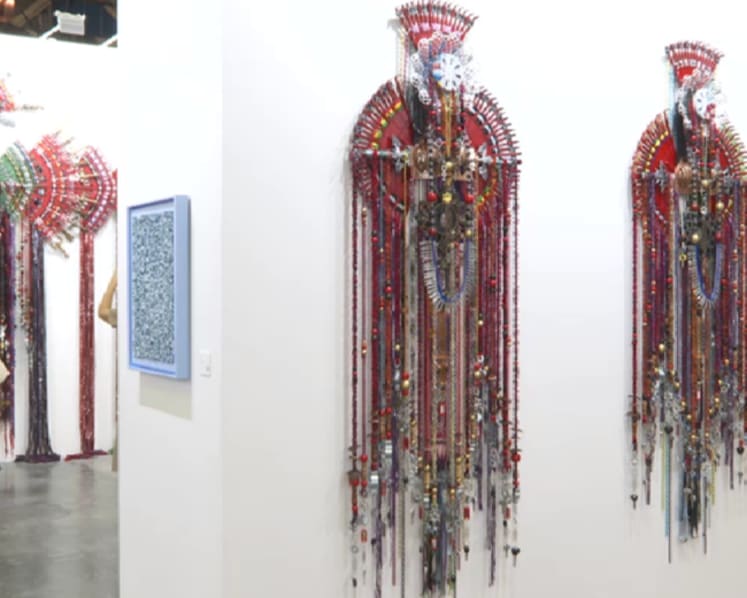
More than 100 exhibitors from over 30 countries and territories are taking part in ART SG this year, with works spanning a wide range of media and themes.

This audio is generated by an AI tool.




SINGAPORE: A growing base of collectors and shifting tastes are reshaping Singapore’s art scene, as ART SG returns for its fourth edition this weekend.
Taking place from Friday (Jan 23) to Sunday at the Marina Bay Sands Expo and Convention Centre, the exhibition is widely regarded as Southeast Asia’s leading contemporary art fair.
This year’s edition comes against the backdrop of renewed confidence in Singapore’s art market, with auction house Sotheby’s saying the number of Singapore-based collectors grew by about a third between 2021 and last year.
A NEW GENERATION OF COLLECTORS
More than 100 exhibitors from over 30 countries and territories are taking part in ART SG this year, with works spanning a wide range of media and themes.
One example is a collaborative series of photographs by Singaporean artist Robert Zhao and South Asian artist Atul Bhalla, which explores heritage and the environment.
Such works reflect broader changes in collecting behaviour.





An Art Basel and UBS survey, released late last year, found that Gen Z collectors - or those aged between 20 and 28 - are spending almost twice as much as millennials on non-traditional art forms such as digital works, film and photography.
The same survey showed that more than 80 per cent of Singapore investors are optimistic about the art market in the next six months, pointing to sustained confidence despite global economic uncertainty.
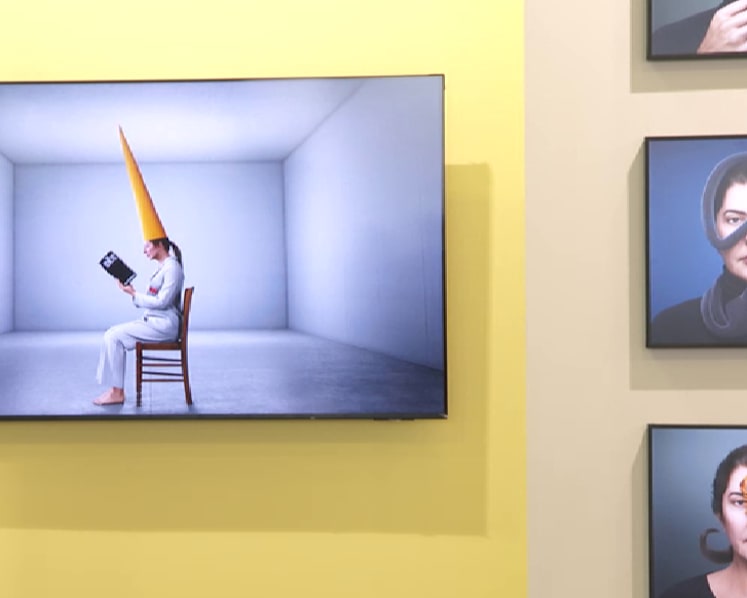
GROWING CONFIDENCE IN SINGAPORE’S ART ECOSYSTEM
Arts players say the expanding collector base reflects Singapore’s growing reputation as a regional and international art hub.
ART SG co-founder Magnus Renfrew said the fair has seen its strongest level of support to date, with a record number of sponsors and partners.
Representatives from major international institutions such as London’s Tate and the Los Angeles County Museum of Art are attending, Mr Renfrew noted.
The fair has also worked with institutions in Asia, including Shanghai’s Rockbund Art Museum and partners spotlighting South Asian and Indian art.
Mr Renfrew added that such partnerships are “quite unique to ART SG … and an area that we really see that we can develop in the future … to create these mutually beneficial collaborations whereby we can expand the community and expand the relevance of Singapore as a meeting place for the international art world”.
FOCUS ON SOUTHEAST ASIAN VOICES
This year’s ART SG also boasts a strong Southeast Asian presence, aimed at encouraging cross-regional dialogue and expanding the fair’s global reach.
For the first time, Southeast Asian contemporary art platform S.E.A. Focus will be part of the event.
Curated by Singaporean exhibition-maker John Tung, S.E.A. Focus offers visitors an opportunity to engage with contemporary works by established and emerging artists from across Southeast Asia.
Organisers said integrating the platform into ART SG underscores the fair’s commitment to the region.
“We feel it's very important for us as a major international art fair coming to Southeast Asia to really respect the heritage and the context in which the fair takes place. It's very much our aspiration that Art SG can be a gathering place for the Southeast Asian art community,” Mr Renfrew said.
“There's a huge interest from European and American cultural institutions about learning more about the cultural offerings from Southeast Asia,” he said, noting that the region’s artistic practices are increasingly recognised for their own histories and narratives.
“The diversity and richness of the culture across Southeast Asia is something that we want to be reflected in this fair,” he added.
SINGAPORE’S EXPANDING ROLE IN ART TRADE
According to the UBS survey, Singapore is now the world’s fifth-largest importer of art and antiques, with import values rising by 74 per cent to just under US$1.7 billion in 2024.
Mr Eric Landolt, global head of family advisory, art and collecting at UBS, said demographic shifts have played a key role.
“There's also obviously a lot more art collectors coming to Singapore and taking residence in Singapore,” he said.
At the same time, institutions have become more prominent.
“This basically calls for bringing in more art, be it for corporate collections, be it again museums which are developing and potentially then also engaging with more international types of art,” he added.
Such developments have reinforced Singapore’s role as both a gateway to Southeast Asian art and a platform for global dialogue, Mr Landolt said.
He attributed this to a combination of public-sector initiatives and private platforms, including international fairs like ART SG, as well as investments in art spaces and artist support.
AUCTION HOUSES SEE GROWTH
The impact is also being felt in the auction market.
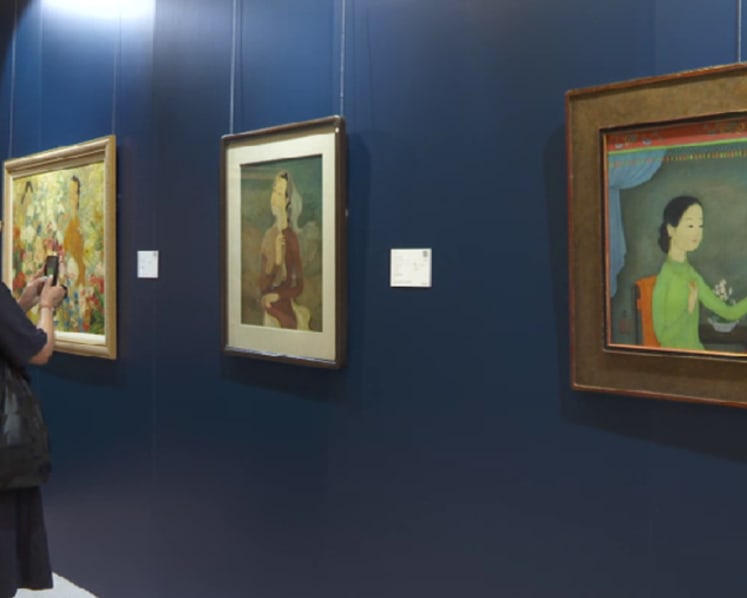
Sotheby’s said it has seen rising interest in Asian works and record sales for Singaporean artists.
Southeast Asian art, including Singaporean works, forms the core of its Singapore auctions, said Ms Jasmine Prasetio, Sotheby’s managing director for Southeast Asia.
This approach has helped introduce Singaporean artists to a wider international audience.
In recent auctions, works by artists such as Georgette Chen, Kim Lim and Jane Lee have attracted bids from collectors beyond Singapore, including those from across Southeast Asia, China, Taiwan, Hong Kong and the United States.
“The best way for a market to grow is organically, through all the players in the market, because the art industry is not composed of a single entity or a single section,” added Ms Prasetio.
“This year alone, there are so many international museum patrons, international institution representatives, who are in Singapore to celebrate and to connect and to engage in dialogues with the community here in Singapore and the Southeast Asia region,” she said.
She added that infrastructure, government support and an engaged community of galleries, artists and collectors are key to Singapore’s rise as a regional art hub.




