







Bangladeshis could have easily switched aim to Singapore targets, experts agree
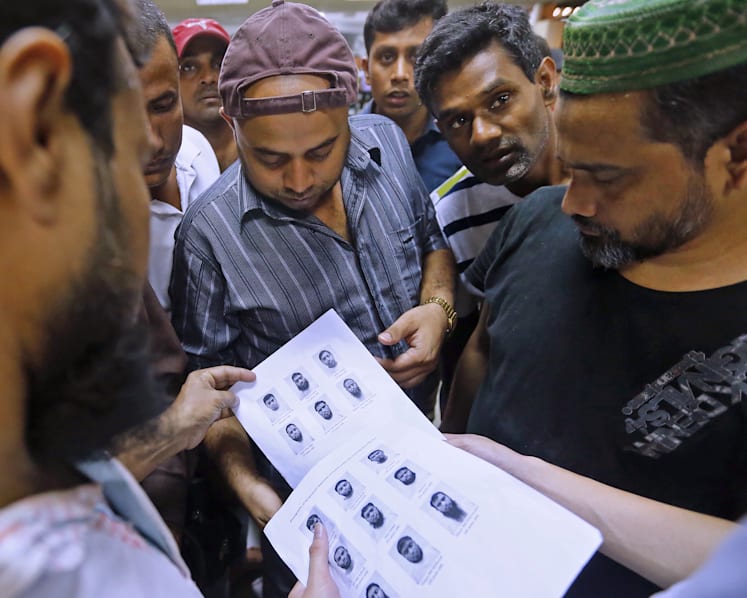
Bangladeshis in Little India looking at photos of the 27 Bangladeshi construction workers who were arrested here under the ISA. Photo: Ernest Chua


SINGAPORE — Foreigners here planning terror attacks overseas could easily switch their target and cause harm in Singapore, terrorism experts told TODAY following yesterday’s (Jan 20) announcement that 27 Bangladeshi construction workers had been arrested after they were found to be contemplating armed jihad in the Middle East and their homeland.
Referring to the arrests, S Rajaratnam School of International Studies (RSIS) head of policy studies Kumar Ramakrishna said that it was “not inconceivable” for the group to have hatched plans to target properties linked to the Bangladeshi government in Singapore. “This may have generated collateral damage to Singaporean lives and property as well,” Associate Professor Ramakrishna added.
Some among those arrested had encouraged members of their religious study group to return to Bangladesh and wage armed jihad against the Bangladeshi government. They had also donated money to groups believed to be linked to extremist groups in Bangladesh.
On an ideological level, Assoc Prof Ramakrishna noted that the terror cell’s influences – which included the ideology of terrorist groups such as al-Qaeda and the Islamic State – were rooted in salafi jihadism, which “legitimises violence against the putative ‘enemies of Islam’”.





With Singapore’s historical ties with the United States and Israel – countries looked upon by salafi jihadists as principal enemies – the prospect that the Republic may become an eventual target was “not far-fetched at all”, Assoc Prof Ramakrishna said.
Agreeing, RSIS research fellow Muhammad Haniff Hassan said: “Once they have accepted violence as a legitimate means to address their grievances and have no qualms about targeting civilians, the decision to launch an attack is a matter of strategic or tactical consideration and this consideration can change based on balance of harms and benefits to their goals.”
Furthermore, radicalised foreigners here could be exploited and recruited by extremists operating in the region as conduits to launch attacks against Singapore, said Professor Rohan Gunaratna, head of the International Centre for Political Violence and Terrorism Research (ICPVTR) at RSIS.
In a Facebook post yesterday, Home Affairs and Law Minister K Shanmugam pointed out that while the arrested Bangladeshis were planning attacks abroad, “they could have easily changed their minds and attacked Singapore”.
The Ministry of Home Affairs had said that the 27 Bangladeshi workers were meeting regularly since 2013. Nevertheless, Assoc Prof Ramakrishna said it was unlikely that the Republic would become a base for radicalised foreigners to plot attacks overseas. He pointed to Singapore’s small size and largely urbanised landscape, robust intelligence and security apparatus, as well as limited access here to “strategic and hazardous materials” which are tightly controlled by the authorities. “It would thus be pretty hard for a terrorist network capable of attacking our neighbours to develop within Singapore at this time,” Assoc Prof Ramakrishna said.
Still, the experts warned against complacency. Citing previous lapses including the 2008 escape of former Jemaah Islamiyah leader Mas Selamat Kastari from the Whitley Road Detention Centre, Assoc Prof Ramakrishna said the Republic must continue to be vigilant.
Prof Gunaratna pointed out that the transnational nature of terrorist networks meant that the fight against terrorism was no longer about “groups but multiple overlapping networks” that pay scant regard to national borders. This necessitates action by governments to operate across borders to protect their citizens. “Singapore has developed a zero-tolerance policy against terrorism and this policy must continue to maintain the stability and security of Singapore,” Prof Gunaratna said.




