







Budget 2015: Singaporeans need to be more resilient, says Tan Tai Yong
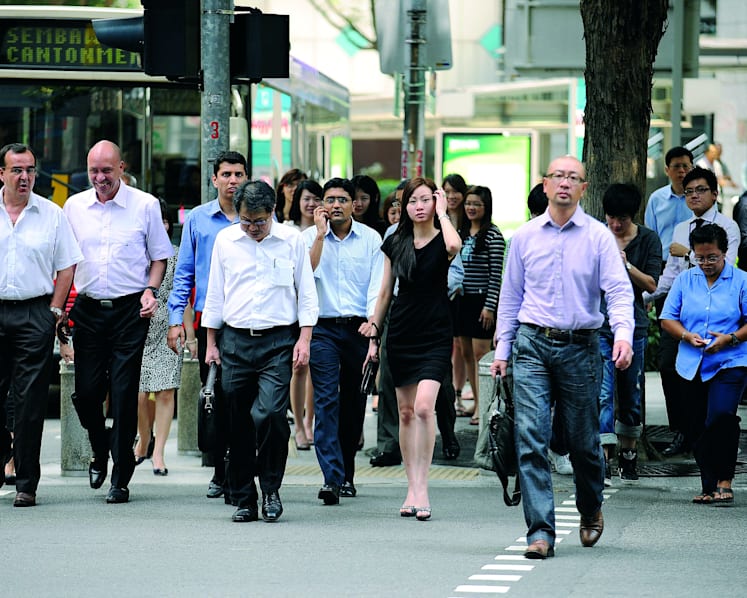
Office workers cross an intersection in the central business district of Singapore, on April 28, 2011. Photo: Bloomberg


SINGAPORE – Singaporeans need to build strength and resilience to cope during times of uncertainty and unpredictability, said Nominated Member of Parliament Tan Tai Yong during the Budget debate in Parliament today (March 4).
With an unpredictable future that brings about challenges and possibly crises, Prof Tan, who is also the executive vice-president (Academic Affairs) at Yale-NUS College, said this will demand a “new kind of Singapore”.
“The kind ironically, that does not come from stronger social security alone, but the sense that we can be strong even without having to rely solely on inanimate things such as infrastructure or systems or institutions but on people and communities that can count on one another,” he said.
Every successive Budget since 1965 has tried to introduce a slew of initiatives to “deliver the good life to Singaporeans”, said Prof Tan. This includes emphasis on job survival, the build-up of physical infrastructure to recent concerns of meeting education and career aspirations.





“But to truly build a future, to make sure that Singaporeans are ready for the future we need not just ensure comfort and peace, but also to prepare for difficult conditions and uncertainty,” he said.
Too often, he noted, the Government tries to build the means to continuously improve the infrastructure so that Singaporeans are spared the discomfort. This includes adding more trains, buses to address complaints about the overcrowding public transport system, for instance.
But Prof Tan felt Singapore remains quite vulnerable when it comes to having the systems and actors to adapt to changing realities.
“If under severe conditions, our infrastructure, our much-lauded forward-planning can no longer cushion from the very worse, what will happen?”
No amount of over-provision can guard against outlier crises, he added.
To be more resilient, Prof Tan suggested that Singapore can learn from Australia, which conducts regular water rationing exercises in order to remind people that water is in short supply and if there was a severe drought, its people would be able to adapt.
More primary school children should be encouraged to take the school bus instead of being chauffeured by their parents. Students should clean up and be responsible for their school’s cleanliness, instead of relying on cleaners, added Prof Tan.




