







Concerns about Budget as national spending goes up
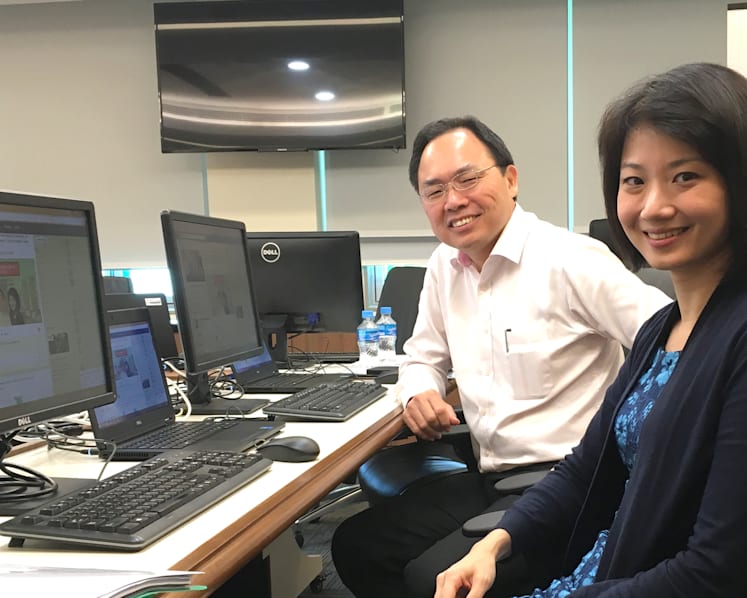
Members of Parliament Liang Eng Hwa (Holland-Bukit Timah GRC), left, and Sun Xueling (Pasir Ris-Punggol GRC) at the REACH pre-Budget session. Source: Ministry of Communications and Information


SINGAPORE — With Singapore facing tight fiscal conditions over the next few years, the Government will face more limitations in tapping its financial resources pool in the forthcoming Budget, particularly as social spending increases and the slowing economy pushes down projected tax revenues.
These will pose a “very challenging situation” for new Finance Minister Heng Swee Keat, who is set to deliver the Budget in Parliament on March 24.
Mr Liang Eng Hwa, chairman of the Government Parliamentary Committee for Finance and Trade and Industry, said this to the media after a pre-Budget online dialogue organised by the Government feedback-portal REACH on Monday (Feb 22).
Social expenditure, which accounts for about half of the Budget, is growing because of policies being implemented, such as the SkillsFuture movement and the Silver Support Scheme. Tax revenues are expected to dip as the economy experiences a slowdown.





In general, Mr Liang expects the Budget to be focused and targeted. “I’m sure we want to continue to grow the economy, so we can generate revenue to be able to continue to pay for higher expenditure (in) social spending and other (forms of) spending, including security,” he said, adding that healthcare spending is expected to rise.
The pre-Budget session was conducted using Facebook, and drew 21 participants and 800 unique visitors. The public posed questions on many issues, but the hot topic was how Singaporeans may effectively hop onto SkillsFuture, the national drive for lifelong learning. One piece of feedback was how to better communicate what SkillsFuture offers to help them improve skills and employability, Mr Liang noted.
Speaking to TODAY, he said that as the economy slows, Singaporeans would be concerned about such issues, and that may mean higher use of SkillsFuture credits, but he stressed that SkillsFuture’s focus should be on continuous lifelong learning, rather than being an initiative that applies only “during times of economic slowdown”.
One concern raised was how seniors may keep up with the increasingly digitised and technologically focused initiatives that the government agencies are rolling out. On this front, Mr Liang said: “We have to do more, especially at the community level, (to see) how we can help Singaporeans who may need more time to cope with the change, to be able to embrace technology, and to help them in their daily lives.”




