







Covid-19: Bill passed in Parliament to allow affected voters and candidates to participate in next General Election
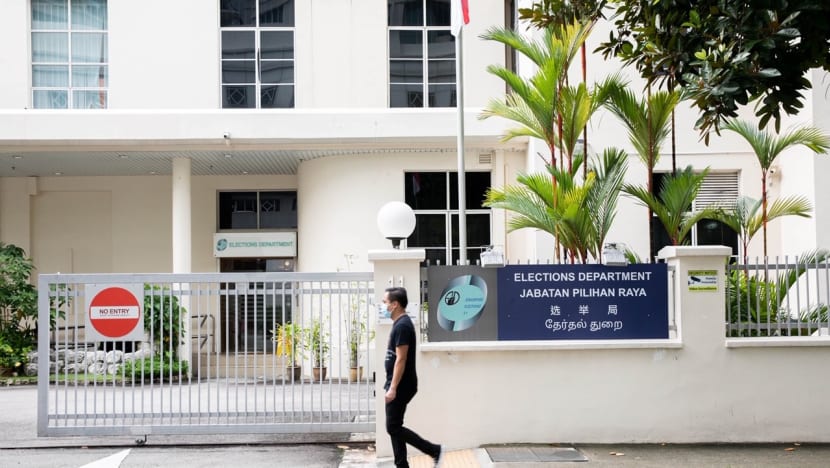
A new law will allow voters to cast their ballots even if they are serving movement restriction orders in designated facilities, such as hotels, to vote outside their electoral divisions.
SINGAPORE — A Bill passed in Parliament on Monday (May 4) allows the Elections Department (ELD) to implement special temporary arrangements to hold safe elections during the Covid-19 crisis.
The next General Elections must be held by April 14 next year and many experts worldwide have predicted that the pandemic may last well into next year.
Among the provisions in the Bill is one that allows voters to cast their ballots even if they are on stay-home notices at a designated facility.
“These arrangements allow more voters to be able to vote than it would otherwise be under previous rules,” the department said.





It added, though, that “the Bill is not related to the timing of the General Election”.
Similarly, arrangements will be made to allow aspiring candidates to authorise a proxy to file nomination papers on their behalf if they cannot do so due to the ongoing crisis.
Here is how the Bill will affect you as a voter or potential candidate:
Will I be able to cast my ballot if I am on a stay-home notice?
The ELD will allow voters serving their stay-home notice in designated facilities, such as hotels, to vote outside their electoral divisions.
How will this be done?
This will be done at either the designated facility itself or “some other suitable premise” that ELD has termed as special polling stations.
These voters at each special polling station will be able to mark their ballot papers in secret and deposit them in a single ballot box even though they are from different electoral divisions.
Such arrangements, it said, are akin to those for overseas voting.
Will these proceedings be open for observation?
Yes. ELD said that electoral candidates — independent or representing a political party — will be allowed to be present at these special polling stations to observe the proceedings.
“A political party, or an independent candidate contesting in a Single Member Constituency, or a group of independent candidates contesting at a Group Representation Constituency can also send one polling agent each to observe the proceedings,” it said.
What happens once the polls are closed?
The ballot boxes from each special polling station will be sealed and transported under police escort to a designated counting centre.
“As with other polling stations, candidates or their polling agents who are present in the special polling stations may place their seals on the ballot boxes,” ELD said.
The counting of the ballots will be done at a centralised counting centre where ballots from the various special polling stations will be mixed together and then sorted for counting.
“This will preserve voting secrecy,” it said.
What are the requirements for an electoral candidate to file a nomination paper by proxy?
ELD said that the aspiring candidate must first be found to be unfit or unable to do so themselves due to Covid-19.
This includes hospitalisation due to the disease or having to serve out a stay-home notice or quarantine order.
Secondly, the proxy needs to be a Singaporean citizen who is entitled to vote.
The person should also possess a power of attorney “expressly authorising” him or her to act on behalf of the aspiring candidate.
“This must include an authorisation to submit nomination papers and raise objections to the nomination papers of other candidates,” ELD said.
However, ELD said that the Bill does not allow for alternative representation for subscribers as they can be any person whose name is in the relevant register of electors.
Subscribers refer to proposers, seconders and assentors who are required to accompany a candidate to deliver the nomination papers.
The candidate should find a replacement if any of their subscribers are either sick or on a movement restriction order due to Covid-19.
What other areas of the election process are not covered by the Bill?
ELD said that the Bill does not cover precautionary measures such as those on campaigning.
Plans for campaigning guidelines are in the works and the department said that it will take into account the prevailing advisories from the Ministry of Health for all parties to have the necessary preparation time.




