







Dyson's relocation to have limited impact on Singapore, say economists
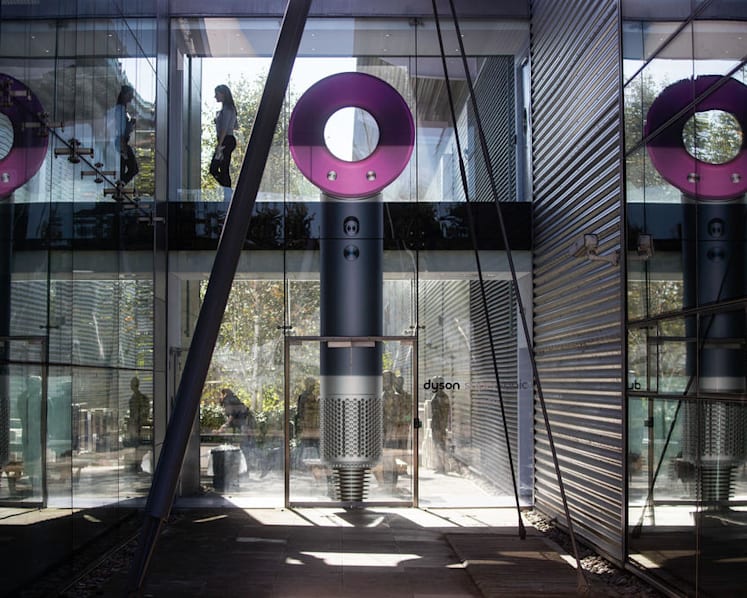
Dyson announced on Jan 22, 2019, that it is moving its corporate office and tax registration from Britain to Singapore to be closer to its fastest-growing markets.


SINGAPORE — British technology firm Dyson, a multi-national company (MNC), employs more than 4,500 people in Britain, but only two top executives, namely chief financial officer Jorn Jensen and general counsel Martin Bowen, are relocating here.
Much can be read into this, economists said, and the impact of the relocation could be limited because it appears to be a “legal exercise” involving the moving of its professional services such as finance and accounting.
Dyson announced on Tuesday (Jan 22) that it is moving its corporate office and tax registration from Britain to Singapore to be closer to its fastest-growing markets.
The household-appliance manufacturer, famed for its bagless vacuum cleaners and bladeless fans, attracted negative press in England after the announcement, with many calling its founder, Brexit-backer James Dyson, a “traitor” and “hypocrite”.





Dyson declined comment when asked to detail its plans in Singapore, but reiterated that its presence in Malmesbury, Hullavington, London and Bristol in the United Kingdom will continue “to be (the) core creative and engineering parts of Dyson” despite a tilting of its “centre of gravity” towards Asia.
While it pumped £330 million (S$585 million) into building a research-and-development (R&D) facility at the Singapore Science Park in 2017, its R&D arm in the UK continued to expand last year. Close to £250 million was pumped into R&D infrastructure there, at its 28ha Hullavington site and technology campus in Malmesbury, Wiltshire.
Dr Chua Hak Bin, senior economist at Maybank Kim Eng Group in Singapore, said that Dyson’s move is merely a sign of how the technology supply chain is “breaking up in Asia”. The ongoing trade war between the United States and China has somehow created an opportunity for Singapore.
“As the US-China trade war forces more MNCs to consider locations outside China and possibly even Hong Kong, Singapore is well-placed to capitalise on this major shift and reconfiguration of the tech supply chain,” he said.
Agreeing, Mr Song Seng Wun, an economist with CIMB Private Banking, said that Dyson’s presence in Singapore is strategic, because its manufacturing activities are already around the Asian region.
Just how much direct impact will the move have on Singapore? “Very little, realistically speaking,” Mr Song said. “(The latest development is) more of an administrative, legal shift. In terms of headcount, (we should see fairly minimal additions to) administrative or support staff here… The brains and its talents are still in the UK.”
As far as Singapore is concerned, the bigger news to both Dr Chua and Mr Song was Dyson’s announcement last October that it will manufacture its first electric car here.
“More meaningful in the coming months and years would be when the first electric-car factory starts,” Mr Song said. This would have a larger impact on the economy and a multiplier effect due to the hiring and expansion of the business.
Dr Chua added that the automobile plant could “attract parts of the supply chain to also set up in Singapore, creating a new manufacturing ecosystem”.
Dyson’s electric-car plant here is expected to be built by 2020, and its first car model scheduled to be rolled out by 2021.
Despite rising criticisms in recent years that Singapore should be less dependent on MNCs since it is expensive to lure them over, economists told TODAY that Dyson’s move should still be seen as a win — built on a strategy of attracting MNCs as a source of knowledge transfer on small- and medium-sized enterprises (SMEs).
Mr Bernard Aw, principal economist (economic indices) at data and information services firm IHS Markit, said that one of the goals of the Government’s Committee of Future Economy is to drive collaboration between MNCs and SMEs here over the next five to 10 years.
“The true litmus test is how closely local firms can partner with MNCs to jointly develop and offer products and services that markets want,” Mr Aw said.
Ms Selena Ling, head of treasury research and strategy at OCBC Bank, noted that a headquarters would “usually generate other spin-off activities”, including finance, talent attraction and R&D.
“To have a dynamic and vibrant economy, Singapore should remain open to FDI (foreign direct investment), foreign talent and ideas,” she said. “A growing economic pie would benefit everyone, including SMEs and Singaporean workers.”
Dr Chua believes that Singapore needs “both local and foreign talent”.
“There is room for both a homegrown Creative and a Dyson. Innovation and invention thrive best when there are no barriers to talent and knowledge transfers,” he said.
Dyson is expected to move its headquarters to Singapore in the coming months, building upon its existing team here of 1,100 employees who are already undertaking a variety of functions including supply chain management, advanced manufacturing and R&D.
In making the announcement, Dyson’s chief executive officer Jim Rowan, who is already based in Singapore, said that Dyson’s markets in Asia accounted for almost three quarters of revenue growth in 2017.




