







Earlier probe into firm linked to Filipino who died found complaint baseless: MOM
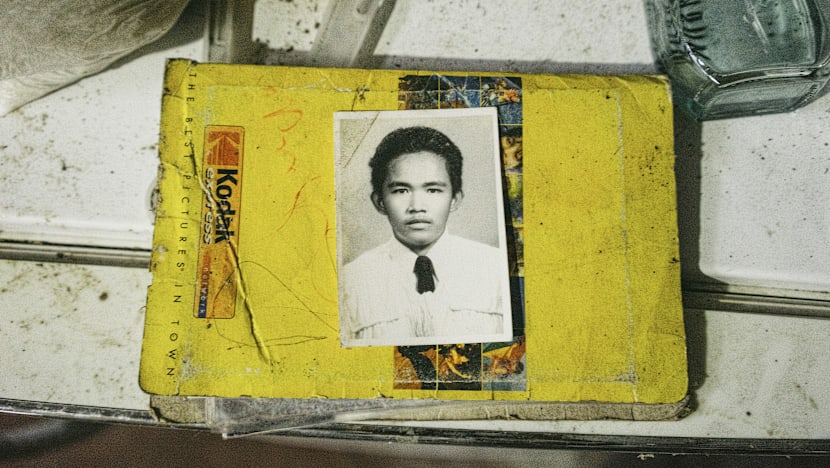
A photo of Eril Andrade at his home in Kalibo, Philippines. Andrade, who died in 2011, and nearly a dozen others were allegedly recruited by a Singaporean agency and tricked with false promises of working on a boat for double the actual wages. Photo: The New York Times


SINGAPORE — Shedding more light on its actions taken in a case of a Filipino fisherman whose recruitment was aided by a Singaporean company and who died in 2011, the Ministry of Manpower (MOM) said it investigated the company months before his family’s complaint but found an earlier complaint to be unsubstantiated. The ministry thus did not open fresh investigations into the complaint lodged by Eril Andrade’s brother in November 2011.
The tragic experience of Andrade, who died in February 2011, was reported by The New York Times earlier this month.
Coming from a village in the Philippines, he got a job on a Taiwanese fishing vessel through a Singaporean firm called Step Up Marine Enterprise. He paid recruitment fees, arrived in Singapore in September 2010 and died on the fishing vessel, which arrived at the Singapore port two months later in April 2011. His brother filed a complaint against Step Up in November 2011 with the MOM.
The MOM said it had received two complaints against Step Up, in May and November 2011. The first was by a non-governmental organisation alleging that Step Up had arranged for three Filipinos, not including Andrade, to be employed on a Taiwanese fishing vessel, where they were later owed salaries and incurred financial penalties for the early termination of their contracts.





The MOM said it investigated and found no evidence that Step Up operated as an unlicensed employment agency.
“Step Up Marine’s main role was to provide temporary accommodation to the workers pending their boarding of the ships,” said the ministry’s spokesperson. “We established that the employment contracts of the three Filipino nationals in question were not signed in Singapore and their employment did not take place in Singapore. Consequently, the alleged salary disputes were outside Singapore’s jurisdiction.”
On the trafficking allegation, the MOM said it ascertained that Step Up was not involved in the direct recruitment or placement of these workers in Singapore. The MOM could not investigate allegations of trafficking activities outside Singapore because it did not have legal powers to investigate extra-territorial acts in 2011.
The spokesperson added that there were never any allegations of demands for sexual favours or of unsanitary and crammed housing conditions, which were reported by The New York Times to have happened when the men arrived in Singapore and were put up in an apartment in Chinatown while awaiting jobs.
So, when Andrade’s brother complained to the MOM in November 2011 “with essentially the same charges of Step Up Marine’s involvement in trafficking activities, we did not open up fresh investigations since the complaints were already looked into earlier and found to be unsubstantiated”, said the spokesperson.
The illegal recruitment of men from rural areas in the region, with Singaporean companies playing a key role, was reported by TODAY between May 2009 and September 2010. The men would pay fees of several hundred dollars, later learn of salaries lower than promised (they received US$200 (S$282) per month) and would often not be given a copy of the contracts that they were hurriedly made to sign.
The men would face punishing conditions at sea, including work days lasting 20 hours, bad food, lack of treatment for injuries suffered and beatings for not performing up to expectations.
A check with the Philippine embassy in Singapore, however, showed that fewer cases of human trafficking and illegal recruitment — as defined by laws in the Philippines — have been reported since 2011. From 69 cases in 2011, the figure dropped to 14 in 2012, 39 in 2013 and three last year. No case has been reported so far this year and the embassy has yet to receive any complaint against Step Up this year.
“The embassy has not reported any suspected/potential human trafficking cases to the Singapore authorities this year,” the Philippine embassy said. “However, the embassy had, in the previous years, made representations with Singapore authorities on reported and potential human trafficking cases.”
The embassy did not indicate possible reasons for the general decline in human trafficking cases. But the MOM pointed to efforts taken in the last two years.
A Seafarers’ Welfare Centre (SWC) was set up at Jurong Fishery Port in January last year in collaboration with the Singapore Maritime Officers’ Union, various seafarer missions and the Migrant Workers Centre. The SWC provides distressed fishermen with shelter and access to help from relevant authorities and has helped two seafarers so far. Both cases were not found to involve trafficking, said the MOM.
The Prevention of Human Trafficking Act took effect in March, equipping Singapore with the power to investigate cases of exploitation both locally and overseas if individuals are trafficked to, or through, Singapore.
“This will enable us to extend the reach of our investigations should similar complaints of trafficking be brought to us in future,” said the MOM spokesperson, who added that Singapore works to continually strengthen its enforcement powers and with partners to combat the transnational crime.
Ms Shelley Thio, an executive committee member of migrant workers advocacy group Transient Workers Count Too (TWC2), however disagreed that the fall in the number of cases reported to the embassy was due to the new law. The embassy’s numbers do not capture the full picture – among other factors, the victims are afraid of repercussions should they seek assistance, she said. She also claimed that the organisations involved with the SWC were not trained in victim identification.
On the investigation into Step Up, Ms Thio said that her group has evidence that the company and its personnel were “involved in directly recruiting (the fishermen) through their domestic worker from the Philippines”. “From our investigations we have found out that there is a Step Up International recruiting Filipinos to work overseas,” she said.
“The Andrade Family is still waiting for justice,” she added.




