







Easing of Singapore’s border restrictions to New Zealand, Brunei a ‘small cautious step’ to reviving aviation: Ong Ye Kung
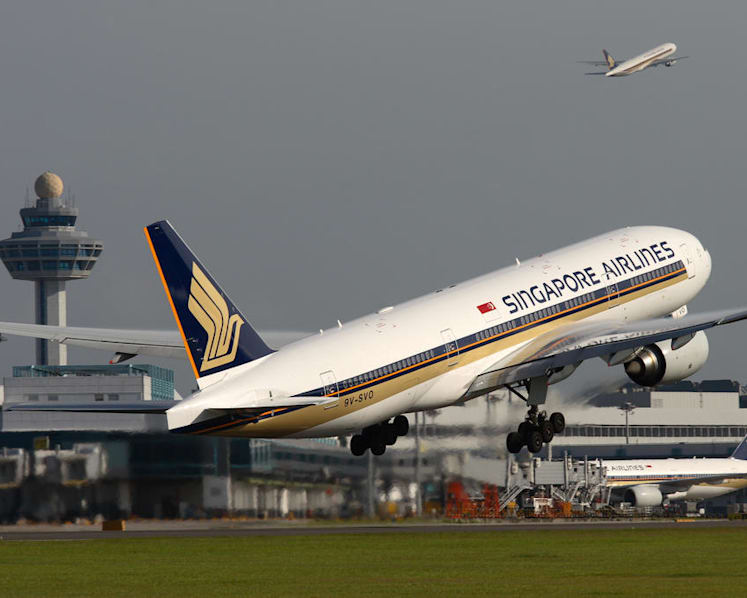
The SIA Group welcomed the decision to ease restrictions on Singapore's borders.


- The move to ease border control will signal to other countries that Singapore’s economy is open for business
- Singapore can manage the number of travellers from Brunei and New Zealand, Transport Minister Ong Ye Kung said
- Whether Singaporeans can travel freely again will depend on the success of the unilateral arrangements
- SIA Group welcomes the easing of inbound travel to some countries
SINGAPORE — The move to reopen Singapore’s borders to New Zealand and Brunei is a “small cautious step” towards resuscitating Changi Airport as well as national carrier Singapore Airlines (SIA), Transport Minister Ong Ye Kung said on Friday (Aug 21).
However, on the question of when Singaporeans can travel freely again, he said this will depend on the success of the unilateral arrangements with the two countries, and the Government will assess the situation once progress is made.





Mr Ong was addressing reporters during a media doorstop on Friday evening after the multi-ministry task force handling Singapore’s response to the Covid-19 pandemic announced the partial easing of the country’s border restrictions.
Elaborating on the Government’s rationale behind the move, Mr Ong said the choice to unilaterally reopen Singapore’s borders to New Zealand and Brunei is also to signal to other countries that the city-state is “open for business”.
“As a small open economy, to survive we have to keep our borders open… (This) is really an invitation to the world… We are open for business and you are invited to bring business activities and opportunities to Singapore,” he said.
As the aviation sector is also linked to Singapore’s wider economy, it is therefore vital for the country to “start taking steps to open up in a safe manner” to revive the aviation sector.
On why New Zealand and Brunei have been chosen, Mr Ong explained that the two countries “have really controlled the epidemic situation very well” and their incidence rates of infections are “equivalent (to) or even better than Singapore”.
Furthermore, both are also small countries, he said, and so the number of travellers that are expected to arrive in Singapore is manageable.
Currently, there are two flights from Brunei to Singapore and the flight capacity is 500 seats a week.
There are four flights a week from New Zealand to Singapore, with a flight capacity of 1,200 seats.
Therefore, taking into account the flight capacity, the infection rates in both countries, and that travellers will be tested when they arrive in Singapore, Mr Ong said that “we are really looking at a very low risk that we can manage”.
FUTURE OF SINGAPORE’S BORDER RESTRICTIONS
Mr Ong was asked which countries Singapore can expect to further open up to in the future and whether the authorities have any updates on bilateral agreements with other countries, such as the reciprocal "green lane" arrangements.
He said that the Government is monitoring the situation in various countries, both in the region and internationally.
But for a start, the authorities could consider further easing its borders to countries that the multi-ministerial task force has listed as low-risk where travellers only need to serve out a stay-home notice period of seven days rather than two weeks.
Still, he cautioned that this list could change depending on how the epidemic situation evolves in these countries.
On whether the Government expects airlines to resume leisure travel to New Zealand and Brunei immediately from Sept 1 when the border restrictions are lifted, Mr Ong said that it will depend on whether the two countries reciprocate in easing border measures on their end.
“It depends on Brunei and New Zealand because this is a unilateral opening for them to come here.”
As for leisure travel from the two countries to Singapore, Mr Ong said that as a starting point, the aim is to fill up the current flight capacity of 500 seats from Brunei and 1,200 seats from New Zealand a week.
SIA WELCOMES EASING OF TRAVEL RESTRICTIONS
In a separate press statement on Friday, the SIA Group said that it welcomes the authorities’ decision to ease inbound travel from selected countries.
“The recovery of air travel and airfreight is a necessary catalyst for the recovery of global trade and economies severely impacted by Covid-19,” it said.
The group added that the move is an “important step towards the gradual rebuilding of the Singapore air hub” and it will continue to work closely with the Government and all stakeholders to support the decision.
“The SIA Group’s top priority is the health and safety of all our customers, staff and the communities that we operate in,” it said, adding that it has modified its in-flight product offerings and end-to-end service delivery to enhance health and safety measures and introduce new initiatives where possible.
“The SIA Group will continue to closely monitor the demand for international air travel, and be nimble and flexible in adjusting our capacity to match this.”
SIA Group — comprising SIA, SilkAir and Scoot — accounted for more than half of the passengers flying in and out of Changi Airport in the last financial year.



