







Electoral Boundaries Review Committee ‘not formed yet’
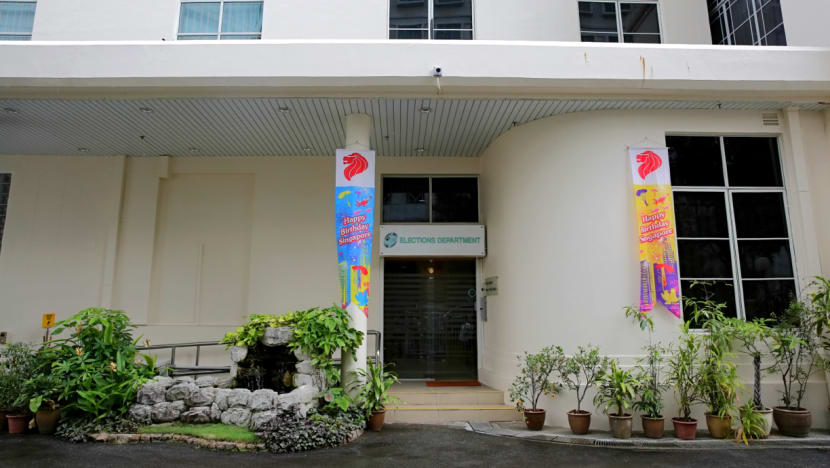
Last year, it was reported that the Elections Department plans to introduce electronic voter registration at the next General Election.


SINGAPORE — The Electoral Boundaries Review Committee (EBRC) has yet to be formed, said Minister-in-Charge of the Public Service Chan Chun Sing on Thursday (Feb 28) in response to a question from Workers’ Party chief Pritam Singh.
Mr Singh posed the question during the Committee of Supply (COS) debate on the Prime Minister’s Office's budget, where he also sought an update on the Elections Department’s efforts in conducting roadshows to educate voters on potential changes such as electronic registration.
Last year, it was reported that the Elections Department plans to introduce electronic voter registration at the next General Election. Under such a system, an election official would scan a voter’s national registration identity card using a barcode scanner to register the voter, but voting will still be done by paper ballot, TODAY reported.
Mr Chan did not reveal the number of roadshows and when they would be held. “On the number of roadshows, we have done that in preparation for the last Presidential Election and we will continue to do that as we move towards the next General Election,” he said.





The EBRC is in charge of redrawing electoral boundaries in Singapore.
The committee is appointed by the Prime Minister, who sets its guidelines, or terms of reference.
For the last General Election which was held in September 2015, Prime Minister Lee Hsien Loong had told Parliament in July that year — in response to questions filed — that the EBRC had been formed two months earlier. The electoral boundaries were announced soon after.
Among other boundary changes in 2015, the Joo Chiat Single Member Constituency (SMC) was absorbed into Marine Parade Group Representation Constituency (GRC).
Fengshan and MacPherson were carved out as SMCs, and the Marsiling-Yew Tee GRC was newly formed.
The opposition-held constituencies — Punggol East, Aljunied and Hougang — were not changed. Punggol East SMC changed hands from the Workers’ Party to the People’s Action Party following the 2015 General Election.
Mr Singh said on Thursday that he hoped the EBRC’s next report will be in “greater detail” and that the Government would make it a “matter of practice” to announce when the committee is formed.
“Why does the Government not announce the formation of the EBRC as a matter of practice? It would be a waste of Parliament’s time and even bordering on an abuse of process if an MP had to file the same parliamentary question to the Prime Minister when rumours of an imminent election are in the air,” Mr Singh said.
Former WP Non-Constituency MP Yee Jenn Jong had raised similar concerns in 2015, Mr Singh said. Mr Yee said “the completeness of the EBRC had been shrinking over the years”, and asked for minutes of the committee’s report to be released.
Mr Singh noted that the Prime Minister’s reply then was to leave the “completeness of the committee’s report and the minutes to the committee”.
Mr Singh said on Thursday: “Even though the Prime Minister said that he was not in favour of publishing every twist and turn that will be reflected in the minutes, the Prime Minister was non-committal on the prospect of a more complete report.”
He added: “It would appear that this can change, should the Government decide to do so, since the EBRC’s terms of reference are determined by the Prime Minister himself.”
Mr Singh asked that a report be provided for the public detailing “why specific precincts, GRCs and SMCs are moved or swapped for each and every constituency in the future”.
This is not the first time that the WP is raising concerns about the completeness of the EBRC report.
As early as 2010, WP’s Ms Sylvia Lim had called for the boundary review report to be released six months to a year before Nomination Day.
Then-Deputy Prime Minister Wong Kan Seng said the EBRC generally takes two to four months to complete its review.
On Thursday, Mr Chan said the EBRC is guided by the terms of reference laid out by the Prime Minister.
“The EBRC independently considers and determines how the constituencies are delineated, the size and configuration of the constituencies, as well as the total number of MPs to be returned.”
In reviewing the electoral boundaries, the committee takes into account “technical factors” such as population growth and shifts, and other relevant parameters, added Mr Chan.
In 2015, the EBRC was tasked to consider “significant increases or decreases in the number of electors in the current electoral divisions as a result of population shifts and housing developments since the last boundary delineation exercise”.
Mr Chan said: “As a matter of practice, we should allow the committee to conduct its work professionally, away from unnecessary media attention or public pressures.”
He added that “as with past elections, there will be sufficient time, from when the committee's review report is made public to the time of the election, for candidates and political parties to make their preparations”.




