







Singapore running pilot for ERP 2 location-based charging
CNA's Justin Ong put ERP 2 location-based charging to the test. What worked well, and what didn't?
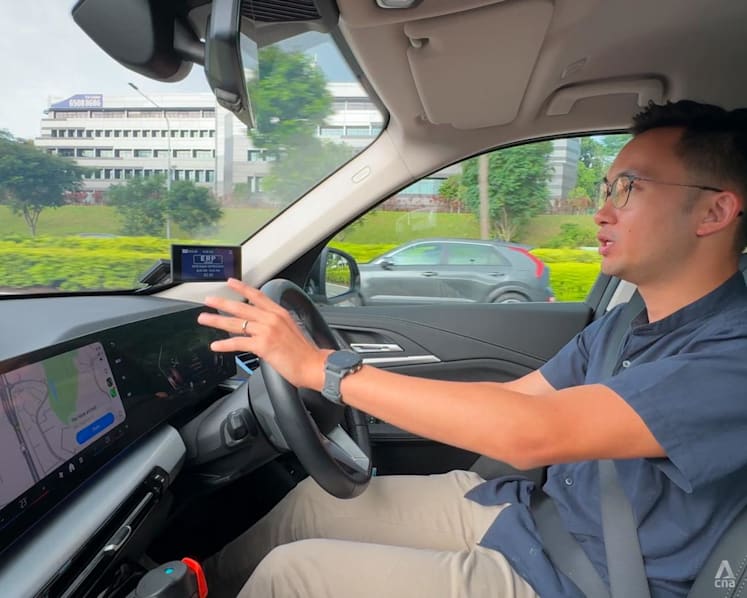
CNA's Justin Ong puts ERP 2 location-based charging to the test. (Photo: CNA/Syamil Sapari)

This audio is generated by an AI tool.


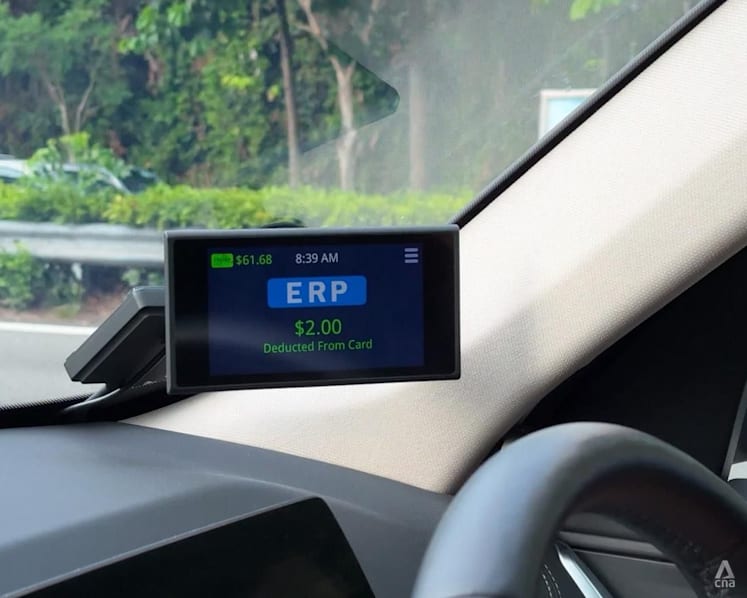
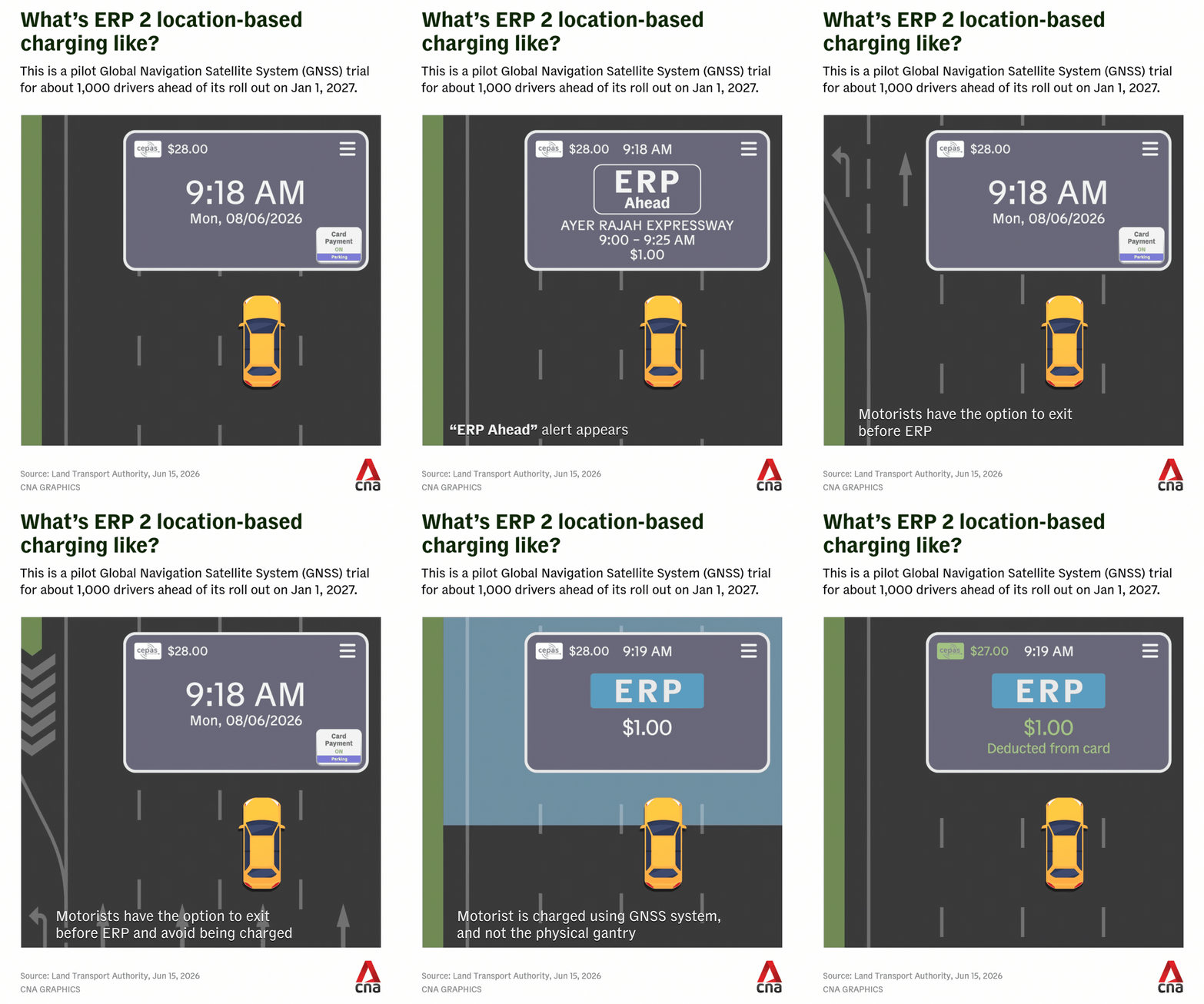
SINGAPORE: An alert that an Electronic Road Pricing (ERP) area is ahead pops up on the car’s on-board unit (OBU) display.
But there is no gantry, and a section of the road is painted in blue - known as an ERP charging zone. As the driver goes over, a second message on the OBU says the charge is paid.
This may not be familiar to drivers under the current ERP system, but it is among the features that could be part of the new ERP 2 location-based charging system when it fully rolls out on Jan 1, 2027.
About 1,000 motorists are part of a trial that started this month on the new location-based charging. CNA was also given the chance to test out these new features.





A Land Transport Authority (LTA) spokesperson said on Monday (Jun 15) that the trial will allow it to gather feedback on ERP 2’s features and user interfaces and make refinements where necessary before a full roll-out to all motorists.
Currently, there are no ERP charging zone alerts on the OBU, and drivers usually rely on physical sightings of the gantry to know that they are about to be charged. The charge will be incurred when the ERP gantry detects the vehicle.
But with Singapore fully switching to the ERP 2 location-based charging system from Jan 1 next year, gantries will no longer be used to demarcate the ERP charge zones.
These ERP gantries will be progressively removed from later this year, starting with those that are no longer in operation.
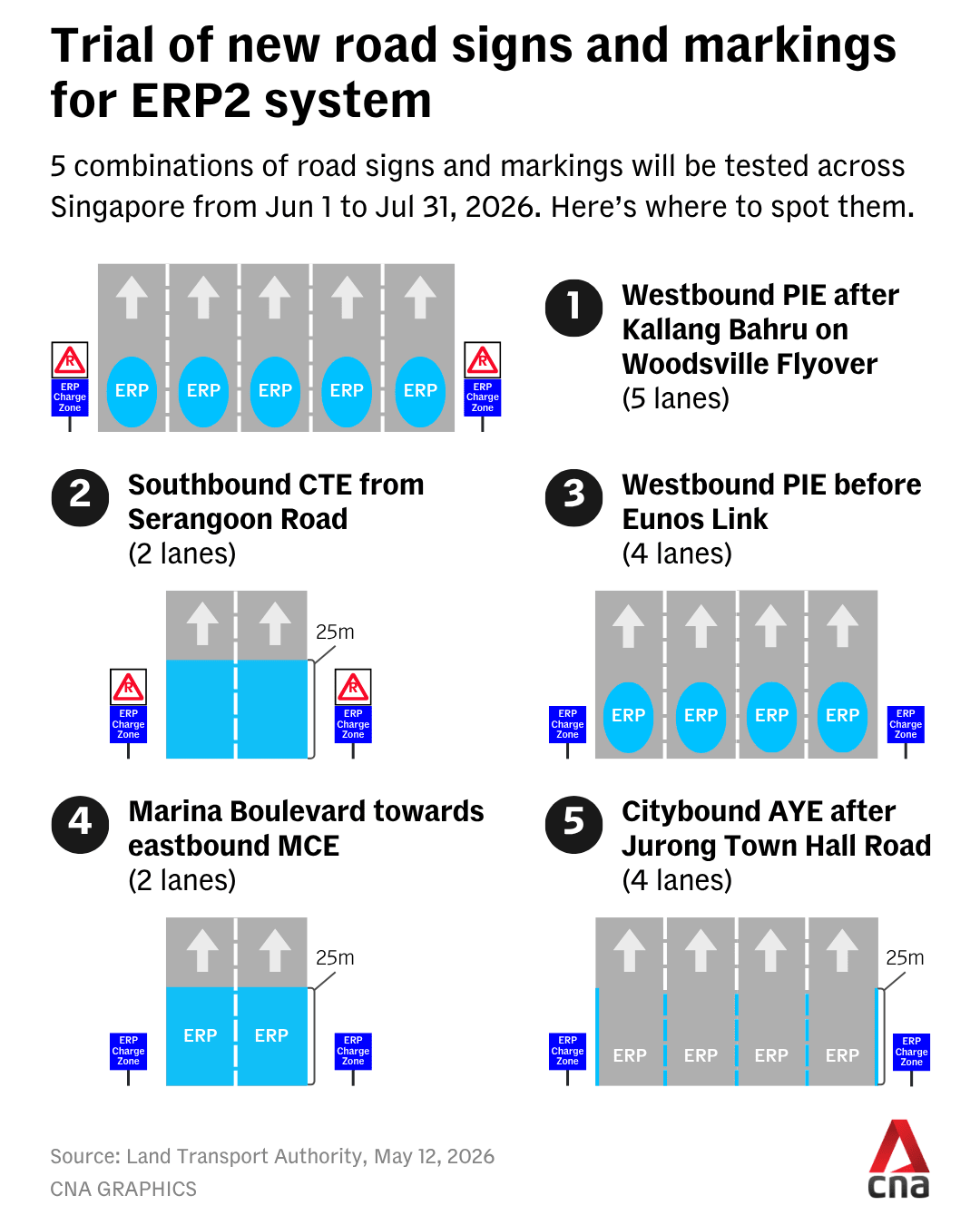
New road signs and markings could be used to indicate ERP charging locations. A trial for these has been running since March.
But how different will the features be under this new system? CNA puts them to the test.
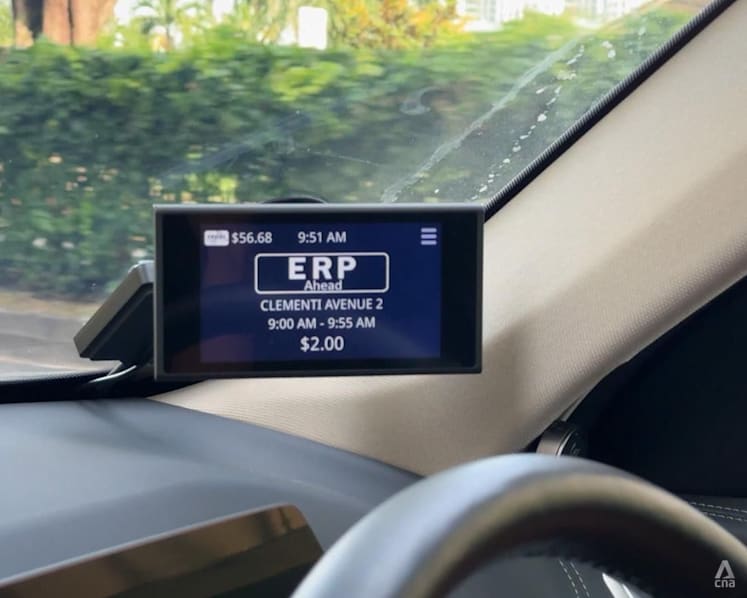
LOCATION-BASED CHARGING
For those under the trial, ERP 2 location-based charging zones will be introduced at the 22 operational ERP locations.
As ERP gantries will no longer serve as markers of charging locations under the upcoming system, LTA has been testing the effectiveness of new road markings and signs as visual cues along or near expressways at five locations.
This journalist drove past two of the locations.
The first was the ERP at Central Expressway (CTE) from Serangoon Road. When this reporter drove towards the ERP charge zone, an alert came up on the OBU display, showing the location and the amount to be charged.
Passing directly under the ERP gantry at 7.31am, there was no charge on the screen. This is because under the new satellite-based system, motorists are not charged through the gantry.
After two seconds, when the car drove over the ERP road markings beyond the gantry, the charge of S$1 (US$0.80) came up on the screen.
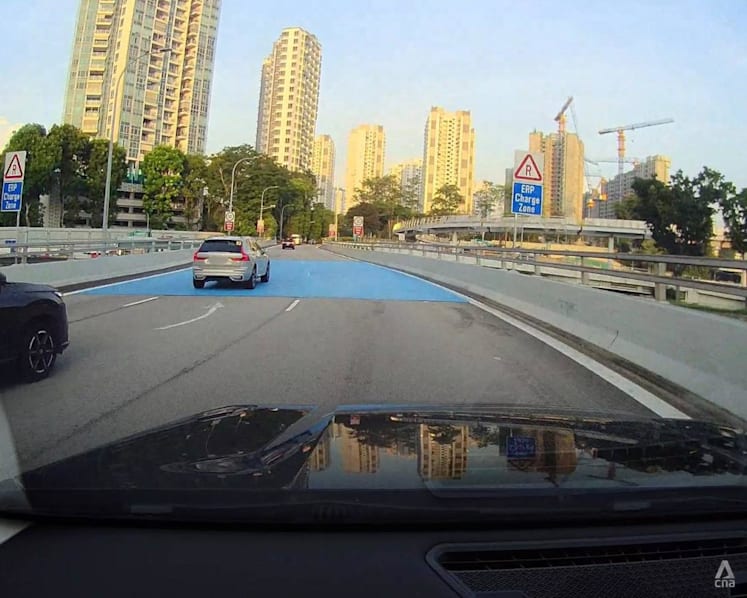
There were also signs flanking both sides of the road showing that it was an "ERP Charge Zone".
Keeping in mind that there will no longer be physical gantries when the ERP 2 system is fully rolled out on Jan 1, the road markings were sufficient to indicate it was an ERP charging zone.
The road is painted for a 25m stretch, which was long enough to grab this driver's attention, covering the entire field of vision.
The signs at the side of the expressway, however, were not eye-catching and easy to miss, being in the peripheral vision of the motorist. They also got lost in the deluge of highway signs and did not stand out.
In contrast, the soon-to-be-defunct ERP gantries loom large overhead and are unmistakable.
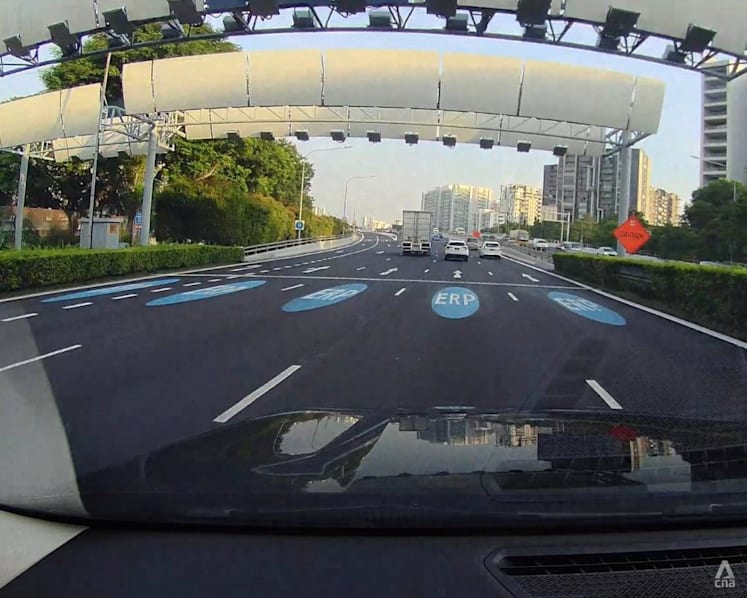
CNA then tried to drive under the ERP at Pan Island Expressway (PIE) after Kallang Bahru on Woodsville Flyover. This ERP charging zone features a different marking - blue oval ERP road markings on each lane.
Again, the ERP alert popped up on the OBU display, with the same ERP Charge Zone signs also flanking both sides of the expressway.
When driving through the zone at 8.02am, the ERP charge happened a split second after crossing the markings, showing that the satellite-based system was precise in its charging.
To this journalist, the oval marking was less obvious and smaller than the CTE markings, where the entire zone of the road was painted blue. The smaller ovals were easier to miss.
The charge zone signs on the sides of the expressway were no easier to spot. One of the signs on the left was blocked by another road sign, and could only be seen when the car was a few metres from the charging zone.
The other three locations that have these trial markings and signs are: PIE westbound before Eunos Link, citybound Ayer Rajah Expressway (AYE) after Jurong Town Hall, and Marina Boulevard to Marina Coastal Expressway eastbound.
AVOIDING AN ERP CHARGE
CNA then tested whether an alert could help a driver avoid an ERP charge.
LTA said that the ERP alert zones are located around the last possible exit before motorists reach the charging locations, so that motorists can consider an alternative route.
But how long before the nearest exit will the alert appear, and will there be enough time to change route and avoid being charged?
CNA first tried this on the smaller road of Clementi Ave 2, which has an ERP charging zone on its exit to AYE.
The ERP Ahead alert came less than 100m from the exit to AYE where the ERP was, and it gave this journalist enough time to avoid entering the lane and being charged.
But avoiding an ERP charge on an expressway was quite different. Driving on the AYE towards the ERP before Alexandra Road, the last possible exit before the charging location was Portsdown Flyover/Queensway.
Travelling on lane 2, would the alert come soon enough to filter to the exit on lane 5?
The answer was yes – but barely. The ERP alert flashed on the OBU display about 200m from the exit.
This journalist made three quick lane changes and was able to filter into the exit lane in the nick of time.
Had there been more congestion, or if the car had been on lane 1, it might not have made it safely to the exit.
ACCURATE CHARGING
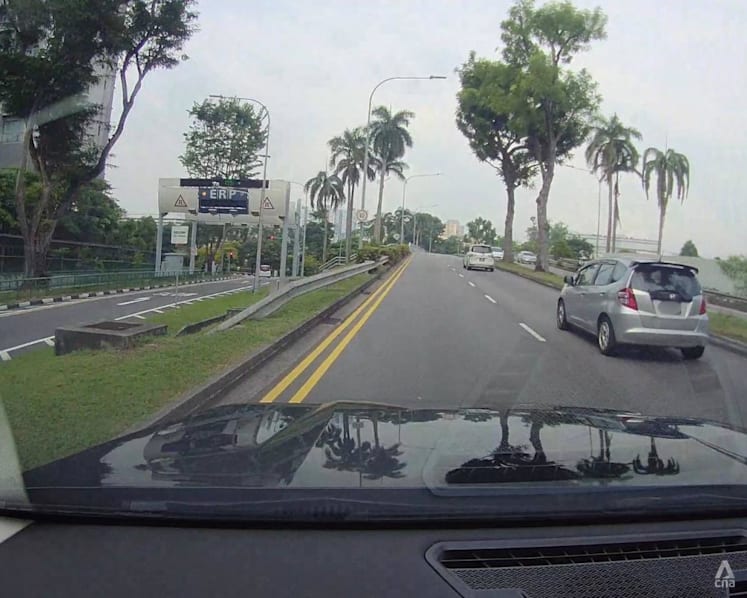
CNA then sought to test if cars could be mistakenly charged if they drove on a parallel road near an ERP charging area.
One example was Clementi Avenue 2. Should cars choose not to exit to AYE, they would drive on a parallel flyover about 30m away from the ERP charging area.
The satellite-based system passed this test. CNA drove in the left-most lane while passing adjacent to the ERP charging area.
This was done three times, and there were no charges.
OTHER FEATURES
Other features that will be rolled out to the motorists on the pilot include automatic payment of checkpoint tolls.
Currently, on the Singapore side of the checkpoint, motorists pay the toll by inserting a NETS CashCard or CEPAS card into a card reader at the immigration booth.
After ERP 2 is rolled out on Jan 1, 2027, a contactless toll collection system will be in place.
The OBU display will show a Toll Ahead alert before motorists reach Woodlands or Tuas Checkpoint.
The motorist will proceed to clear immigration and drive away from the immigration booth. The OBU will then show a notification with the amount to be charged when the vehicle drives on the Woodlands Causeway or Tuas Second Link.
The OBU will then show a successful deduction.
A new roadside electronic parking (REP) system will also be trialled for the 1,000 vehicles starting in August.
The system will let motorists start parking sessions through their vehicle’s OBU, instead of only the Parking.sg app.
It can also automatically detect when the vehicle leaves, end the session and calculate charges, removing the need to manually stop parking.
As of May 31, about 960,000 vehicles or more than 96 per cent of vehicles in Singapore have installed the ERP 2 OBU. Since the installation of OBUs was extended to foreign-registered vehicles from Apr 1, over 5,700 foreign-registered vehicles have opted to install the OBU.
Motorists not participating in the trial may also provide their feedback on the trial road signs and markings at LTA_Pilot_GNSS [at] lta.gov.sg by Jul 31.




