







Explainer: What goes on inside a howitzer when a gun barrel is lowered?
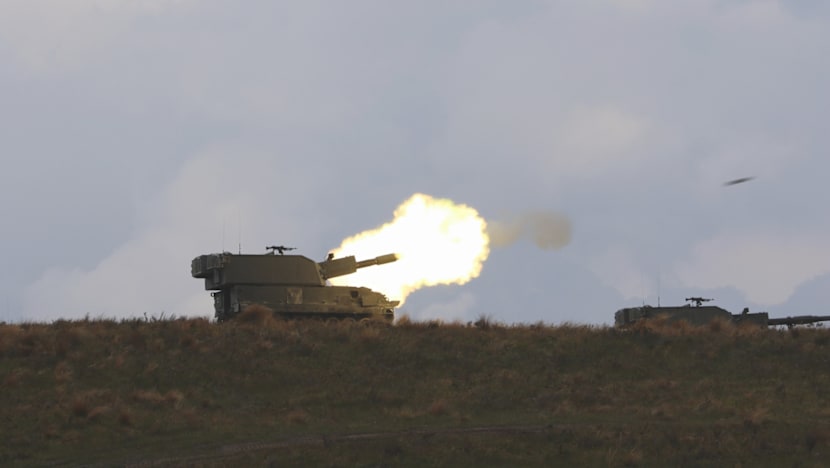
A Singapore Self-Propelled Howitzer participating in the live-firing exercise at Waiouru Training Area, New Zealand.


SINGAPORE — Following the death of actor Aloysius Pang, who was fatally wounded in a Singapore self-propelled howitzer (SSPH) during reservist, the Ministry of Defence on Wednesday (Jan 30) released more information on how the SSPH is operated and what goes on inside the cabin when the gun barrel is lowered.
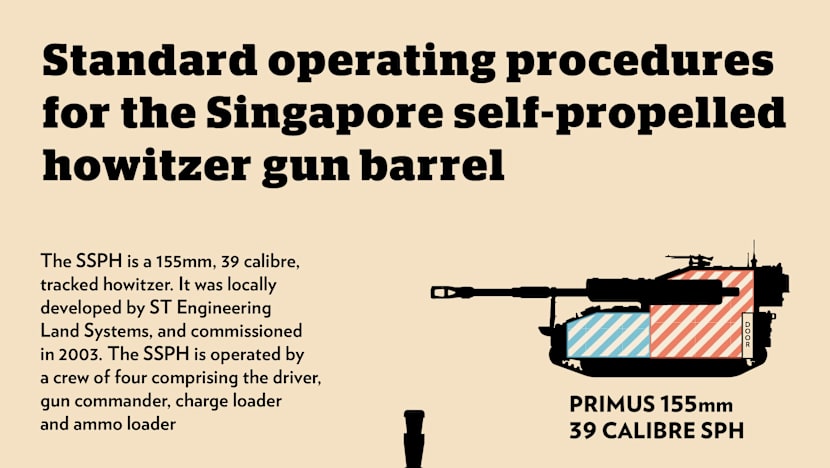
ABOUT THE SSPH
The SSPH is a 155mm, 39-calibre, tracked howitzer.
It was developed here by ST Engineering Land Systems and commissioned in 2003.
- CNA Games
 Guess WordCrack the word, one row at a time
 BuzzwordCreate words using the given letters
 Mini SudokuTiny puzzle, mighty brain teaser
 Mini CrosswordSmall grid, big challenge
 Word SearchSpot as many words as you can
Until the incident involving Pang, there were no reported injuries to servicemen during the gun-lowering process for maintenance, operations or firing of the SSPH.
Over the last 15 years, more than 1,000 servicemen, operationally ready national servicemen (NSmen) and regulars, have been trained to operate the artillery machine, with around 12,500 rounds fired.
WHO OPERATES THE SSPH
The SSPH is operated by a four-man crew. Safe areas within the turret are demarcated for each serviceman. The crew consists of:
Driver
Gun commander, who commands and supervises the gun detachment. He is responsible for all equipment in the detachment as well as all aspects of operation of the SSPH
Charge loader, who is responsible for preparing and loading the correct charge for the firing of the ammunition
Ammo loader, who is responsible for loading the correct ammunition to be fired
WHAT HAPPENS WHEN GUN BARREL IS LOWERED
To lower the gun barrel, the crew is expected to follow stipulated drills in the SSPH operator manual.
First, the gun commander conducts visual checks to ensure that the area surrounding the gun barrel is free of obstacles.
The gun commander also conducts visual checks to ensure that the crew in the cabin remain in their respective safe operating positions and are not in the travel path of the barrel.
The gun commander will then shout “clear away” to warn the gun crew of impending barrel movement.
Similarly, he will shout “standby” before lowering the barrel.
SAFETY PRECAUTIONS
The gun commander, charge loader and ammo loader can activate emergency stop buttons to immediately stop the movement of the gun barrel or other mechanical moving parts in the turret in the event of an emergency.
The emergency stop buttons are located within reach of their respective operating positions.
WHAT HAPPENS DURING MAINTENANCE WORKS
In the event that the gun requires maintenance work during training and operations, a team of army technicians will be activated onsite.
The army technician team will assume charge of the SSPH.
Depending on the diagnosis and maintenance works required, the army technicians may require the assistance of the gun commander.
Army technicians are trained and required to abide by the same drills and safety protocols as the SSPH crew.
HOW ARMY TECHNICIANS ARE TRAINED
Selected full-time national servicemen are posted to the Ordnance Engineering Training Institute Engineering School for 12 weeks of Basic Technical Training on common platforms such as the Bionix II infantry fighting vehicle and Bronco all-terrain tracked carrier.
After Basic Technical Training, technicians are posted to various maintenance bases to undergo four weeks of On-Job Experience under the guidance of a regular technician.
Selected technicians who are required to maintain specialised platforms such as the SSPH will undergo two to four weeks of modular courses.
They are then posted to various units to perform required maintenance tasks.
During in-camp training, NSmen who are army technicians undergo maintenance vocational training to refresh what they learnt previously. Technicians in units taking part in overseas exercises will be assessed for Just-in-Time training.




