







Financial institutions rebuked by MAS chief for failing to reform culture, restore public trust
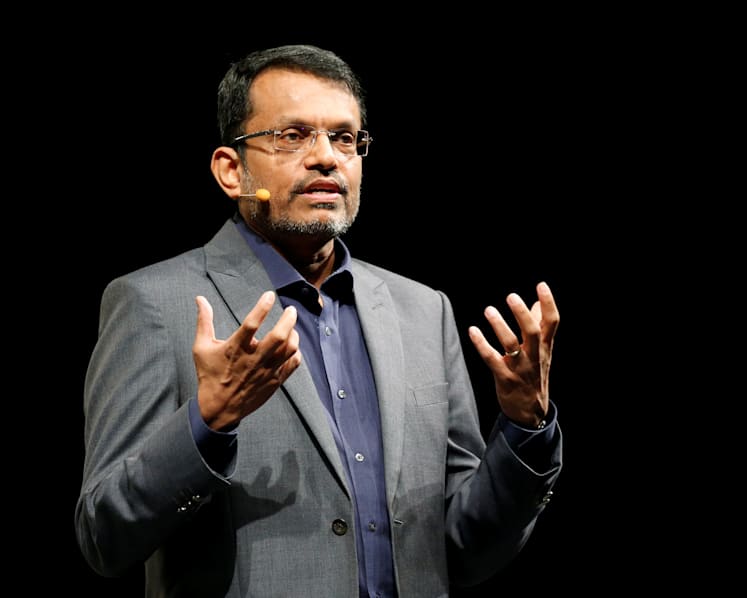
Singapore's financial institutions have been rebuked by the head of the Monetary Authority of Singapore, Mr Ravi Menon, for failing to reform their culture to win back public trust.


SINGAPORE — Two years after regulators here slapped eight banks with almost S$30 million in fines over Malaysia’s 1MDB scandal, the Monetary Authority of Singapore (MAS) has warned that financial institutions may have reformed their systems but not their culture.
“Financial institutions have restored their capital, but not public trust. They have repaired their balance sheets, but not their compact with society. They have reformed their systems, but not their culture,” said MAS managing director Ravi Menon.
Speaking at a banking conference on Monday (June 3), Mr Menon said that an MAS study to assess the culture and practices in financial institutions found that they are uneven across the industry, with many still struggling to articulate the “conduct risks” they face.
The regulator has since set up a small behavioural sciences unit to build up its capabilities in this area and support banking supervisors with methodologies that help them better understand culture and conduct issues in their own organisations.





In April last year, MAS proposed guidelines, such as setting up a whistle-blowing channel in financial institutions, to enforce conduct standards. It is part of broader efforts to foster a culture of ethical behaviour and responsible risk-taking in the financial industry.
“Only with trust can the financial industry earn the ‘social licence’ it needs to thrive and grow,” said Mr Menon.
ETHICAL CONDUCT
The focus on conduct and culture comes after MAS and financial institutions have made “significant strides” in surveilling and managing money laundering risks.
“In Singapore, we had a rude awakening in 2015 when it came to light how 1MDB-related funds were laundered through our banking system,” he said, referring to Malaysia’s scandal-hit state-investment fund. He also cited earlier episodes involving the erosion of public trust, such as the mis-selling of complex financial products to Singapore consumers a decade ago amid the global financial crisis.
But Mr Menon said the industry here has “come a long way” in strengthening systems and processes to detect and deter illicit fund flows.
However he said regulations and controls can only go so far in shaping behaviour.
“Ultimately, how professionals in the financial industry conduct themselves is shaped by the shared values, attitudes and norms in their organisations – in short, the culture. Rules can only tell us what we cannot do, it is values that tell us what we should not do,” he said.
Thus, MAS is also increasing its supervision on the culture and conduct within financial institutions.
BEING TRANSPARENT WITH CUSTOMERS
Another way financial institutions can restore trust is to ensure that they deal fairly with their customers and always act in their best interests.
To help customers understand what product they are buying and the risks they are taking, “disclosure alone is not enough”, noted Mr Menon.
“Ask any consumer of financial products having to go through hundreds of pages of product disclosure written in unintelligible legalese.”
Instead, financial institutions need to be more transparent to customers about the risk associated with a financial product, the assumptions underlying return projections and the fees, charges and commissions.
Sales representatives also need to have sufficient knowledge and skills. Beyond that, they should make recommendations to customers based on what is the most suitable for them, not what will maximise their own commissions or rewards, said Mr Menon.
To ensure that these are being practised on the ground, Mr Menon said the “tone from the top is critical”.
“Senior management and supervisors at all levels must make clear to their staff that meeting revenue targets must never be at the expense of treating their customers with fairness and honesty.”




