







Firms, families would be severely affected by shortfall of 130,000 migrant workers if borders closed post-circuit breaker: MOM
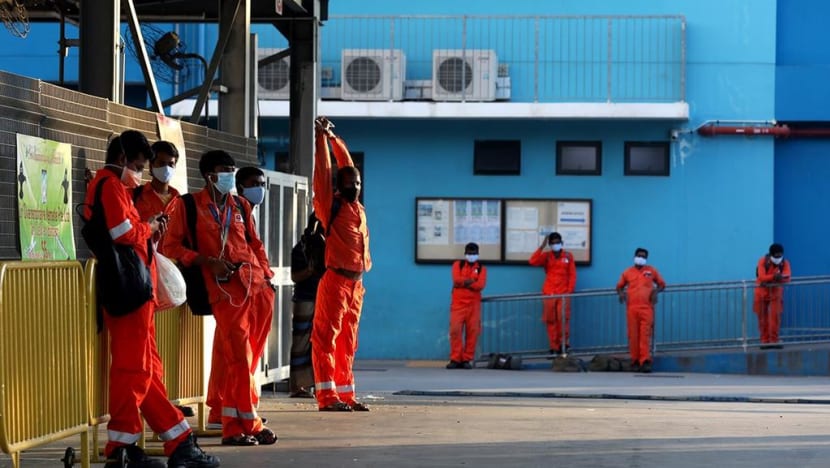
The Ministry of Manpower said that the outflow of migrant workers has exceeded the inflow over the past year.
SINGAPORE — Businesses and families would have been “severely affected” by a shortfall of 130,000 migrant workers including cleaners, construction workers and domestic workers, if Singapore had closed its borders after last year's circuit breaker, the Ministry of Manpower (MOM) said in a statement on Tuesday (May 18).
There would have been 70,000 fewer migrant workers in Singapore to work in the services sector, including in essential services such as healthcare and cleaning; 30,000 fewer construction workers to work on key infrastructure and building projects; and 30,000 fewer migrant domestic workers to help out in households.
The circuit breaker was a partial lockdown last April and May that halted non-essential activites and people had to stay home. Singapore then reopened its economy in three gradual phases from last June.
However, due to a rising number of Covid-19 cases and clusters in the community, the country is clamping down on some activities such as dining at eateries again.





Of the present situation, MOM said: “Border restrictions will impact Singaporeans’ daily lives and this will be felt more keenly in the coming weeks and months.”
The ministry said that it was aware of recent calls by members of the public to close Singapore’s borders entirely to bring down the number of imported cases but pointed out that at the same time, businesses have been appealing for more workers to be allowed to enter Singapore to address manpower shortages.
“As a result of border restrictions to mitigate importation risks, we have not been able to adequately replace those who have left Singapore. From May 2, we completely stopped entry of all from South Asia,” it said.
Many businesses, it added, are already trying to retain their workers by offering workers higher retention bonuses while industry associations have also been facilitating transfers of workers to new employers.
“However, many migrant workers are understandably homesick, are worried about their families at home and wish to return home,” MOM said.
It added that restrictions on the inflow of workers from higher-risk countries will persist until the situation improves.
“This is the only way we can ensure the safe inflow of workers, while managing the risk of transmission in the community. We are mindful of the manpower crunch that our businesses will face, and the caregiving help that our families will need, as a result.”
MOM added in the press statement that the outflow of migrant workers has exceeded the inflow over the past year but did not provide statistics. TODAY has asked for them.




