







GE2020: ‘You cannot solve the system from within’, says youngest candidate on why he joined PSP
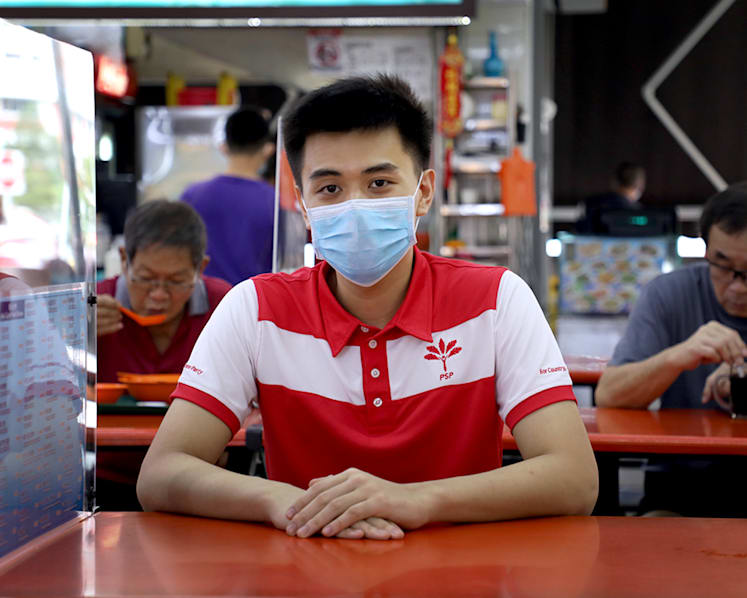
Mr Choo Shaun Ming, 23, joined the Progress Singapore Party last year, at the start of his third year of studies at the National University of Singapore.




- On why he didn’t join PAP, Mr Choo says the Singapore system is “too entrenched”
- He believes youths should be represented in parliament as policies affect their future
- Mr Choo says country needs different vision from what’s been done in the past 50 years

SINGAPORE — Some of those who know him have asked why he joined the Progress Singapore Party (PSP) instead of the incumbent People’s Action Party (PAP), but 23-year-old Choo Shaun Ming was clear in his mind about the path he wanted to take.
“I didn’t want (to join the PAP), because you can't solve the system from within — it's too entrenched,” said Mr Choo who is among the four-men opposition team contesting Chua Chu Kang Group Representation Constituency (GRC).
“The ivory tower is basically a disconnect with what’s happening in real life to real Singaporeans.”





Wearing the PSP polo tee and sporting an eager smile, the National University of Singapore (NUS) law undergraduate is the youngest candidate in this year’s General Election (GE).
He joined PSP last year, at the start of his third year in university. When asked why he chose Dr Tan Cheng Bock’s party, he cited the “positive politics” the 80-year-old brings to PSP.
“People (in the party) can come forward to share and debate policies, opinions and ideas with respect for each other despite a difference of views, without fear of being judged or shamed for speaking a different point of view,” Mr Choo said.
He started out by helping them distribute party materials such as tissue packets, and then gradually became more involved, going on walkabouts and meeting residents.
Mr Choo insists that he is an ordinary Singaporean from an ordinary family.
His father is a retiree who used to work in the real estate industry, and his mother is a Chinese who teaches business and the Malay language in an international school, which explains why he can speak some Malay.
He also has an older brother, who is a lawyer. Other than himself, his family is not involved in politics, he said.
In his free time, Mr Choo plays the cello and reads autobiographies.
Should he be elected into Parliament, he intends to continue his studies while being a parliamentarian. He might also consider taking a leave of absence for a period.
He takes his participation in politics seriously as he feels that young people should be represented in Parliament, noting that government policies are going to affect his generation the most.
‘YOUTH IS AN ADVANTAGE’
For those who might discredit him for being young, Mr Choo said that his youth is his advantage. While youths may be idealistic, “idealism is what we need to bring Singapore forward into the next 30 years”, he said.
“We need someone who has a different vision than what we have done. We have gone far in the first 50 years, but the question is where would we go in the next 50 years,” he said.
Mr Choo believes that current policies, such as a reliance on low-cost foreign labour, have created too many structural issues. “They don’t have a vision for Singapore that will propel us into the next decade,” he said.
“The problems that we have now will not be solved by the people who created them. So, we need new voices and more diversity of views.”
Mr Choo imagines a Singapore where young citizens feel that they have a stake in the country.
Elaborating, he said: “Now the issue is less a climate of fear, but it’s a climate of political apathy because they have been desensitised...It is a learned helplessness.
“They feel like whatever they want to say or want to do, they can’t do… There are restrictions on artistic licences — what you can and cannot say… They feel like when they say something, they are not heard, or their opinion doesn’t matter.”
ON THE CAMPAIGN TRAIL
Throughout the campaigning period, Mr Choo and his teammates contesting Chua Chu Kang GRC — Mr Francis Yuen, 70; Dr Tan Meng Wah, 56; and Mr Abdul Rahman, 67 — have been walking the ground, and the experience, he said, has been very fulfilling.
He believes he is able to connect better to youths on the ground, compared with his older teammates. “Seeing someone young (in politics) is not something they’ve seen before, so I think they are more receptive to talk.”
However, it had not been hard for him to connect to older residents as well, as some of their children are about his age, he noted.
“(Older residents) tell me that their children have read about me, that their children are still studying… so they hear the news from their children, and so they are also receptive,” he said.
Mr Choo, whose team will be competing against a team of PAP heavyweights which includes Mr Gan Kim Yong who leads Singapore’s Covid-19 response, said he is undeterred by the challenge.
“We come from a party that believes in compassion,” he said. “(When) we meet the residents, they also feel that we are able to show that compassion to them directly.
“That, I think, is how we want to approach this task that we have.”
DR TAN MENG WAH, THE ‘NOT A VERY GOOD POLITICIAN’
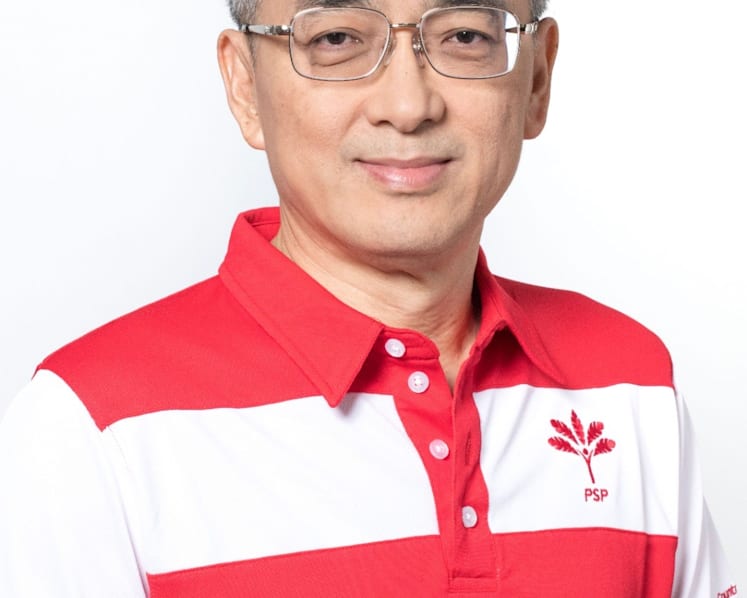
TODAY also spoke to his teammate Dr Tan Meng Wah, a former research fellow at think-tank Institute of Policy Studies (IPS) of NUS’ Lee Kuan Yew School of Public Policy.
The 57-year-old economist cited several issues that he is concerned about, such as how income inequality is being discussed in Singapore.
For instance, it was reported earlier this year that income inequality was at its lowest in the past 18 years, but this looked at the Gini coefficient, which measures relative inequality. When measured in absolute terms, however, inequality is “never higher”, he said.
Dr Tan gave the example of a person earning S$1,000 a month and another making S$20,000 a month. When their salaries are increased by 10 per cent each, the absolute gain for the person with a lower income is S$100, but the person with the higher salary received S$2,000.
“As long as the gap is there, the dynamic is such that inequality will always widen,” he said.
“So before you use a progressive wage model for the low-wage earner, you should make a one-time adjustment to bring it to a fair starting point.”
Dr Tan said that as early as 2017, he had hatched plans to run as an independent candidate in the GE.
Then in April 2019, he met Dr Tan Cheng Bock who told him that he needs a platform for his ideas.
“I am not a very good politician, but my objective, which is to share my research findings to tell people why things are wrong because of certain policies, is not sinister,” he said. ADDITIONAL REPORTING BY YEO JONG HAN




