







Grab pledges safer rides for passengers with alert system monitoring driver fatigue levels
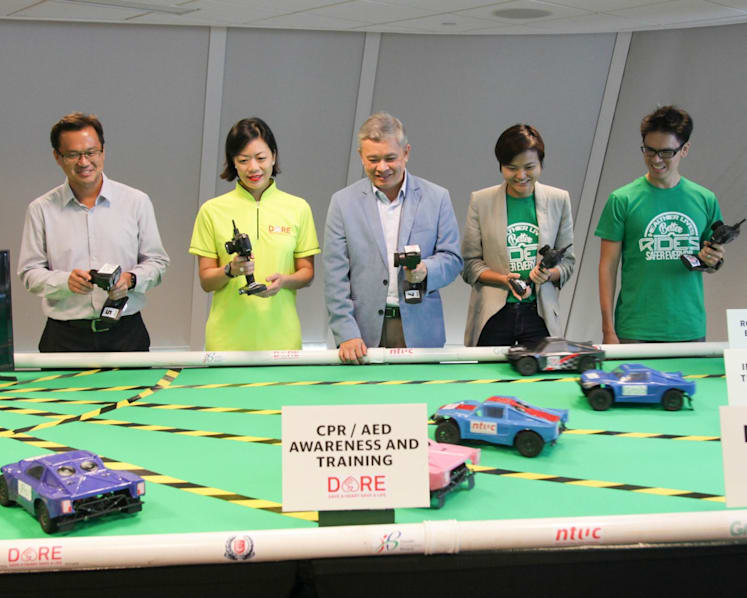
The new fatigue monitoring system is among several initiatives which Grab unveiled at its first Health and Safety Carnival organised for its drivers on Tuesday.


SINGAPORE — Grab passengers can expect safer rides going forward as the ride-hailing giant on Tuesday (Oct 16) rolled out a series of new tech improvements aimed at raising safety standards, including an alert system which monitors driver fatigue levels.
The monitoring system — which tabulates “fatigue scores” between 0 and 1 — will take into account the number of hours a private-hire car driver has been on the road, and other telematics data such as the driver’s age, profile, time of the day, rest between shifts, and total number of bookings accepted.
Drivers who hit the higher threshold — the value of which is still being determined — will be sent a notification to take a break.
The alert system will be enabled on all drivers’ application in Singapore by the end of October.





When asked if Grab will be using the data collected for other uses such as in cases of insurance claims, the firm said that the telematics data are “solely used” to encourage safe driving behaviour among Grab drivers.
One driver who only wanted to be known as Mr Sofian, said that telematics data collected could be a “double-edged sword” for drivers and it is important for Grab to be transparent on its use.
“It depends on how Grab uses the data collected. If they monetise it, I want a cut. If it infringes on my insurance claims and such, it’s a great concern,” said the 30-year-old driver, who cited the example of a collision from the rear which is normally "a 100 per cent" sure-win case for him.
"But if data shows that I have been driving for too long, and it becomes my fault, then that’s the problem," he added.
"But if it’s just to monitor to ensure drivers are not overworked, it’s a good effort.”
The new fatigue monitoring system was among several initiatives which Grab unveiled at its first Health and Safety Carnival organised for its drivers on Tuesday.
Held at the Star Gallery in Buona Vista, the event was also attended by National Private Hire Vehicles Association and National Taxi Association executive adviser Ang Hin Kee.
Other initiatives include a complimentary health screening — co-funded by the Health Promotion Board — which will be offered to all drivers from Tuesday.
ArraySuch initiatives will see Grab doubling its investments in safety measures by the end of 2019, said the firm, though it declined to reveal figures.
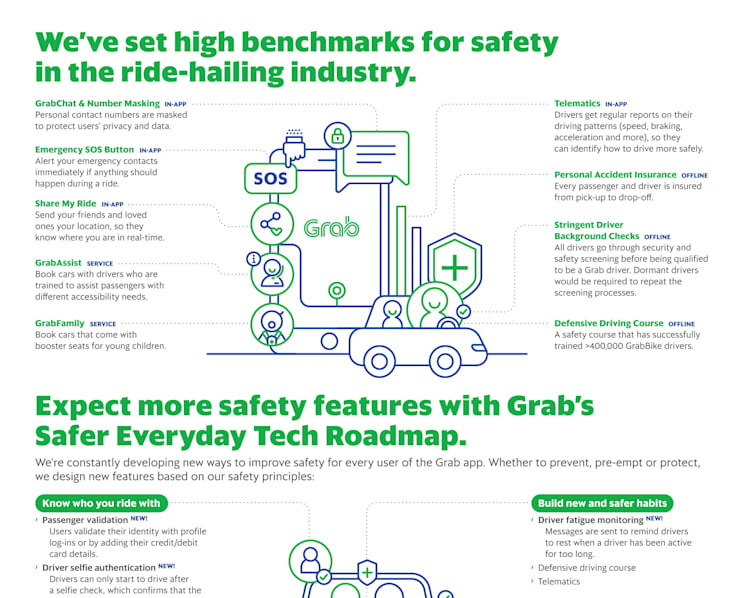
Grab has trialled telematics (which is a monitoring system for vehicles) since June last year, and drivers were issued weekly reports based on their driving speed and manoeuvres.
The Singapore-based firm added that since the roll out of telematics, there has been a 50 per cent reduction in speeding incidents and 20 per cent reduction in hard braking and sudden acceleration, which are potential causes of accidents.
Grab’s co-founder Tan Hooi Ling also revealed on Tuesday that the non-fatal incident rate on the Grab platform, which includes fender benders and verbal altercations between driver and passengers, have decreased by 40 per cent year-on-year.
Separately, when asked for an update, head of Grab Singapore Lim Kell Jay declined to confirm if it would be appealing against the S$13 million in fines imposed by Singapore’s competition watchdog in September, which was handed down on Grab and Uber in light of the “anti-competitive” merger between the two firms.
WHY IT MATTERS
The momentum for tightening safety standards on ride-hailing platforms has been increasing since a passenger on Chinese ride-hailing app Didi Chuxing was reportedly raped and killed by her driver in the eastern city of Wenzhou in August this year.
Locally, fatal incidents involving tired drivers have also cast a spotlight on the risk of drivers spending long hours on the road. In September, a former Singaporean Uber driver was jailed for causing the death of his passenger in an accident last year. The court heard that the driver — who told police that he was “feeling fatigued” prior to the fatal accident — had been driving non-stop for nearly five hours in the wee hours of the morning.
OTHER NEW FEATURES
-
Drivers will be able to share their GPS location to their passengers and family members by the end of 2018
-
Drivers can start driving only after a “selfie check”, which confirms that the cars are operated by the verified drivers; these checks will be conducted once every couple of days
-
Drivers and food couriers who use personal mobility devices can undergo a free safe riding programme conducted by the Land Transport Authority’s appointed training provider; Grab’s target is to have at least 100 delivery partners complete the programme in the first year
-
At least 500 drivers to be trained in cardiopulmonary resuscitation (CPR) and use of automated external defibrillator (AED) through step-by-step tutorials via its Dispatcher-Assisted First Responder (DARE) programme
-
To protect drivers, especially in countries with a high crime rate, passengers will be asked to provide additional information for verification purposes
Sign up for TODAY's WhatsApp service. Click here:




