







Greater support for religious teachers, returning graduates of foreign Islamic universities
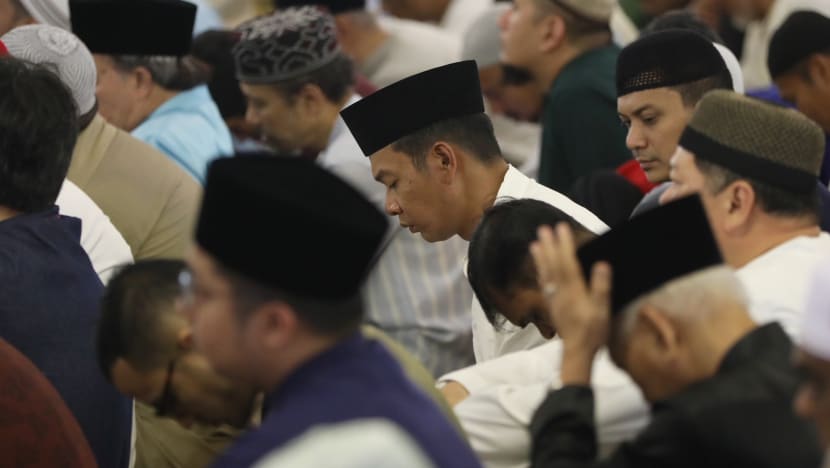
The Government will set up a committee to help Islamic religious teachers adapt to future trends in the community and launch a postgraduate programme for returning graduates to be equipped with skills to find employment back home.
SINGAPORE — More support will be given to local Islamic religious teachers — who are known as asatizah — and Singaporeans studying in foreign Islamic universities to ensure they have the necessary skills to find employment back home.
Dr Mohamad Maliki Osman, Senior Minister of State for Defence and Foreign Affairs, announced these efforts during the debate on the Ministry of Culture, Community and Youth’s budget in Parliament on Friday (March 8).
COMMITTEE ON FUTURE ASATIZAH (COFA)
Highlighting the need to keep up with changing times, Dr Maliki said that the Government will set up COFA to allow the Muslim community and local asatizah to adapt to the future.





“Singaporean Muslims need to adapt with the times, in their professional and socio-religious lives. To be able to provide effective guidance and socio-religious support, our asatizah, too, must adapt and be ready for the future,” he said.
Read also
Under one roof: Three Malay-Muslim institutions to be housed at Wisma Geylang Serai
“This is why we formed the COFA, so that we can gain a better understanding of the evolving needs of the Singapore Muslim community, react to the trends that will shape the community’s future and hear ground-up feedback on how we can prepare our next generation of asatizah,” said Dr Maliki.
Chaired by Dr Maliki, the COFA will comprise community members such as senior and younger asatizah, leaders from the madrasah sector, community leaders and Muslim professionals. It will also include individuals and academics with expertise in social work, continuing education and training.
Over the next few months, the committee will engage members of the public and various stakeholders to get feedback on how COFA can prepare the next generation of asatizah.
On Friday, several Members of Parliament (MPs) also asked about the development of the Singapore Islamic College, which was first mooted in 2016. In response, Dr Maliki said that there was no timeline to set up the college as there needed to be a greater understanding of what local asatizah required.
Adding that COFA’s work was a “critical step” towards establishing the college, he said: “We look forward to the Singapore Islamic College but we shouldn’t hurry it.”
Read also
Islamic religious teachers must be registered with Muis from January 2017
STUDENT LIAISON OFFICERS TO SUPPORT OVERSEAS STUDENTS
Dr Maliki also announced that the Islamic Religious Council of Singapore (Muis) has deployed three Student Liaison Officers (SLOs) to help aspiring asatizah studying overseas to adapt to the local culture and maintain their ties with Singapore. The SLOs will act as mentors, help them in their education process, keep them abreast of Singapore’s developments and develop them for future careers.
At the moment, there are two such officers based in Egypt and Saudi Arabia supporting over 500 Singaporeans in the Middle East and North Africa. There is also one SLO based here who supports 300 Singaporeans studying in Malaysia, Indonesia and Brunei.
LAUNCH OF POSTGRADUATE CERTIFICATE IN ISLAM IN CONTEMPORARY SOCIETIES (PCISS)
From 2020 onwards, Muis will introduce a new programme for returning graduates.
Currently, Muis offers a compulsory month-long programme, Islam in Context (Icon), for returning graduates before they can register under the Asatizah Recognition Scheme. It has been in place since 2017.
The current programme will be replaced by the PCISS in 2020 following feedback from previous participants that its scope could be widened to include more work-relevant skills.
The PCISS will include content that deepens returning graduates’ understanding of Singapore’s geo-political and socio-religious context and provide information on how Islam can be practised effectively in Singapore’s multi-racial and multi-religious society.
To open up more employment opportunities for returning graduates, the PCISS will also offer content on social work and counselling, digital literacy and entrepreneurship.




