







Two Singapore residents isolated at NCID after hantavirus exposure on cruise and flight, risk to public currently low: CDA
The two men were on the same flight as a confirmed hantavirus case who later died.
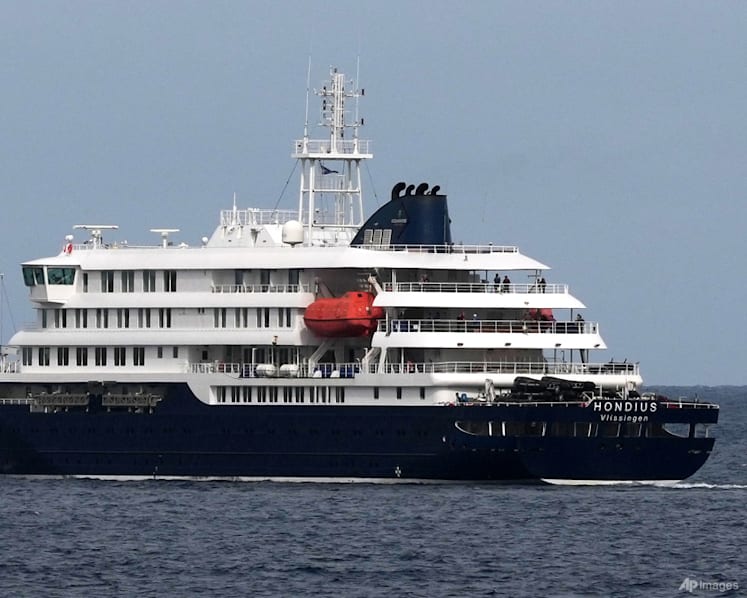
The MV Hondius cruise ship departs the port in Praia, Cape Verde on May 6, 2026. (Photo: AP/Misper Apawu)

This audio is generated by an AI tool.
SINGAPORE: Two Singapore residents who were onboard the hantavirus-hit cruise ship MV Hondius are currently being isolated at the National Centre for Infectious Diseases (NCID), where they are being tested for the virus.
“Their test results are pending. One has a runny nose but is otherwise well, and the other is asymptomatic. The risk to the general public in Singapore is currently low,” the Communicable Diseases Agency (CDA) said on Thursday (May 7).
CDA said it was notified on May 4 and May 5 that the individuals were on MV Hondius when it departed from the Argentinian port of Ushuaia on Apr 1. The ship later reported an outbreak of Andes hantavirus.
The first individual, a 67-year-old Singaporean, arrived in Singapore on May 2. The second, a 65-year-old Singapore permanent resident, arrived in Singapore on May 6.





Both men had disembarked from the ship and were also on the same flight as a confirmed hantavirus case from St Helena to Johannesburg on Apr 25, said CDA, adding that the confirmed case did not travel to Singapore and has since died in South Africa.
As of Wednesday, eight cases including three deaths have been linked to the cluster on the cruise ship. Three of the cases were confirmed to be infected with hantavirus, and the rest are under investigation.
CDA said the World Health Organization (WHO) currently assesses the risk to the global population as low.
PUBLIC HEALTH MEASURES FOR RETURNEES TO SINGAPORE
Should the two Singapore residents currently isolated at NCID test negative for hantavirus, they will be quarantined for 30 days from the date of last exposure.
This is because the majority of hantavirus cases are expected to become symptomatic within this period, said CDA.
“Testing will be conducted again before release from quarantine, and they will then undergo phone surveillance for the remaining monitoring period of 45 days from the date of last exposure, which is the maximum incubation period for hantavirus exposure.”
If they test positive for hantavirus, they will remain hospitalised for monitoring and treatment, given the potential severity of hantavirus infection.
“Contact tracing will be conducted to identify persons who have been exposed during the infectious period, and close contacts will be quarantined,” said the agency.
WHAT IS HANTAVIRUS?
Hantaviruses are viruses carried by some rodents. People can become infected when they breathe in dust contaminated with urine, droppings or saliva from infected rodents, especially when cleaning or disturbing areas with rodent activity.
Infections are uncommon, but illness can range from mild to severe.
CDA said that while hantaviruses do not usually spread from person to person, one species, the Andes virus found in parts of South America, has been associated with human-to-human transmission.
Symptoms of infection with the Andes virus typically include fever, body aches, fatigue, gastrointestinal symptoms and difficulty breathing, and progress rapidly to shock and death.
Treatment consists of supportive care and management in hospital if required.
There is no specific antiviral treatment or vaccination.
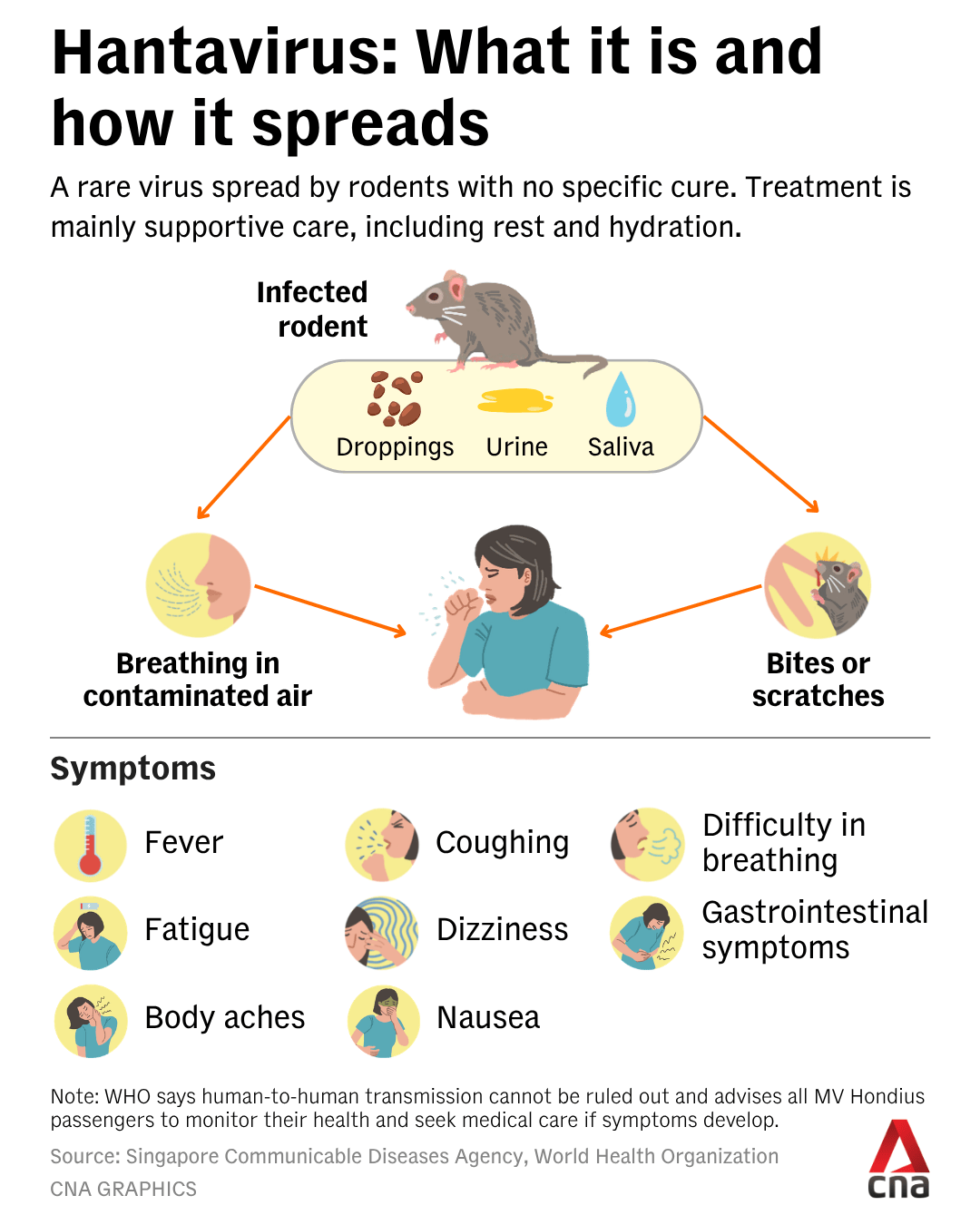
The agency said the mode of transmission for the cases linked to the MV Hondius remains under investigation, with WHO indicating that human-to-human transmission cannot be excluded.
All of those who were on the cruise ship have been advised to monitor their health and seek medical attention promptly if experiencing symptoms.
PRECAUTIONS FOR TRAVELLERS
To reduce the risk of hantavirus infection, CDA advises those travelling to areas with known hantavirus transmission to take the following precautionary measures, especially when planning to camp, hike or visit rural areas:
- Avoid contact with rodents and areas contaminated by their urine, droppings, saliva or nesting materials
- Keep accommodation areas clean, seal gaps where rodents can enter, store food securely and dispose of rubbish properly
- Use a damp cloth or mop to clean surfaces instead of dry sweeping to avoid stirring up potentially contaminated dust particles
- Maintain good personal hygiene
- Avoid close contact and sharing common items with people who are unwell, such as those suffering from respiratory or gastrointestinal symptoms – the latter including vomiting and diarrhoea
“Travellers who become unwell during or after travel should seek prompt medical attention and inform their doctors of their recent travel history, itinerary and any potential exposure to rodents or unwell persons,” said CDA.
.jpg?itok=cAFlReEz)




