Healthcare institutions widen youth volunteers’ roles with para-clinical training
Hospitals are also turning their attention to elderly volunteers, who offer greater weekday availability and can communicate with patients in various dialects.
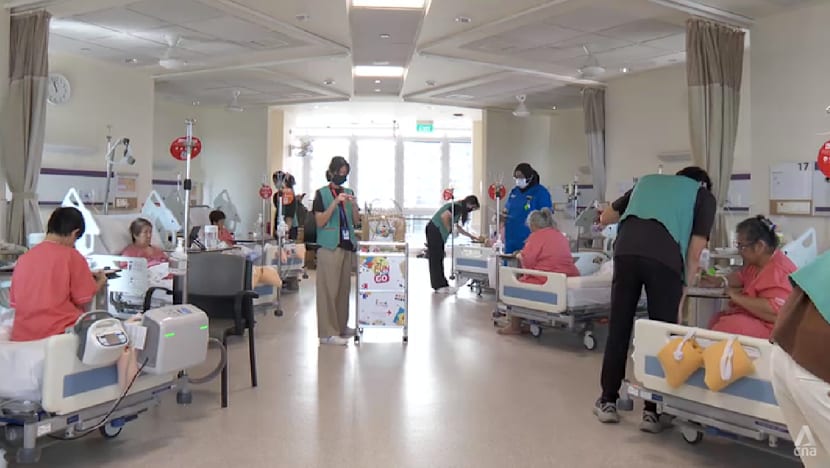
Healthcare institutions in Singapore are ramping up training for youth volunteers to take up para-clinical roles.

This audio is generated by an AI tool.




SINGAPORE: Healthcare institutions in Singapore are ramping up training for youth volunteers to take up para-clinical roles, in a growing shift towards preparing them for specific, skills-based duties that support frontline care.
The move reflects efforts to equip volunteers with competencies that go beyond traditional support roles, enabling them to contribute more meaningfully within healthcare settings.
Observers say this could also help widen the talent pool for future healthcare professionals.
EASING THE WORKLOAD
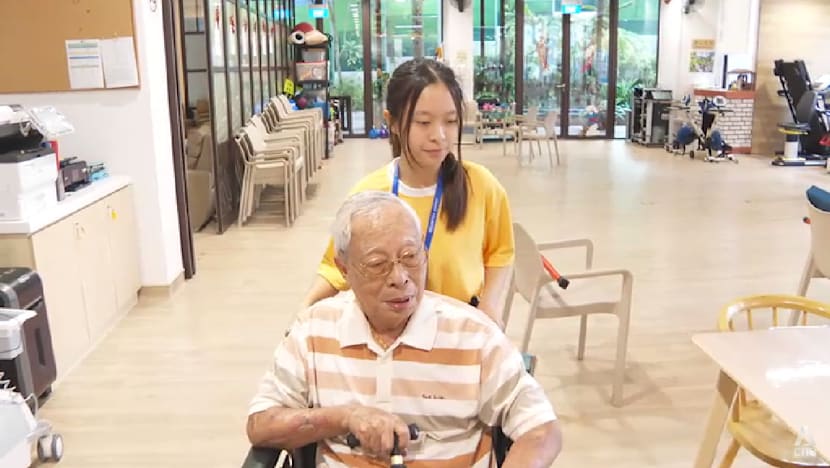
At Assisi Hospice, youth volunteer Chloe Sin, who supports patients in the final stage of their lives, says her work is driven by deeply personal reasons.
“When my dad was diagnosed with cancer when I was 11, I was exposed from a young age to the importance of connection, empathy and emotional support during times of crisis,” said the 19-year-old.
“So I really decided to serve in a hospice because the experience drew me closer to palliative care.”
Volunteer numbers at the hospice - located along Thomson Road - have grown steadily to about 520, with youths making up 37 per cent of the pool.
In recent years, it has expanded its training for volunteers to include specific clinical skills for some roles - for example, dysphagia training for volunteers in food-related programmes like Food Buddy and Treat Trolley.
This has helped ease the workload of staff, said the hospice.
“Our volunteers are trained to support our nurses in a lot of service-based delivery of care for patients,” said Ms Lee Tien Sin, senior manager of volunteer management at Assisi Hospice.
“That includes even things like diaper changing, sponging of patients to keep them comfortable and clean, and the unhurried companionship which they appreciate.”
SECURING SUSTAINED VOLUNTEERING
The Centre for Healthcare Innovation is building on this momentum to develop a future pipeline of healthcare professionals through skills-based programmes with structured learning pathways.
Ms Celine Ong, director of its Centre for Health Activation, said: “We are now looking at how care is going to be redesigned and how roles are going to be redeveloped for the professional workforce and also the informal workforce.”
This includes para-clinical initiatives, such as volunteers assisting in pharmacy operations.
The programmes also aim to equip participants with transferable skills including caregiving, which they can apply within their communities.
But some hospitals also face challenges in retaining youth volunteers as they move through different life stages and shifting priorities.
Hospitals are turning their attention to elderly volunteers as well, who offer greater weekday availability and can communicate with patients in various dialects.
Ms Tan Hwee Ping, head of community relations at Ng Teng Fong General Hospital and Jurong Community Hospital, said one of the key considerations when working with youth volunteers is securing longer-term commitment.
She explained that youth volunteers juggle schoolwork, co-curricular activities and personal responsibilities, making sustained volunteering difficult.
As they are typically in school on weekdays when hospitals need the most support, attracting them to weekday programmes has been particularly challenging, Ms Tan noted.
“We have weekend programmes on Saturday and Sunday, so the volunteers who cannot make it on weekdays still (can) contribute,” she added.
“During term break, they can come more regularly. During exam period or when a term paper is due, they will take a pause. So that's one of the (flexible measures) that we have to put in if we want to retain the volunteers.”