







Industry transformation to consider overlaps between sectors next: Heng
TODAY file photo


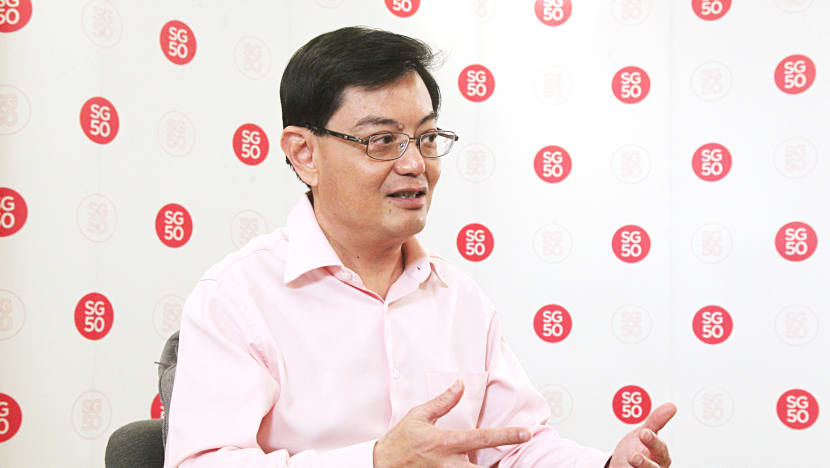
SINGAPORE – The next phase of Singapore’s industry transformation efforts will be focused on implementing the strategies, while considering the overlaps between industries, said Finance Minister Heng Swee Keat on Wednesday (Jan 31).
Delivering his keynote address at the launch of a six-part Enterprise & Entrepreneur Series by the EDB Society and Singapore Management University (SMU), Mr Heng said he did not want to think of Industry Transformation Maps (ITMs) as “just another set of vertical silos”.
With structural changes in the global economy, as well as technological changes, boundaries between industries are beginning to blur. It will be important to consider the convergence of sectors, such as between the finance and technology sectors that resulted in the growth of Fintech, Mr Heng told an audience of about 300 business leaders and entrepreneurs, senior government officials, Economic Development Board alumni, academia, and SMU students.
In the next phase of the ITMs, which were first announced in Budget 2016, the Government will work on raising productivity and skills, promoting innovation and helping companies internationalise across sectors.





They will also take a “cluster approach” across various industries, to realise synergy in sectors where there are overlaps. This could be between real estate and retail, for instance, he added.
Mr Heng stressed that the real work was not in the launch of the ITMs, but in their implementation.
But he also sounded a word of caution to all economic agencies, adding that it is “not our job to run (a) business”.
He said: “It’s our job to be helpful. If businesses expect us to… plan for them to just follow, they will also not succeed. We don’t have the skillsets to do this, but we can work in partnership to achieve more.”
Mr Heng also urged the trade associations and chambers to step up.
It was reported earlier in January that Singapore Business Federation chief executive Ho Meng Kit had shared feedback he received from some companies about how there was a divide between the ITMs and the private sector. Some had felt that the ITMs were disconnected from the reality of the industry.
So far, the Government has launched 18 out of the 23 ITMs and the remaining five will be launched by March.
With some wondering if the ITMs “mean anything”, Mr Heng cited the food manufacturing industry as an example of how it has helped companies. Individual companies may have come up with new products, but on the industry level, the firms are also sharing high-tech facilities such as high pressure processing to extend the shelf-life of food products. They also come together to offer local products to the international market.
“It’s an example of how different components of ITM work together, in terms of innovation, training, collaboration and internationalization,” he added.
He also recalled his experience at the former Trade Development Board years ago when several companies applied for small grants to join a German food fair. When he suggested that the companies work together to set up a booth, the entrepreneurs felt that he was a “typical bureaucrat” with “no business sense” for asking the competing firms to work together.
Now, Mr Heng said he is glad to see the situation changing, as companies decide to work together, “achieving more together and putting Singapore food on the map”, he added.
During a subsequent panel discussion, Mr Dilhan Pillay Sandrasegara, the deputy chief executive officer of Temasek International, said the Government has a role to play, together with the industry, in developing ecosystems that represent future growth areas.
Going back to Singapore’s successes in the 1960s to the 1980s, he noted that they were a result of the partnership between the Government and the industry. He also added that some of the leading companies today were started by civil servants “in the old days”.
He said: “We need to bring that back in a very, very strong form... There was a lot of interplay between Government and private sector that led to successful companies.”
This does not mean the Government should get involved in businesses and founding companies, but rather to exchange perspectives, ideas and experiences between the Government and the businesses, said Mr Sandrasegara.
Another panelist, Mr Ho Kwon Ping, chairman of SMU and Executive Chairman of Banyan Tree, said Singapore should not “romanticise” the idea of risk-taking among fresh graduates with start-ups.
Also referring to Singapore’s history, Mr Ho said many successful entrepreneurs were people who had first spent time working as managers in multinational corporations before setting up their own businesses.
These “mid-career entrepreneurs”, often those with young families, could also have a higher rate of success with their businesses.
He added: “We should develop a culture where we encourage people to start out working with multinationals… that level of entrepreneurship is something we should consciously nurture also, and not just romanticise the start-ups because the rate of failures among start-ups is also inordinately high.”




