Hope, heartbreak and high costs: The challenges of fertility treatment in Singapore
As part of a series looking at marriage, dating and parenting trends in Singapore, CNA looks at how assisted reproductive journeys can be physically, emotionally and financially draining, especially for those seeking private treatment with limited subsidies.


This audio is generated by an AI tool.




SINGAPORE: The road to parenthood was far from straightforward for Ms Rafidah Jalil and her husband Mimrah Mahmood.
Several years ago, the couple noticed something was amiss when they failed to conceive after trying for six months. Checks with a fertility doctor led them to begin in-vitro fertilisation (IVF) treatment.
“Growing up in Singapore - usually you put in X amount of effort, then you get result. But then with IVF, you are suddenly like: ‘Okay, no matter what you do, the result is not confirmed’,” said Ms Rafidah, a content creator.
To their joy, the couple managed to conceive in their first IVF cycle.
They decided to try again when their son was about two years old, but Ms Rafidah suffered a miscarriage. The pair also had to juggle work with caring for a toddler at home.
They took the challenges in their stride and finally welcomed twins in 2021 through IVF as well.
Now, parents like them are calling for greater awareness, earlier health checks and more open conversations around fertility struggles.







MISCONCEPTIONS, AWARENESS GAPS
While fertility challenges are becoming more common in Singapore, experts say both medical awareness and social support are lagging.
Around one in six couples in Singapore face fertility issues, with the causes split evenly between men and women, according to 2023 data from the National University Health System.
Like many others who underwent assisted reproductive treatment, Mdm Rafiah, 40, and Mr Mimrah, 43, found the process difficult to navigate.
“There's just not enough education in schools or in universities that make people aware of the process of having kids and the benefits. Also, what's the process to get to that point of having a kid?” said Mr Mimrah, who works in the digital space.
“There's very little information about the different procedures available.”
Misconceptions remain a key barrier as well.
A common belief is that infertility is primarily a women’s issue, but doctors stressed that male factors are equally important.
"Knowledge is very important … (Couples) can empower them(selves) to plot their journey to fertility, whether they want to start immediately, six months later, one year later, or maybe they say: ‘Okay, we just have to save some money to go for treatment’," said Dr Cathryn Chan, an IVF clinician at Astra Women’s Specialists.
HOW FERTILITY TREATMENT WORKS
Couples who seek help for fertility issues typically undergo a series of tests to determine underlying causes.
Treatment can range from simple interventions such as timing intercourse to improve the chances of conception, to more complex procedures.
Patients who have severe diseases may have to undergo assisted reproduction, noted Dr Cathryn Chan, who is also an obstetrician and gynaecologist.
Common assisted reproductive technologies include IVF as well as intrauterine insemination or artificial insemination.
IVF, where an egg is fertilised by sperm in a laboratory, is typically recommended for older couples or those who have exhausted other options.


HOW MUCH IVF CAN COST
Financial costs remain a significant hurdle, particularly for those seeking treatment in private clinics for a speedier process.
Singaporean couples can receive up to 75 per cent co-funding for a maximum of six assisted reproduction cycles in government hospitals, with women generally needing to be below 40 to qualify.
But the expenses can still add up – a single IVF cycle can cost between S$15,000 (US$11,700) and S$18,000 before subsidies. The amount of co-funding varies depending on the couple’s citizenship.
"Financially, if you are choosing the private route, I think the maximum subsidy is actually quite limited. And the subsidy that we are talking about is just a portion (that is) deducted from our Medisave, which is still our money,” said Ms Jacelyn Phang, a mother-of-one who underwent IVF.
The hefty costs for treatments at private clinics can add to an already heavy emotional load, she added.
“Ultimately, there's no subsidy if you're going for the private route, and for this particular journey, there's no guaranteed success,” she noted, suggesting that couples have a substantial amount of savings before deciding to proceed with IVF.
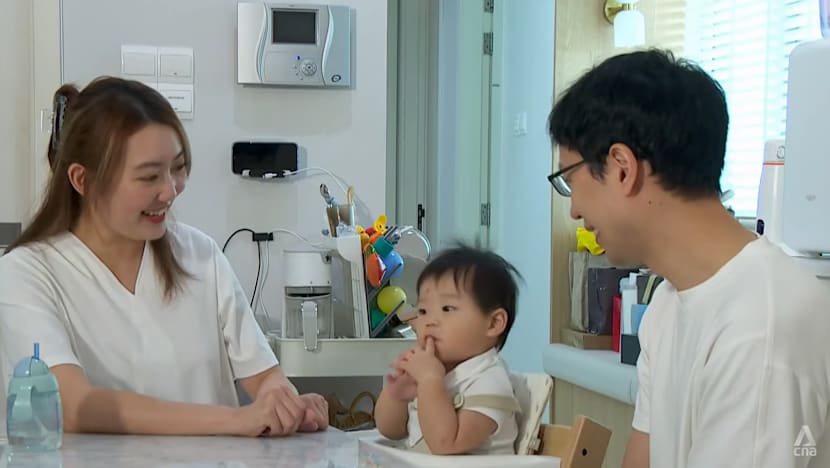
Ms Phang, who runs her own business, also pointed out that couples trying for a second child often have fewer subsidies left and may need more support.
For the 36-year-old, the pressure of time adds another layer of difficulty.
“There's not a lot of people sharing their experiences online, so you can only go through it to understand what the procedure is. Sometimes, you're not left with a lot of time to decide because we don't get any younger,” she said.
“So, I felt like 35 was the cutoff age for me (and) I felt like I really need to go all in, because that's (when) your egg quality starts to decrease as well. That was when I had to stop work, sort of to concentrate on this journey.”
EMOTIONAL, PSYCHOLOGICAL IMPACT
Beyond the financial strain, experts say the emotional and psychological toll of infertility is often overlooked.
"I think most couples do not know the cost of it - the psychological trauma and the emotional stress that they actually have to go through,” cautioned Dr Chan.
“They just come and say, ‘I’ll do IVF’, but they must also be realistic that not all cases will get pregnant, and it depends on the underlying medical problems that they have.”
Clinical psychologist Annabelle Chow also said women can experience “very significant feelings” after rounds of IVF injections.
“Of course, the men can as well and usually do. And unfortunately, sometimes the men will say, ‘I can't have these feelings, right? I need to support my wife.’ But those feelings then get suppressed. So, the successful couples I've seen hold space for each other," added Dr Chow, who runs Annabelle Psychology.
She warned that without adequate support, relationships can suffer.
"It can be helpful to include emotional support and mental health to be more integrated into the infertility journey, rather than taking it as an optional or secondary option," she said.
"So, that will mean including women's mental health, integrating that into infertility policies.”
Couples going through assisted reproduction should be offered routine mental health checks and screening - not just about the process and journey, but to find out how they are functioning as a couple, Dr Chow said.
She added that this will require wider systemic change, with insurers and healthcare providers having to play a part.
BREAKING THE SILENCE
Another challenge is the lack of open discussion around infertility, said another mother.
"In Singapore, everybody works long hours. If we are able to have that time to actually sit down with someone who's gone through it, that will be great,” said Ms Nur Thohirah Hassan, who has a four-year-old son conceived through IVF.
“If at that time I had someone who is in my position, who (went) through all that research, that would be great - someone to mentor me through the process. Not so much telling me what to do, but essentially guiding me, showing me the options,” the 39-year-old added.
“I find that that type of discussion is not very common. If anything, it’s almost unheard of,”
Experts and parents alike say breaking this taboo could help more couples seek help earlier, share knowledge and ultimately improve outcomes.