







Lim Chu Kang Road turns into makeshift runway for fighter jets
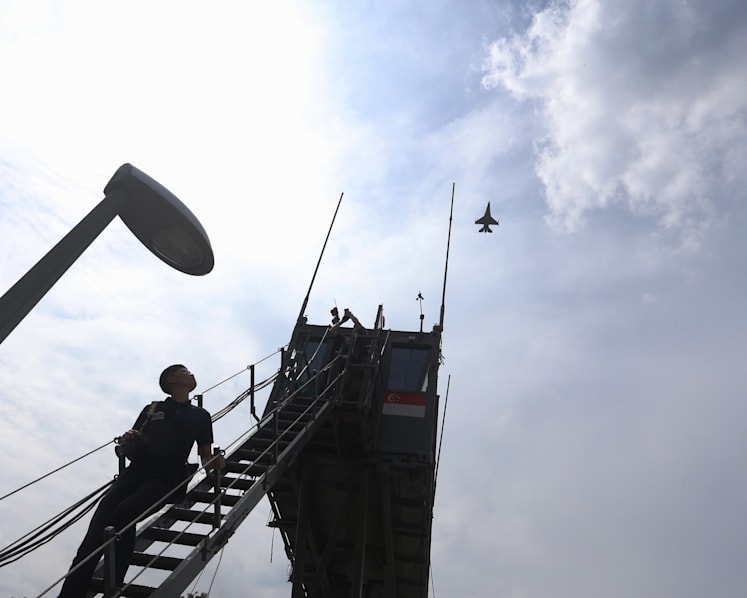
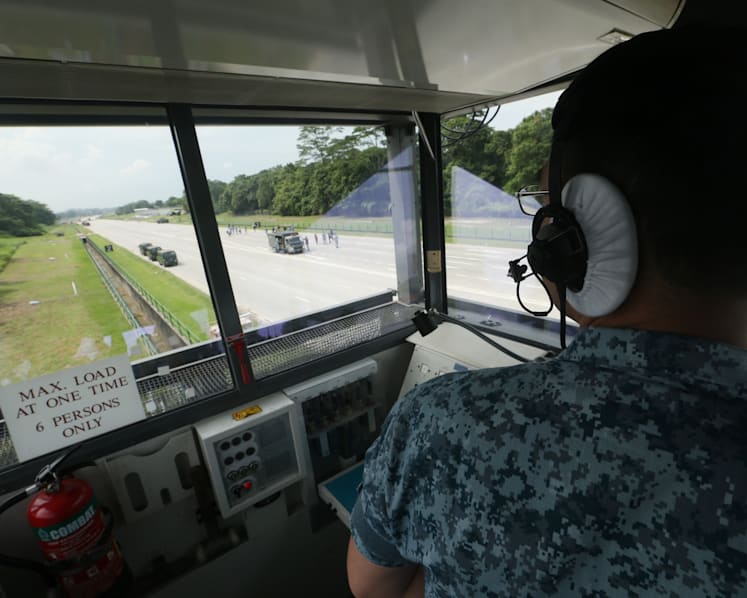


SINGAPORE — Fighter jets will be landing on and taking off from Lim Chu Kang Road this weekend, as part of the Republic of Singapore Air Force’s (RSAF) seventh alternate runway exercise.
Lim Chu Kang Road has been closed to traffic since Thursday (Nov 10) as the RSAF prepares for the event, named Exercise Torrent, which is not open to the public.
This year’s line-up, returning after an eight-year hiatus, comprises only fighter jets, with the state-of-the-art F-15SG making its debut at the exercise.
Fighter aircraft will take off at intervals of between three and 10 seconds, not just from Lim Chu Kang Road but also from the nearby Tengah Air Base’s runway and taxiways.





This alternate runway exercise has been conducted since April 1986 to allow the RSAF to practise launch and recovery operations, and the last edition took place in 2008.
Fighter jets’ ability to take off and land rapidly is hugely significant to an operational and small air force, said exercise director Brigadier-General (BG) Gan Siow Huang, who is commander of the RSAF’s air power generation command.
She said: “The faster and more aircraft that we can launch within a short period of time, the more air power we can bring to defend Singapore.”
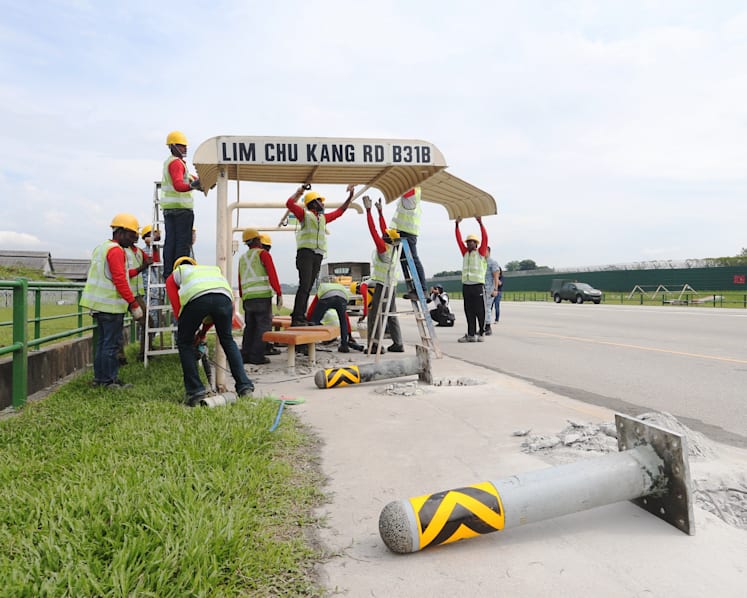
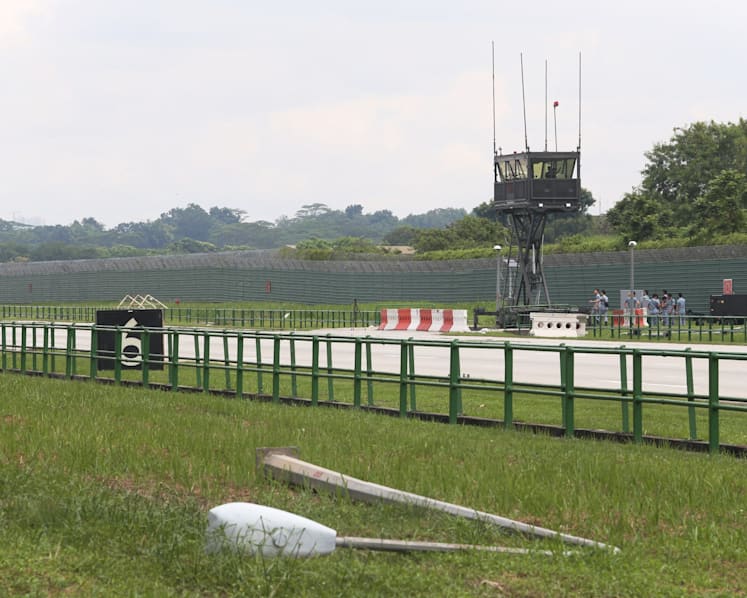
Work on converting Lim Chu Kang Road into a runway commenced on Thursday. It involved removing a series of public road fixtures, including more than 150 lamp posts, 12 bus stops and guard rails totalling 1.2km.
More than 100 RSAF servicemen have also been roped in to set up airfield equipment and fixtures as part of the conversion, which is expected to take about 48 hours.
In total, 1,000 or so servicemen are involved in the exercise – about half of them operationally ready national servicemen.
The simultaneous launch and recovery operations from the four platforms – Lim Chu Kang Road, and the runway and two taxiways at Tengah Air Base – will see F-15SG, F-16C/D and F-16D+ warplanes take off and land in much quicker fashion, said BG Gan.
Lieutenant Colonel (LTC) Tan Hwee Roy, an F-16C/D pilot, said it was more challenging to manoeuvre an aircraft to land on Lim Chu Kang Road, which is narrower and shorter than Tengah Air Base’s runway.
The 2.5km Lim Chu Kang Road is 24m wide, about half the width of the Tengah runway.
“Landing too far in means that you’ve a shorter distance to go before you reach the end of the runway and that means reduced stopping distance,” LTC Tan said.
This year’s exercise will also see a mobile arrestor gear used for the first time. The gear is a mechanical system equipped with a hookwire that rapidly slows down an aircraft after touchdown.
It is used on temporary or short runways or in the unlikely scenario where fighter jets cannot stop on their own. The aircraft’s tailhook attaches to the system’s hookwire, which is splayed across the runway.
The gear’s brake pistons then slow the aircraft to a stop.
The exercise will wrap up on Monday.




