







March factory output falls by 0.5%
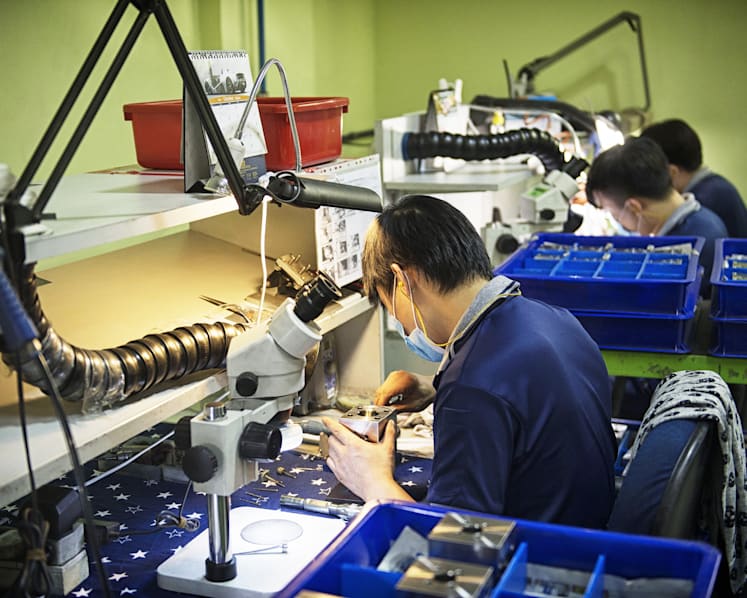
Bloomberg file photo


SINGAPORE — Manufacturing output fell by a better-than-expected 0.5 per cent last month, thanks to a surge in pharmaceuticals and an expansion from electronics, pointing to a possible revision to the first-quarter advance gross domestic product (GDP) estimates.
Economists, however, say that the more moderate decline in March, compared with February’s year-on-year 3.8 per cent decrease, does not point to the beginning of a turnaround for the manufacturing sector, as the growth in electronics is not likely to be sustainable, and the boost from the volatile biomedical output is unpredictable.
Economists in a Reuters poll had expected industrial production to decline 2.7 per cent.
Excluding biomedical manufacturing, manufacturing output fell 5.5 per cent, showed data from the Economic Development Board on Tuesday (April 26).





“Today’s set of numbers has altered the growth outlook for the first quarter slightly, at least from the statistical perspective,” said DBS senior economist Irvin Seah. “Together with some abnormally large upward revisions in the industrial production figures over the past two months, overall manufacturing growth in the quarter now averages at -1.1 per cent YoY, almost a full 1 percentage point higher than the -2.0 per cent assumed in the first-quarter advance GDP estimates. Now this alone will warrant a 0.2 percentage point upward revision in the headline GDP growth figure.”
By cluster, biomedical manufacturing output expanded 23.1 per cent, largely due to a 27.9 per cent jump in the pharmaceuticals segment. However, Mr Seah noted that the pharmaceutical sector is the least integrated industry within the economy and that without the boost from pharma, manufacturing performance would look dreary.
“With all its ups and downs, it has little impact on the rest of the economy except on the headline gross domestic product growth. That is, the rest of the economy will hardly feel the effect of the surge in pharmaceutical production — it only makes the headline GDP figure look better,” he said.
The bright spark in last month’s output figures, said economists, was really from the key electronics cluster, which carries about one-third of the total weight in the industrial production index. The segment rose 5.8 per cent last month, reverting to expansion, led by a 21.7 per cent growth in semiconductors output.
SIM Global Education senior lecturer Tan Khay Boon, however, noted that the “lack of a competitive advantage in the electronics cluster will not be saved by a rebound in semiconductors which may not be sustained”.
“(Overall) the data is actually still weak with no significant turnaround in sight … A new approach, focus on value and innovation, may be the only long-term solution to the manufacturing sector and prevent it from being marginalised,” added Dr Tan.
Besides biomedical manufacturing and electronics, the other cluster to log an expansion was general manufacturing products, while the transport engineering, chemicals and precision engineering clusters contracted.
Transport engineering fell by 23.1 per cent, extending from the 14.6 per cent February decline. Despite growth in the aerospace segment, the land and marine & offshore engineering segments contracted, with the latter declining due to a lower level of rig-building activity and weaker demand for oilfield and gas field equipment amid the low oil price environment.
“Without a huge spike in oil prices, the transport engineering cluster will continue to be weighed down by a large negative marine & offshore engineering segment,” noted Dr Tan.
The chemicals cluster reversed from expansion to contract 4.9 per cent last month, while the precision engineering cluster declined by 7.7 per cent.




