







Good progress, some success from equities market review, says Chee Hong Tat in response to WP motion
More than S$2.4 billion was raised through initial public offerings in 2025, the highest amount since 2019, said Mr Chee Hong Tat.
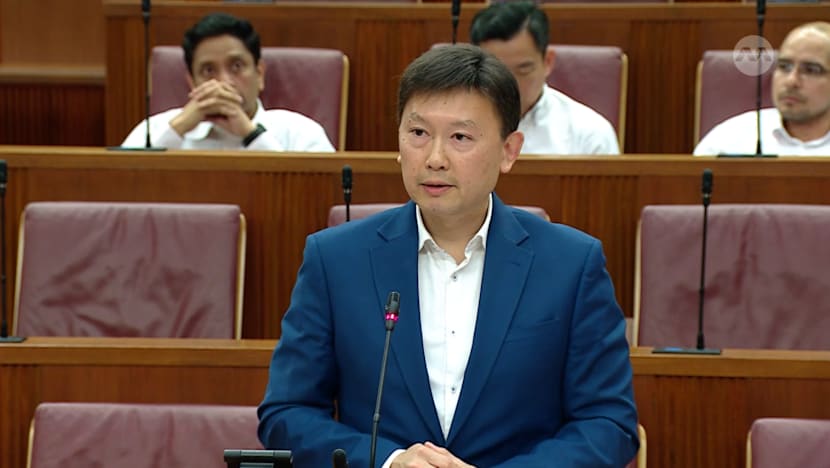
Minister for National Development and deputy chairman of the Monetary Authority of Singapore Chee Hong Tat speaking in parliament on Feb 3, 2026.

This audio is generated by an AI tool.


SINGAPORE: Good progress has been made since a review group was set up to revive Singapore’s stock market, and there have been initial signs of success, said Minister for National Development Chee Hong Tat in parliament on Tuesday (Feb 3).
Mr Chee, who is also deputy chairman of the Monetary Authority of Singapore (MAS), said the average daily traded value of securities on the Singapore Exchange grew more than 20 per cent year-on-year to almost S$1.8 billion (US$1.4 billion) in November last year.
He added that the average daily traded value of securities last year was the highest since 2010, while 100 Singapore-listed stocks had at least S$1 million in average daily trading turnover, a 40 per cent increase compared with August 2024.
More than S$2.4 billion was raised in initial public offerings in 2025, the highest since 2019, and a significant rebound, said Mr Chee. The total market value of listed companies also crossed the S$1 trillion mark.
“The growth has benefited many listed companies, many investors, and these companies include both the large caps and also the small and mid caps,” he said.
He was responding to an adjournment motion by Members of Parliament Louis Chua (WP-Sengkang) and Jamus Lim (WP-Sengkang) on how to “make (Singapore) equities great again”.
The two opposition MPs’ suggestions included requiring companies to demonstrate how they will drive higher shareholder returns, holding companies accountable for disclosure lapses and encouraging local retail investors to invest in Singapore stocks.
“I believe that the current recommendations by the review group may be necessary but not sufficient to truly drive permanent change,” said Mr Chua.
WP’S SUGGESTIONS
Mr Chua said there are no mandatory disclosure requirements to compel Singapore companies to demonstrate improved returns for shareholders, whereas other countries such as Japan have implemented market-wide directives to create pressure on companies to perform.
For example, the Tokyo Stock Exchange has a structured disclosure framework with specific requirements, and published a monthly list of companies by their disclosure status, which put “constructive market pressure” on firms.
“While we are asking the (Equity Market Development Programme) fund managers to deploy more than S$5 billion in capital and expect returns, our listed companies feel no compulsion to demonstrate commitment to improving fundamentals,” he said.





Singapore’s market liquidity had fallen behind and its measures must be bold enough to bring its equity markets into the future, said MP Louis Chua. In an adjournment motion in parliament on Tuesday (Feb 3), he stressed the need to institute mandatory value-up disclosure requirements immediately and strengthen enforcement. MP Jamus Lim, who echoed the call, stressed the need for macro financial reform. He said a successful SGX will require paying attention to the full capital-raising cycle - from start-up through listing on both the buy and sell side. Responding, Deputy Chairman of the Monetary Authority of Singapore Chee Hong Tat said developing a vibrant equities market is a multi-year effort that requires discipline and willingness to innovate sensibly, as well as committed partnerships. The government has laid the foundations and set in motion a comprehensive programme, he said. He added that he is confident that Singapore's equities market will grow in depth, resilience and attractiveness if it keeps at this work - in close partnership with industry, with the right incentives and a clear focus on quality and sustainability.
Mr Chua also said Singapore should strengthen enforcement and maintain standards that protect investor confidence.
He noted that despite requirements to disclose director and chief executive officer remuneration, only 68 per cent of companies did so as of December 2024.
“Without consequences for non-compliance, why would companies comply?”
Associate Professor Lim said Singapore could further promote responsible retail ownership of the local market index.
That could be done through revisions to the Lifetime Retirement Investment Scheme that is still under review by the Ministry of Manpower, or through additional educational incentives, he said.
“Sweden has demonstrated that such bottom-up participation can underpin stock market success,” he said.
“WE CANNOT STAND STILL”
Singapore set up an Equities Market Review Group in August 2024 to study ways to strengthen the local stock market, which had been shrinking for years, with delistings outstripping new ones.
Last year, recommendations from the group were announced, including the launch of a S$5 billion programme that involves putting money with fund managers focused on investing in Singapore stocks.
The MAS also announced a proposal that would allow companies to concurrently list on the SGX and Nasdaq, while the SGX shared plans to reduce the board lot size from 100 to 10 units for securities above S$10.

Mr Chee said improving competitiveness is like a “never-ending marathon” and that he welcomes feedback and suggestions from Mr Chua, Assoc Prof Lim and other members of the Workers’ Party.
“Although our efforts have yielded some initial success, we cannot stand still and rest on our laurels because the competition for global capital is intense and fast evolving,” he said.
There needs to be a multi-year effort involving discipline, willingness to innovate sensibly and partnership between the government, regulators, exchanges and more.
“If we keep at this work together in close partnership between government and industry, and with the right incentives and a clear focus on quality and sustainability, I'm confident that Singapore's equities market will grow in depth, resilience and attractiveness in the years ahead,” said Mr Chee.




