







MOE scheme supported over 33,000 students’ attendances at Chinese art shows in 2018
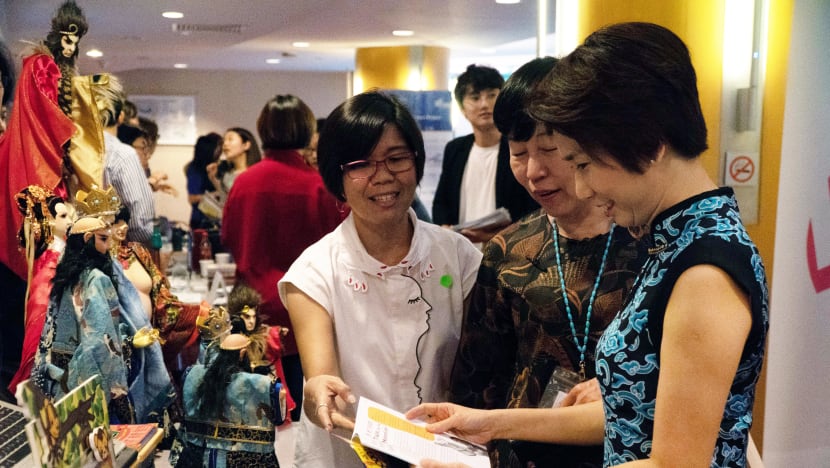
Ms Low Yen Ling (far right) speaking to members of Chinese theatre groups. Ms Low is Senior Parliamentary Secretary for Education and chair of the Committee to Promote Chinese Language Learning.
SINGAPORE — Schools in Singapore received about S$750,000 last year from the Committee to Promote Chinese Language Learning to subsidise tickets for students to watch Chinese language-related performances.
The Cultural Performance Exposure Scheme provides primary, secondary and tertiary institutions with a S$3,000 subsidy yearly for Chinese-language students to attend arts performances by local or overseas groups where Mandarin is used.
The performances — which include Chinese opera, theatre, musicals, museum trips and even comedy acts — allow for greater exposure to Chinese culture.
When the scheme first began in 2009, 4,251 students from 20 schools attended performances through it. Last year, the figure grew to 33,335 students from 253 schools.





In total, more than 260,000 students have benefited from the scheme.
Chairing the Committee to Promote Chinese Language Learning is Ms Low Yen Ling, Senior Parliamentary Secretary for Education.
At an event to mark the 10th anniversary of the scheme on Thursday (Jan 24), she said: “Through the performing arts, we hope to create a rich and authentic environment for our students to learn Chinese language and culture.
“We hope that this experience in the theatre will also help them to foster an emotional connection to the Chinese language beyond what they pick up in a classroom setting.”
Teachers are also encouraged to come up with learning activities before and after the performances to deepen the learning experience.
At Punggol Green Primary School last year, teachers showed pictures of different museums to Primary 2 students ahead of their trip to the National Museum of Singapore.
At home, the students conveyed in Mandarin what they learnt to their parents, who then awarded them a grade based on their language skills.
After the visit, the students had show-and-tell sessions in school with drawings of their favourite museum exhibits.
The school also asked that parents take their children to other museums during the June holidays and to design a poster showcasing what they learnt after that.
Teacher Zhang Pu, 40, said that the school received positive feedback on the activities. Many parent-volunteers felt that the programme allowed their children to learn Chinese culture in a fun and engaging manner, he said.
BOON FOR CHINESE THEATRE GROUPS
Performing groups here stand to gain from the scheme as well, and some of them have tailored shows specifically for students.
On Thursday, 14 theatre groups promoted their programmes to more than 300 teachers at the event.
Madam Cai Bi Xia, 46, artistic director of the Traditional Arts Centre and founder of the non-profit Chinese Opera centre, said that the scheme helps to keep Chinese culture and traditions in Singapore alive.
“Traditional cultural performances, having lasted so many years, will now and in the future be of value for society and the country,” she said.
The Committee to Promote Chinese Language Learning was set up in 2005 after a review of the teaching of Chinese language in Singapore.
Besides the Cultural Performance Exposure Scheme, the committee also conducts annual programmes such as the National Schools Xinyao Singing and Song Writing Competition as well as the “Script It Right” Chinese Radio Drama Script Writing Competition.
The committee will work with the Singapore Chinese Cultural Centre and the Singapore Federation of Chinese Clan Associations to roll out new programmes to promote Chinese language learning.




