MOH to focus more on women's health, considering bone density tests under Healthier SG: Ong Ye Kung
The health minister also described the recent announcements during the debate on his ministry’s budget as “breakthroughs” that relooked longstanding policy assumptions.

Health Minister Ong Ye Kung and Sembawang West MP Poh Li San pose for a photograph at Woodlands Mart on Mar 8, 2026. (Photo: CNA/Raj Nadarajan)

This audio is generated by an AI tool.


SINGAPORE: The health ministry is looking to see how the Healthier SG initiative can support women to go for more frequent bone density tests, said Health Minister Ong Ye Kung on Sunday (Mar 8).
Speaking to the media on the side of the Sembawang West Women’s Festival, Mr Ong said that the condition - which causes bones to weaken and be more prone to fracture - affects menopausal women especially.
Sunday marked International Women’s Day.
Mr Ong earlier told attendees at the festival that he personally realised after taking on the health portfolio that women’s health requires special attention.
One reason is that past research has typically focused on men, explained Mr Ong, who is also Coordinating Minister for Social Policies.
“Second, although women live longer, women have particular health challenges, for example, breast cancer or hormonal cycle and also menopause,” he said, adding that menopause causes a lot of complications.
Women are also often the caregivers of their family and face added stress, and so require more support, said Mr Ong.
“So I think for MOH (Ministry of Health), we are going to put more attention on women's health,” he told attendees at the festival at Woodlands Mart.
Present with him on Sunday was Sembawang GRC MP Poh Li San, who oversees the Sembawang West ward.



POLICY BREAKTHROUGHS
On Sunday, Mr Ong told reporters that the policy changes were significant as they relooked longstanding assumptions.
His ministry had announced a slew of changes during the debate in parliament on its budget for the year ahead, such as the raising of MediSave withdrawal limits and the use of artificial intelligence (AI) to deal with chronic diseases.
“These are important breakthroughs, not huge policy changes, but important breakthroughs, because it questions and re-examines some of our long-existing policy assumptions,” said Mr Ong.
For instance, the government is now prepared to extend MediShield Life - the national health insurance scheme - to cover preventive surgery, which is “something we have never done before”.
This is possible due to the advancement of science, particularly in genomics and AI, noted Mr Ong.
“You save painful treatment later on, and it’s also cost-effective and actually doesn't impose any financial burden on our system,” he said.
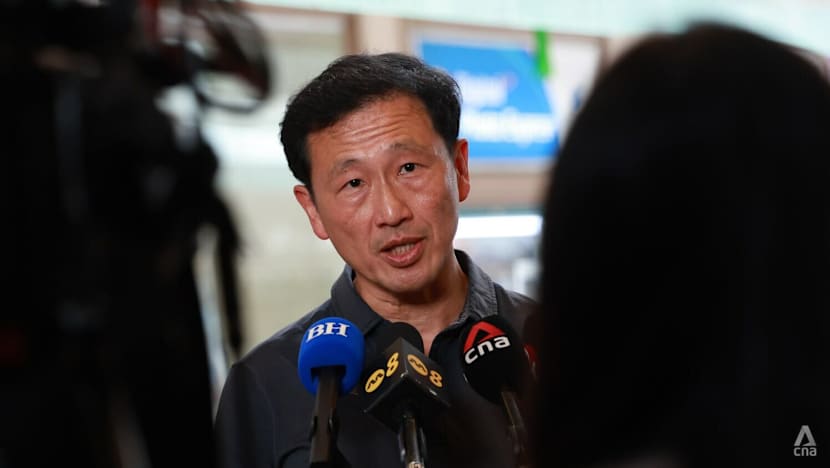
The changes to the MediSave scheme also recognise that it no longer has just one traditional objective, said Mr Ong.
“When MediSave was implemented decades ago, the main objective was for us to save up for a rainy day, should we need emergency surgery, or in our old age, need long hospital stays,” he explained.
With lifespans getting longer today, the scheme now has a dual objective, which is to let people “practice good preventive care and manage our chronic diseases effectively”, noted Mr Ong.
In response to a question from CNA, Mr Ong said that the use of MediSave is “a zero-sum game”, something which has to be managed carefully, because using more for today’s needs means having less for the future.
Mr Ong also highlighted MOH’s plan to harness technology, particularly AI and genomics, to better deliver preventive healthcare.
“Our vision, if we do this well, carefully and appropriately and responsibly, I think it is possible to have a personalised, predictive preventive care system,” he said.