Patients with chronic conditions can withdraw more from MediSave starting next year
Withdrawal limits under the MediSave500/700 scheme will rise to S$700 and S$1,000 for chronic conditions.

A woman handing medication to a patient. (File photo: iStock)

This audio is generated by an AI tool.


SINGAPORE: Patients with chronic conditions such as hypertension and stroke will be able to tap more from their MediSave accounts from Jan 1 next year, the Ministry of Health (MOH) announced on Thursday (Mar 5).
The changes, which will also see MediSave500/700 renamed as the MediSave Chronic and Preventive Care scheme, include higher withdrawal limits for outpatient treatment, vaccinations and preventive tests.
Under the revised scheme, patients will be allowed to withdraw up to S$700 (US$550) a year, up from the current S$500. Those with more complex chronic conditions can withdraw up to S$1,000 annually, a rise from the existing S$700 limit.
MOH said the changes are part of a regular review to ensure patient affordability. Of the 915,000 patients who benefitted from the scheme last year, about 20 per cent had post-subsidy bills for chronic or preventive care that exceeded their withdrawal limit.
Chronic patients accounted for 95 per cent of all scheme users last year, and of these, around 80 per cent had complex chronic conditions – meaning the majority were capped at the S$700 limit.





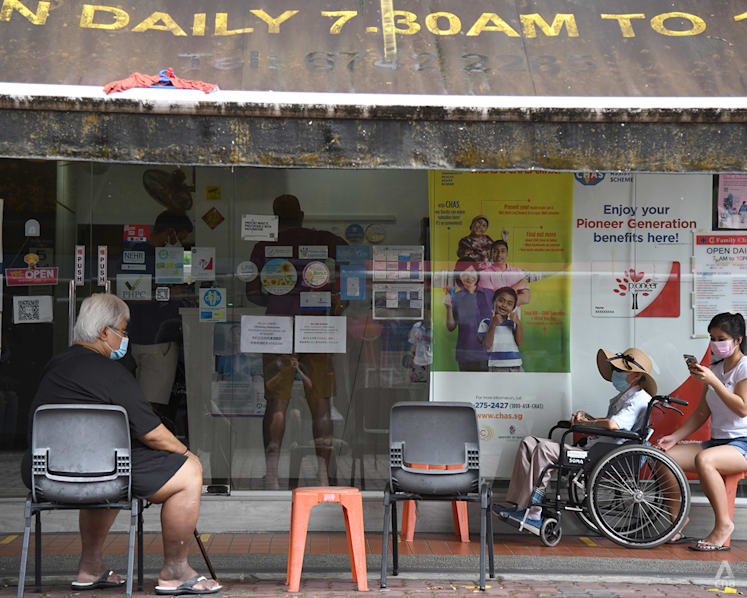


Speaking in parliament on Thursday, where he was laying out his ministry's spending plans for the year, Health Minister Ong Ye Kung said schemes like Flexi-MediSave and MediSave500/700 provide flexibility to pay for chronic disease management, scans or dentist visits – without overly diluting MediSave’s original objective of catering for big lumpy hospital bills in old age.
However, he acknowledged that the situation has changed since MediSave was implemented in 1984, as people in Singapore are now living longer.
"It continues to be important to preserve MediSave for big hospital bills. On the other hand, as people live longer, the need to spend on preventive care and chronic disease management also goes up," he said.
Trade-offs are inherent in the MediSave scheme, he said, as using more balances for recurrent medical expenses means having less in the future when patients are hospitalised, and vice versa.
"When the tension becomes too severe, we will have to consider raising contribution rates," he said.
"The tension is therefore deliberate and in the design of the scheme. It is a balance we must constantly and carefully manage, to ensure the system of co-payment is held together while ensuring affordability and keeping CPF contribution rates reasonable for all."
EXPANSION TO CHRONIC DISEASE MANAGEMENT PROGRAMME
MOH will also expand the Chronic Disease Management Programme, which supports care for major chronic illnesses, to include hyperthyroidism and hypothyroidism.
The expansion – also effective on Jan 1, 2027 – is expected to benefit more than 53,000 patients with thyroid disorders.
The ministry said it is studying other conditions, such as eczema, for inclusion in the programme and will provide an update at a later date.
The changes are part of a broader effort to support Singapore's ageing population, with over 20 per cent of residents now aged 65 and above.