







More elderly S’poreans received short-term government aid in 2016
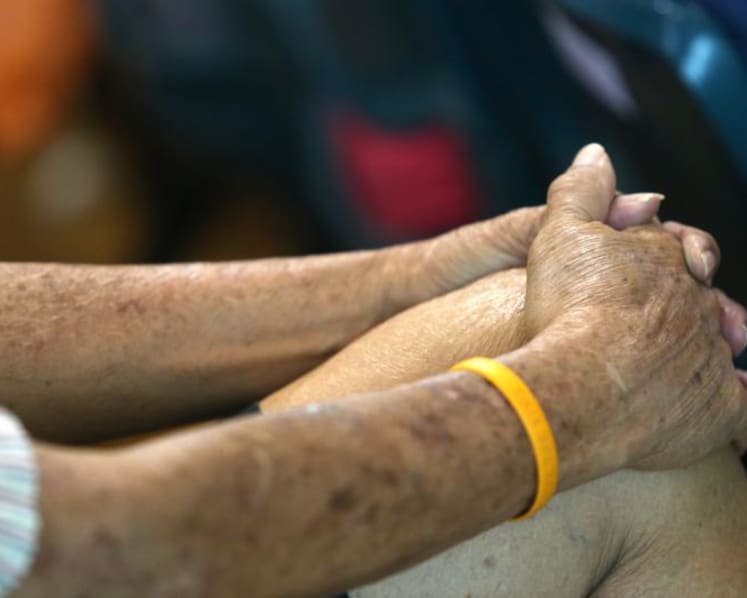
TODAY file photo


SINGAPORE – In June this year, Mr Maswadi Sujaie, 63, suffered a stroke which affected mobility in the left side of his body, and left the former part-time delivery driver temporarily unfit for work.
After spending two to three months in hospital, the divorcee, who lives in a one-room flat in Tampines, was referred to the social service office (SSO) in his neighbourhood. He started receiving a monthly sum of S$350 from the Community Care Endowment Fund (ComCare) last month, an amount that he said was "just enough" for him after paying rent as it was less than the S$400 to S$600 he earned from his previous job. He will receive help from ComCare for six months for now.
Mr Maswadi, who is undergoing physiotherapy, said: "I hope my body can (recover) so I can work again."
Seniors like Mr Maswadi were part of some 83,000 beneficiaires who received S$130 million from ComCare between April 2016 and March this year. Started by the Government to address the socio-economic needs of needy Singaporeans and families, ComCare disbursed the same amount to 87,000 beneficiaries in FY2015.





Findings from the ComCare Annual Report and Trends Report released by the Ministry of Social and Family Development (MSF) on Friday (Dec 08) revealed that a larger proportion of Singaporeans who received short-term government aid in the last financial year were made up of households headed by those aged 55 to 64.
A majority of households on ComCare received short-to-medium-term assistance (SMTA), which provides a monthly cash grant, assistance with utilities, service and conservancy charges, rent and employment assistance.
Households that received such assistance were mostly headed by Singaporeans aged 45 to 64. Specifically, the proportion of households headed by persons aged 55 to 64 rose from 18 per cent in FY2012 to 23 per cent in FY2016. This could be due to the increase in the proportion of households on SMTA headed by people who were not working, from 48 per cent in FY2012 to 53 per cent in the last financial year. They stopped work mostly because they were medically unfit or retired.
While there was a slight dip in those assisted on SMTA in FY2016 as compared to the previous year - from from 29,511 to 28,409 - reports showed a general increase in the number of households helped by ComCare since 2012. There was an overall increase of 38 per cent in those who received such assistance in the last four financial years, with a total of 28,400 households receiving such assistance in 2016 as compared to the 20,500 households in FY 2012.
The overall increase could be due to the raising of the household income cap, and income cap, on each household member for families applying for SMTA, from S$1,700 to S$1,900 and S$550 to S$650 respectively. Another possible explanation was the roll out of the 24 SSOs between Jul 2013 and Dec 2015, which provided a more accessible and coordinated social assistance to those in need. The spokesperson added that MSF will continue to monitor this trend, and assess if it stabilises.
More households received long-term assistance (LTA) last year as compared to FY2012. About 4,300 households received such help, which was a 28 per cent increase from about 3,400 in FY2012.
Reflecting demographic trends such as shrinking family sizes and an ageing population, more elderly individuals aged 60 and above received either LTA or SMTA. Some 3,757 and 6,769 elderly persons received assistance respectively under the LTA and SMTA schemes, a 26.5 per cent and 74 per cent jump from FY2012.
Minister for Social and Family Development Desmond Lee said in a Facebook post on Friday: "We will continue to monitor these trends. While the Government will do more to help those in need, families and the community continue to play an important part in supporting vulnerable individuals and families.
"Families form the foundation of our society and will continue to be the first line of support. The wider community also plays a part in the outreach and care for the less fortunate. By working together, we must strive to ensure that no one is left behind."
A MSF spokesperson added that the Government will continue to provide assistance as long as necessary and ensure support by linking these beneficiaries with the relevant help agencies, such as the Family Service Centres. TODAY understands that the SMTA can last between three to six months and each beneficiary can receive a few hundred dollars each month, with the average duration and quantum to vary according to the beneficiary's assessed needs and household circumstances. A SSO officer will review the case before determining whether to extend or stop the assistance provided under the scheme. Longer term assistance may be provided if required, added the spokesperson.




